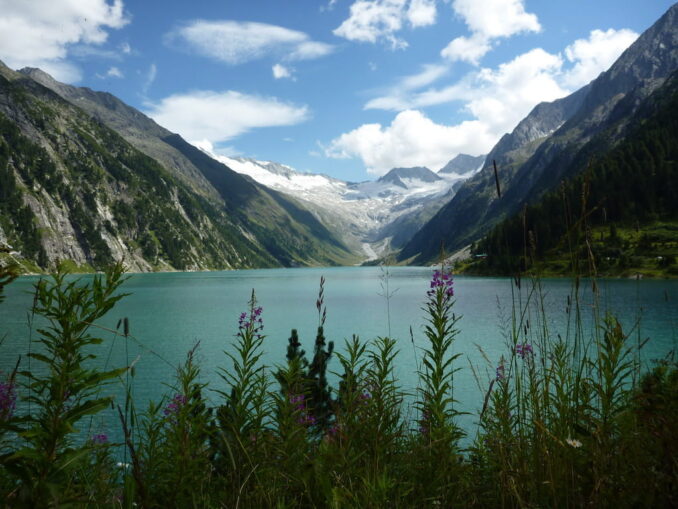
What to see in Tyrol on your own, where to go first? Key attractions and points of interest, ski resorts, travel routes, and distances. Eurotraveler explains the best time to travel to Tyrol and where to stay overnight.
Tyrol isn’t the largest of Austria’s federal states. But it’s rich in attractions and therefore alluring! Just mention it and images of mountain peaks, snowy slopes, rugged castles, and felt hats adorned with pheasant feathers spring to mind. And the melodious trills of yodel ring in your ears. A commonplace in the Alps, not even singing, but a way to communicate with the world around you.
Tyrol is a harsh land. Unforgiving of mistakes and complacency, should you dismiss the local mountains as frivolous. But at the same time, it imparts a spicy flavor of risk and excitement to seemingly ordinary travel!
Ready? Then let’s go and see what’s interesting in Tyrol!
Innsbruck
Not only is Innsbruck the region’s capital, but it’s also arguably the ski capital of Austria—wherever you look, you’ll find skiing. Innsbruck is also literally chock-full of attractions. Therefore, it can be considered a convenient starting point for seeing the «real» Tyrol. After, of course, you’ve visited all the interesting things the region has to offer.
Hotels
Deciding how long to linger is a matter of personal preference. Some will see the Golden Roof and decide they’ve had enough. Others will stroll around the city and visit St. James’s Cathedral. And the next day, the local Hofburg and Ambras Castle.
The affordable Basic Hotel Innsbruck is literally ideal for a one- or two-night stay . It’s centrally located, offers mountain views, and breakfast is included. And in summer, breakfast costs less than a hundred euros! Parking is available, however, only for motorcycles.
How to get there
Some time-limited road trippers head to Tyrol immediately after a similar tour of Bavaria . This makes sense given the regions’ proximity: Munich to Innsbruck is 160 km by road. Excellent quality, by the way!
And limited flights often travel the same route. Direct flights, for example from Moscow and St. Petersburg (S7 Airlines), fly to the capital of Tyrol only in winter, roughly from late December to late March. For indirect flights, we obviously return to point 1, and begin our journey from Munich’s Franz Josef Strauss Airport.
Important! Our Tyrol itinerary is designed to minimize travel time. That’s why it begins with the region’s lesser-known attractions. However, that doesn’t mean they’re the worst!
First, we’ll head west from the Tyrolean capital. Then we’ll return for the night. And in the morning, we’ll head towards Hall, Wattens, Kufstein (stop), and the like!
Highline179
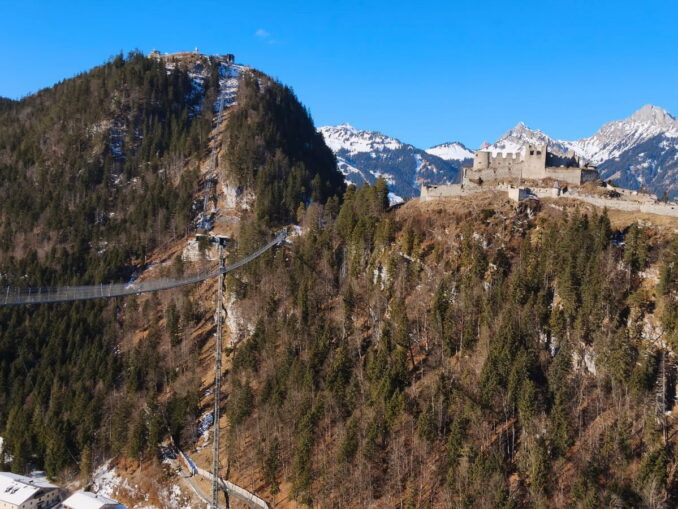
A lesser-known but still impressive pedestrian suspension bridge across a gorge, it’s one of Austria’s newest attractions. Scenic views, the Ehrenberg Fortress perched on a hill, and a 114-meter drop beneath your feet are enough to terrify you and inspire you to take the plunge.
Accessible only by car, Highline179 is located 90 km from Innsbruck, near the German border. Ticket prices and operating hours are available in our article.
Kaunertal Glacier Road
26 kilometers of incredible and breathtaking scenery on one of the most beautiful mountain roads in the Alps. It begins near the village of Feichten in the Kaunertal Valley and climbs upward to the foot of the glacier. Naturally, not directly—those wishing to see this Tyrolean wonder will have to negotiate 29 hairpin turns.
The attraction’s official website promises a special treat for motorcyclists. This is likely because bikers and their passengers only need to pay €15 for a day pass, while car owners pay €25 for themselves and up to four passengers.
Hall in Tirol
Ten kilometers from Innsbruck, it boasts the reputation of being the most beautiful medieval town in the region, and perhaps in all of Austria. It even has its own castle, Hasseg, if that’s not enough excitement for you.
Wattens
A small town 15 km from Innsbruck is famous for Swarovski Crystal Worlds, an underground labyrinth teeming with both natural and artificial crystals. This veritable crystal museum, built on the site of the famous company’s first production facility for its centenary, is today the most visited attraction in Tyrol.
And the second one is in Austria. After – scary to say – Schönbrunn Palace .
A visit to Svrovski’s Crystal World will be a delight for both adults and children. The exhibition is thoughtfully and modernly designed: real exhibits, some of which are listed in the Guinness Book of World Records, stand alongside colorful virtual installations. Naturally, there’s also a shop where you can pick up a few items from this renowned brand.
Silver mine in Schwaz
Schwaz is a small town 30 km from Innsbruck. It’s not particularly remarkable, save for the local silver mine, which the official website unabashedly calls the «mother» of similar mines worldwide.
Silver for thalers has long been mined here, but the Schwaz mine generates a healthy income. Tourists flock here, eagerly descending underground and exploring the tunnels to the accompaniment of a guide’s chant. A ticket costs €18, including an audio guide app downloadable to your smartphone (also available in Russian). A tour of the underground mine lasts 90 minutes.
And we continue moving along the roadmade of yellow brickE45. And, having covered 130 km, we enter Kufstein.
Kufstein
The local fortress, perched on a separate rock, is a landmark in its own right. Its 13th-century origins, rich history, and the world’s largest open-air organ are all worthy reasons to visit. The town itself is also beautiful, literally gingerbread-like in places.
There’s absolutely no shame in stopping here for the night. It’s difficult to return the same day—you’ll be exhausted!
However, the next morning you’ll still have to head back. The next thing to see in Tyrol is Lake Achensee, the local «sea.» Getting there from Kufstein requires a 55-kilometer journey.
Lake Achensee
Narrow as a blade and the most beautiful of the region’s lakes, it is surrounded by mountains up to 2 km high. You can enjoy the views on foot (free) or from a cruise ship. A ticket costs €21; children born between 2005 and 2013 and bicycles pay half price: tirolschiffahrt.com/fahrplan-2019-2/ .
© Eurotraveler