
Tallinn or Riga — which is the better to visit for a New Year getaway, or going on a trip at any other time of year? Transport links, prices, attractions. Eurotraveler compares the two Baltic capitals to find out: which is better and cheaper, Tallinn or Riga?
As soon as Christmas and New Year come into view, people all over the world start asking themselves the same familiar question: where should we go for the holidays?
A lucky minority eagerly awaits the break so they can head off to warmer shores: to Thailand, Vietnam, Sri Lanka or the Caribbean. Most people have more modest, budget-friendly plans: celebrate at home and/or set off in search of a little holiday magic, Father Christmas and Santa Claus somewhere closer to home.
- Why not head to the Baltics?
- A region traditionally known for celebrating Christmas in a wonderfully warm, almost homely atmosphere?
We’ll follow the majority’s lead. And let’s start by considering where is better to go: Tallinn or Riga?
In many ways, these two cities are alike. Yet they’re also very different!
Tallinn, or at least its central district, is firmly rooted in the Middle Ages. Its medieval heritage has survived to this day in remarkably well-preserved condition, making the city particularly appealing to tourists.
Riga, on the other hand, is famous for its ancient Dome Cathedral and beautiful buildings dating from the 17th to the 19th centuries.
So, which one should you choose?
Transport Connections — Tallinn Has the Edge
Getting to Tallinn is clearly easier, no matter where you’re travelling from. The city is not only well connected by air to destinations around the world, but also has ferry links to Helsinki and Stockholm. Getting from Tallinn Airport to the city centre is easy by public transport, too (bus 2 and trams 2 and 4).
Riga is also easy to reach by plane. And public transport (bus 22) connects the airport with the city centre.
But there’s a catch! If cruise ferries do dock at the city’s port, but generally only in summer, as part of Baltic Sea cruises…
Regular ferry services that once connected Riga with Stockholm before the pandemic have since been discontinued.
Attractions — Riga comes out on top
Tallinn
By general consensus, Tallinn is a real-life medieval fairy tale. Its remarkably well-preserved towers and walls encircle the historic part of the city. You can admire them from the outside or even walk along them!
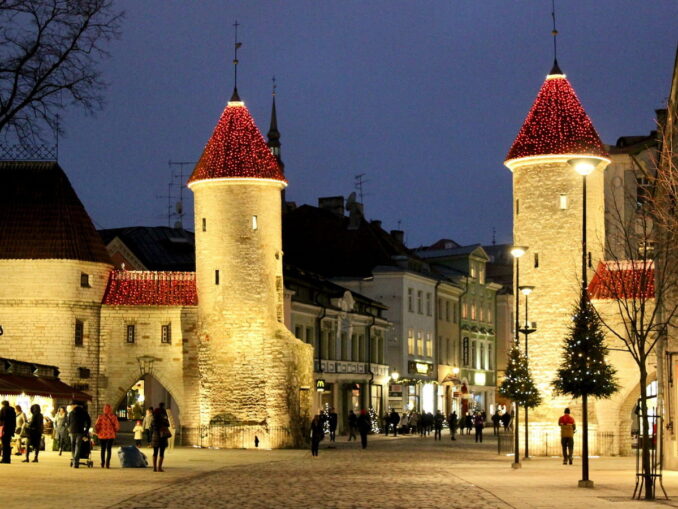
Inside this stone ring lies an exceptionally charming city, looking as though it has stepped straight out of a historical movie.
- Many buildings date back five or six centuries, and the streets are paved with cobblestones.
- What’s more, everything is packed into a fairly compact area, meaning visitors can easily see all the highlights of Tallinn’s Old Town in just one day.
What else is there to do? Plenty!
You can visit Kadriorg, Pirita and Tallinn Zoo. The latter covers such a vast area that residents of major cities, where zoos are often cramped for space, will be delighted to see how much room these animals have.
It’s also worth setting aside a day for shopping: Tallinn is a great place to pick up souvenirs, as well as affordable, good-quality everyday items! And don’t forget the local food, especially the cheeses.
What else is worth visiting in Estonia? That’s a question that deserves some thought!
- A trip from Tallinn to Tartu is certainly worth considering.
- Some interesting old houses and churches have also survived in Pärnu.
- Saaremaa Island is another excellent place to unwind, although perhaps not in winter…
Riga
Latvia’s capital has fewer genuinely medieval buildings than Tallinn, and its original city walls have disappeared altogether. But Riga has a special appeal for architecture lovers, thanks to its Art Nouveau buildings.
Around the turn of the 20th century, the city acquired a wealth of fascinating and simply beautiful structures. There’s even a museum dedicated to Jugendstil architecture.
Older buildings have survived as well. The House of the Black Heads on Town Hall Square has long been one of Riga’s most recognisable landmarks. The city’s famous Three Brothers are well known, as is the Mentzendorff House, which now houses a fascinating museum.
Riga Cathedral is magnificent and hosts memorable organ concerts — www.doms.lv/events/concerts.php?mnu_id=46.
Riga’s cinematic history is also impressive. It was here that Soviet cinema classics managed to capture an unmistakably foreign atmosphere. Holmes and Watson, Stierlitz and Professor Pleischner all once wandered through Riga’s streets…
Here’s what you should see in Riga first (and then what to explore next!).

A shopping spree can be just as rewarding:
- Riga has at least as much to offer tourists in terms of interesting products as Tallinn,
- and prices may well be lower, too!
The explanation is simple: average incomes in Latvia are considerably lower than in Estonia.
There’s also plenty to see around Riga. For example, the museum dedicated to the real-life Baron Munchausen in Dunte. Then there’s Rundāle Palace, built for Duke Biron, who wielded virtually absolute power in Russia. And Bauska Castle, once home to the Livonian knights.
Then there’s Jūrmala, which is well worth visiting even outside the summer season. Other great attractions of Latvia include the old fortress in Sigulda and its local bobsleigh track, where visitors can enjoy rides on inflatable sledges. Add the ancient Turaida Castle and the lesser-known Cēsis Castle to the list…
Prices: Riga Has the Advantage
The main difference between the two cities comes down to accommodation, restaurants and entertainment costs. According to the Post Office Travel Money comparative study for 2025, a hypothetical tourist basket of 12 items cost around €297 in Riga, compared with €395 in Tallinn — latvia.travel/en/how-much-does-it-cost-travel-latvia.
The comparison included:
- two nights in a three-star hotel in the city centre for two people
- meals
- transport
- admission to attractions.
That’s a considerable difference. And if you work out how much you’ll spend over a three- or four-day visit, the gap becomes even more noticeable.
In Riga, it’s easier to find affordable hotels, enjoy a meal at a café and set aside some money for museums, guided tours or an evening at a restaurant. Tallinn isn’t outrageously expensive either, but you’ll generally need to keep a closer eye on your budget.
Of course, a lot depends on the season, weekends and the hotel’s location. In either city, you can save money by booking accommodation in advance and choosing restaurants a little further away from the main tourist squares.
Booking early really pays off. At least, you can still find a decent, reasonably priced hotel in Tallinn for New Year’ Eve, for example, as late as September. Leave it any longer, and only the expensive options are likely to remain.
Things are easier in Latvia’s capital. If you decide to spend Christmas or New Year’s Eve in Riga, you’ll have little trouble finding a good place to stay (even one with a spa) as late as October or November!
What Else?
Tallinn’s restaurants and cafés are keen not to miss out on their share of tourist spending. The same goes for shops selling souvenirs, mittens, hats and all sorts of locally themed merchandise. Their owners have got a taste for foreign visitors and clearly consider them willing to spend.
Riga is more affordable in this respect, too. It’s simply not as accustomed to being spoiled by tourists!

Which City to Choose for a 2–4-Day Trip?
| Riga | Tallinn |
| Cost of a holiday | |
| Considerably lower | Higher, comparable to Prague and Budapest |
| Medieval city centre | |
| Beautiful and varied; the fortress has been reconstructed, but the original walls have not survived | Medieval walls and towers are exceptionally well preserved |
| Art Nouveau architecture | |
| Outstanding | Not one of its main attractions |
| Museums and urban culture | |
| Wide selection | Good selection |
| Day trips | |
| Jūrmala, Sigulda | Coastal areas, national parks |
| Atmosphere | |
| A larger, livelier city | Intimate, fairytale-like and cosy |
One More Thing
If you have four or five days rather than just two or three, you may not need to choose between Riga and Tallinn at all. That’s because the two Baltic capitals are connected by several forms of transport.
A flight, for instance, takes less than an hour. A bus journey can be done in around four hours, while driving takes even less.
There are also trains running from Tallinn to Riga, although this option takes around six hours. On the other hand, you’ll have plenty of time to relax along the way before setting off for another round of sightseeing!
© Eurotraveler