
Best time to visit Thailand for a beach holiday or sightseeing? Weather month by month, traveler reviews, sea and air temperatures, when swimming is possible and when conditions make it difficult. When does the rainy season begin in Thailand, high and shoulder seasons, and which months are the worst for a holiday? — all covered in this Eurotraveler guide!
As even a child knows, Thailand is all about the beach! After all, this Asian country attracts tourists from all over the world primarily because of the opportunity to enjoy a holiday by the warm sea.
Only then do foreign visitors turn some of their attention to the country’s history and culture, its distinctive Thai cuisine and attractions. Explore national parks and islands, discover Bangkok, venture into the north of the country, and visit the temples of Chiang Mai and Chiang Rai.
However, as we’ve already mentioned, all that comes… a little later.
- First, prospective travelers need to choose a resort.
- Next, they need to find out which months are considered the best and worst for a holiday in Thailand, and how prices change throughout the year.
Only then is it time to pack your bags and go!
In this Article,
we’ll try to help you choose the (right) time to visit Thailand while looking beyond some of the usual assumptions (such as the idea that «you should go in January and everything will be perfect»). We’ll cover the typical weather in spring and summer, autumn and winter, as well as air and sea temperatures.
Also we’ll try to explain what Thailand’s rainy season is really like. And why it’s not nearly as bad or as hopeless as countless reviews and travel guides would have you believe.
In short, we’ll share our own take on the big question: when is the best month to visit Thailand equally for a beach holiday or a sightseeing trip?
Climate: What to Expect
A quick look at the map reveals that Thailand is located on the Indochina and Malay Peninsulas. Its coastline is washed by the Gulf of Thailand (with resorts such as Pattaya, Koh Samet, Koh Chang and Hua Hin) and the Andaman Sea (Phuket, Krabi, Koh Lanta and Phi Phi).
Thailand has just two main climate types: tropical in the south and subtropical in the north, particularly in the mountains.
- The former is characterized by relatively small temperature fluctuations, both throughout the year and between day and night.
- People living in the northern provinces, on the other hand, know all too well what cold weather feels like. They’re used to shedding layers by midday and bundling up again once night falls.
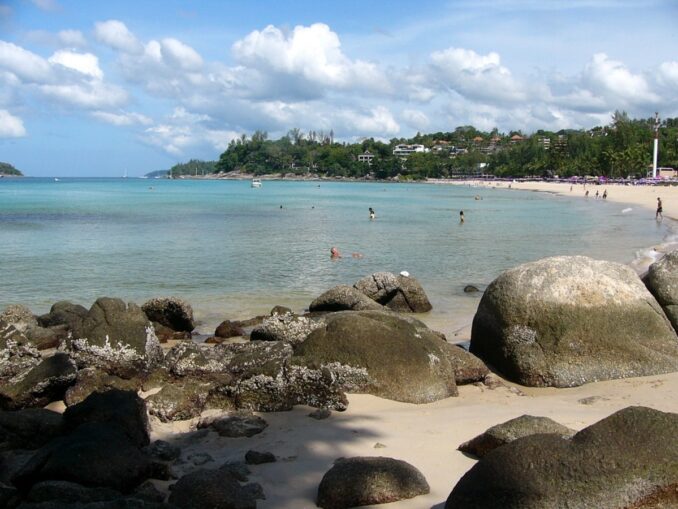
During the winter months, temperatures in northern Thailand can even drop to 0 °C, although they rarely fall below 8-12 °C.
But that’s not really the point — we’re mainly here to discuss when to fly to Thailand for a beach holiday. And figure out which months are least likely to have your plans (too badly) disrupted by rain and rough seas.
So, along Thailand’s coastline, it’s worth distinguishing three seasons.
- One of them, from December to March, is considered the high season. It’s also the driest period of the year, making it the best time for swimming and spending time on the beach.
- The period from March to May can be described as hot and summery. Rain does fall, but it hasn’t yet reached flood-like proportions.
- From June to November, however, much of the country comes under the influence of the southwest monsoon. These months are what are traditionally known in Thailand as the rainy season.
That said, there are
Exceptions to the Rule
For example, July weather on Koh Samui is characterized by plenty of sunny days and relatively light rainfall. And you can enjoy a wonderful holiday on the island in August, too, without having to worry too much about avoiding downpours.
On the other hand, Koh Samui in November gets absolutely drenched. Meanwhile, its luckier neighbors — Pattaya, Hua Hin and Krabi — often enjoy partly cloudy skies and are already gearing up for the start of the high season.
- Overall, October to April is considered the best time to visit Thailand!
Still, let’s spend a little more time looking at the country’s climate throughout the different seasons.
Winter
in Thailand is nothing like winter in Europe! That’s precisely what makes it so popular!
For example, December is a wonderful time to enjoy a seaside holiday in Thailand and explore Bangkok’s attractions. Daytime temperatures remain consistently between 28 and 32 °C. It doesn’t stop raining altogether, but the showers are usually neither frequent nor particularly persistent.
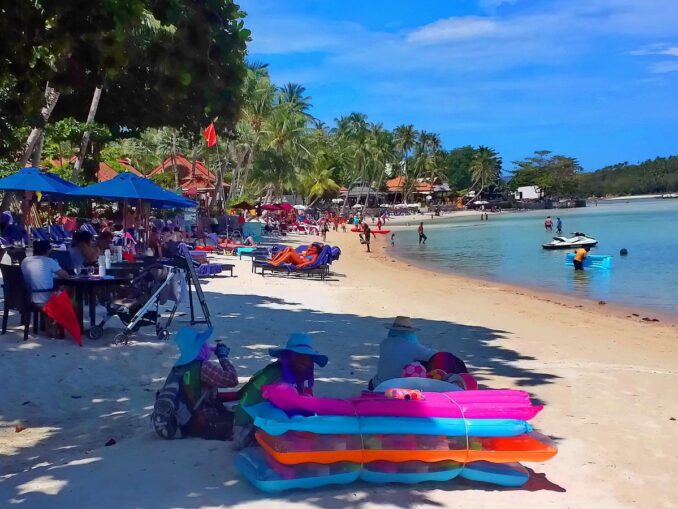
The sea is typically a pleasant 28-29 °C. Windy days do occur, but they’re nowhere near as common as in summer, when you may well get tired of seeing red warning flags flying on the beaches.
In any case, it’s worth planning ahead and finding out where to find wave-free beaches in Phuket. Or at whichever other resort you choose for your holiday.
- Just before Christmas and in the run-up to New Year’s Eve, Thailand welcomes a huge influx of tourists eager to escape the cold and soak up some sunshine.
- Most of them in December head to Phuket, as it’s one of the best beach destinations at this time of year.
It’s certainly not cheap (the time), but it generally offers the fewest unpleasant surprises when it comes to the weather.
Koh Lanta and Krabi are also popular destinations in December. Koh Samui, however, still gets heavy tropical downpours at night during the first month of winter, churning up the sea.
January
is one of the most favorable months for a holiday on Thailand’s coast either. Air temperatures drop to 27-29 °C, while humidity falls to its lowest levels. There are more sunny days, and the sea is sometimes so calm it looks like a sheet of glass.
So where should you go at this time of year?
- If money isn’t an issue, Phuket is the place to be.
- Krabi, Pattaya, Koh Samet and Koh Chang are also excellent choices.
An January trip to Koh Samui or Koh Phangan may come with a few surprises, as heavy rainfall is still possible there at this time of year.
January is also an excellent time to explore Bangkok. And if you have the opportunity, it’s well worth discovering the lifestyle and natural beauty of northern Thailand in comfort.
Here, we’ve listed all the ways to travel independently from Bangkok to Phuket.
February
is when Thailand enters its shoulder season, with wonderfully pleasant weather.
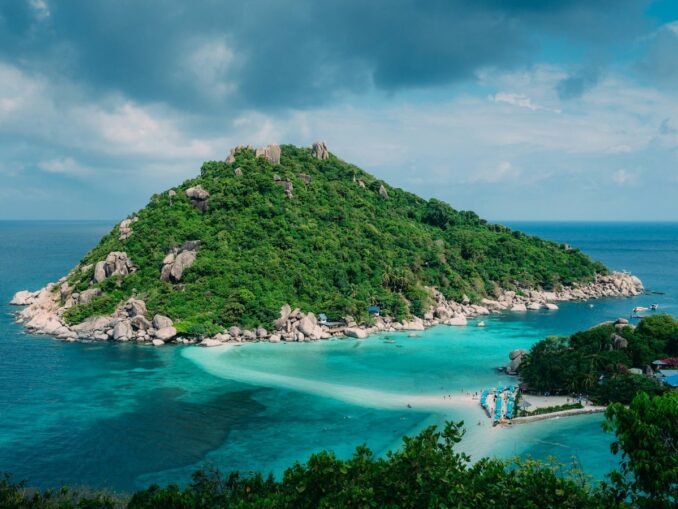
- Daytime temperatures hover around 30 °C, dropping to 23-25 °C at night.
- The sea is wonderfully warm, and the waves practically disappear altogether, as if saving their strength for summer.
Among seasoned travelers, February holidays in Phuket are traditionally popular (and no wonder — prices start coming down!). Many international visitors also choose to stay on Koh Samui at this time, as the island finally enjoys predominantly dry weather.
In northern Thailand, however, temperatures fluctuate considerably, with hot days and cold nights.
As for Bangkok, February is the hottest month of winter in the Thai capital, with temperatures easily reaching 33-35 °C. Rains are rare, and up to 25 days a month are completely sunny and dry, with humidity (usually) no higher than 70%.
It’s worth remembering that Chinese New Year is celebrated in Thailand in late January or mid-February. It’s a colorful, distinctly exotic celebration and a truly memorable experience for visitors from the Western world.
Spring
While winter is still firmly in charge across much of Europe in March, Thailand moves straight into hot summer weather. At first, though, conditions are still relatively comfortable.
For example, daytime temperatures in Phuket in March may climb to 35 °C, but they fall to a much more comfortable 20-24 °C at night.
- Rain at Thailand’s seaside resorts in early spring is not unheard of, but it’s still relatively rare.
- The sea is often completely calm, making swimming enjoyable both during the day and at sunset.
In Mid-April
Thailand celebrates its own New Year, Songkran. The festival marks the hottest time of the year, after which the rainy season begins.
Naturally, many Western tourists keen to experience something different make a point of visiting the country at this time. What’s more, local hotels offer attractive accommodation discounts as the high season draws to a close.
For example, you can rent an apartment for a week at Babylon Pool Villas near Nai Harn Beach for €350-400. In March, the same stay would cost roughly twice as much.
- April is also a good time to save money on flights and excursions.

Keep in mind that the heat during this period is sometimes described as «unbearable.» In Phuket, April weather regularly brings overcast days with temperatures reaching 38 °C and high humidity.
In northern Thailand, as well as in the southeast, rainfall becomes increasingly frequent in April, bringing some relief from the intense heat. Winds also pick up along Phuket’s west coast, and the Andaman Sea often appears rough.
That makes the resorts along the Gulf of Thailand — Koh Samui and Pattaya — the most attractive destinations for an April holiday.
May
The last month of spring is not the best time to visit Thailand. Heavy monsoon downpours begin across much of the country, making the already hot weather feel extremely humid and uncomfortable.
It’s generally agreed that May weather on Koh Samui and in Phuket makes these destinations suitable mainly for young, healthy travelers. They’re certainly not the best choice for families with small children or older visitors.
- It’s also worth bearing in mind that April and May are the hottest months in Thailand.
Summer
is a particularly interesting and rather unpredictable time of year in Thailand. It was once considered completely unsuitable for a visit, but in the post-pandemic era, it seems to have made quite a comeback.
One important factor — perhaps even the main one behind this growing trend — is the relatively low cost of accommodation (for example, hotel prices in Phuket).
In any case, international visitors are now increasingly happy to spend their holidays in Phuket in June, as well as in July and August. They’re willing to put up with both a high chance of heavy rain and rough seas, which can make regular swimming in the ocean difficult.
One way or another, summer in Thailand is hot and rainy. It’s also extremely humid. Resorts along the Andaman Sea coast can experience tropical downpours lasting for hours or even days, along with stormy seas and high waves.
The Gulf of Thailand, on the other hand, gets much shorter spells of rain. And bad weather is regularly followed by sunny days.
- The skies can be completely clear or partly cloudy, and the sea rarely gets particularly rough.
- Not many people know about this, so you may be able to book a hotel on Koh Samui, for example, for as little as €30-40 per night.
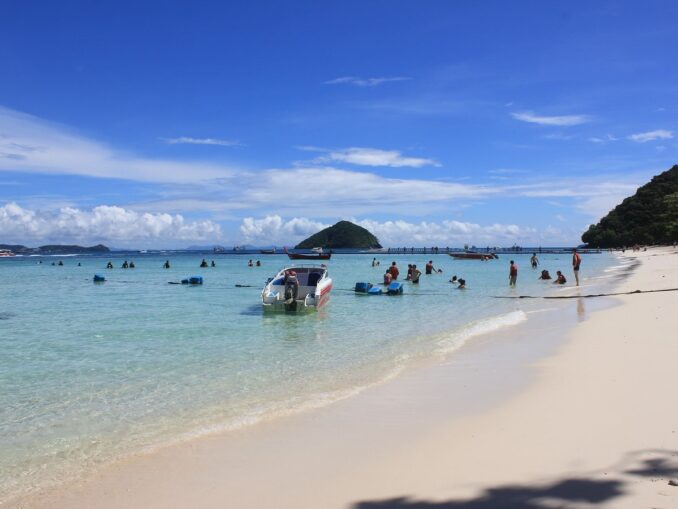
July
is an even wetter month, especially along the Andaman Sea coast. Storm-force winds and huge waves are not uncommon along Phuket’s west coast and, to some extent, in Krabi.
During this period, swimming is often only possible in hotel pools. And even then, you may find yourself taking a dip in the rain.
Much more pleasant, often even sunny, weather can be found in July on Koh Samui and Koh Samet, as well as at the mainland resorts of Pattaya and Hua Hin. The sea usually has only small waves.
In August
Thailand’s rainy season really starts to gather momentum. By the end of the month, it reaches its peak.
Rain falls across the entire country, both during the day and at night.
The heaviest downpours are recorded along the central part of the Gulf of Thailand coast and in northern Thailand. Flash floods and flooding can occur, while landslides are possible in mountainous areas.
Bangkok remains warm in August (up to 31-32 °C), but the rain can be absolutely torrential, with as many as 17-18 rainy days per month. So if you’re planning to visit the capital of the «Land of Smiles» in late summer, make sure to pack raincoats, umbrellas and waterproof footwear.
- Based on everything we’ve discussed, July through September can be considered the worst time to visit Thailand.
- Although, as we’ve mentioned, Koh Samui and Pattaya can sometimes feel like little oases of good weather during this period.
Here, we took a closer look at the facts to assess whether it’s worth flying to Phuket in August — and who should consider doing so.
Autumn
doesn’t bring an immediate change in the weather. So, at least in September, there’s little reason to expect any dramatic improvement in conditions across Thailand.
Of course, weather charts show that rainfall gradually becomes less intense and shorter as winter approaches.
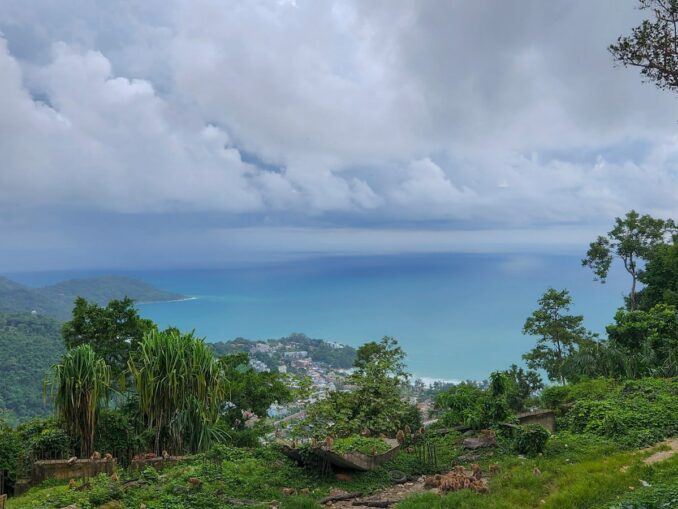
But overall, autumn in Southeast Asia is not the time to count on a carefree holiday. Until around mid-to-late October, a trip to Thailand is still something of a gamble — you either get lucky or don’t.
And the odds are very much against you!
- September, incidentally, is the wettest month of the year in Bangkok.
November
is a transitional month between the wet and dry seasons. Sunny days become more frequent, and the winds begin to die down.
The downpours may still be heavy, but they usually last only a few hours. What’s more, they tend to come at night.
- Pattaya and Hua Hin are fairly dry, while a November holiday on Koh Chang can leave you with some very pleasant memories.
- Even Phuket in November can reward visitors with several genuinely sunny days.
Koh Samui, however, is best avoided during this period, as the end of autumn marks the peak of its rainy season.
November is an excellent time to visit Chiang Mai in northern Thailand. The weather becomes pleasantly warm rather than scorching (up to 30-31 °C during the day and 18-20 °C at night), and there’s very little rain (just 4-5 rainy days per month).
The end of autumn is also moderately hot in Bangkok, with temperatures reaching 32 °C. Cloudy weather is common, but rain is relatively infrequent. Humidity levels during this period (around 60-70%) are also almost ideal for sightseeing.
- What you can (and should) take out of Thailand
- The best resorts in Thailand for a family holiday with children
- When to visit Phi Phi for a beach holiday
© Eurotraveler