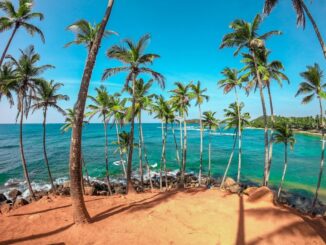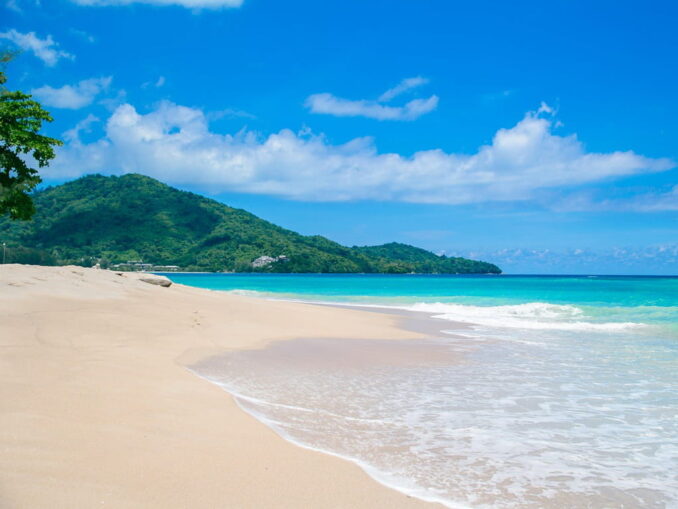
Best Beaches in Phuket in summer and during the «dry season» of 2026: from Kata and Patong to Bang Tao, Nai Harn, and Ao Yon. Which beaches are best for families with children, active pursuits, surfing and diving, or simply swimming and doing absolutely nothing? Wave-free beaches in Phuket, affordable hotels nearby, what things to do — all in this Eurotraveler guide.
Today, few people would dispute the idea that Phuket and its beaches are Thailand’s most popular holiday destination. The truly versatile place,s perfect for both a relaxed, peaceful getaway with or without children and for active holiday by the sea.
After all, people of all ages and with all kinds of interests can find something to enjoy here! Whether you’re active travelers who wants to explore — there’s plenty to see in Phuket — or someone looking to escape the hustle and bustle and unwind on a sun-warmed beach beneath the palm trees… Go diving, try surfing, recharge energy, feel refreshed…
Of course, if you want to make the most of your time by the sea, it’s worth finding out a few things in advance. In particular — to know, which beaches in Phuket are best suited to your needs? And also:
- what you can expect to pay for staying in nearby hotels
- what activities and entertainment are available
- how easy it is to get to the attractions?
And perhaps most importantly, will you be able to swim «from sunset to sunrise»? In other words, where can you find beaches in Phuket without waves? Or at least those where the sea is usually at its calmest?
We’ll try to answer all these questions in this guide. It’s not exactly a lengthy read, but we hope it offers some useful, practical information.
Beaches on Phuket’s West Coast
These are the best-known beaches and, as a result, often the most crowded. Naturally, this is especially true during the high season, which starts sometime in December and lasts until around mid-April.
If you’re planning to visit Phuket in June, or in summer or early autumn in general, you’re unlikely to find many people eager to swim at Kata or Karon Beach, let alone Patong. That’s because the prevailing wind direction changes dramatically during this period, and the Andaman Sea regularly sends impressive waves crashing onto the shore.
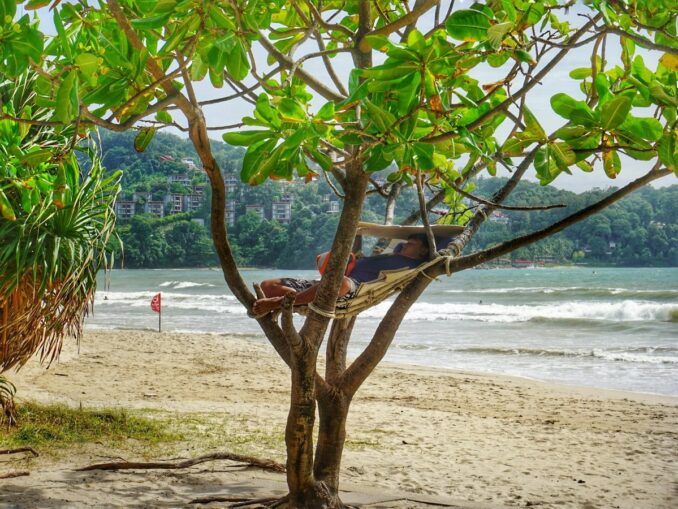
You’ll see red flags along the beaches warning people not to swim. Even without them, it’s clear that swimming in these conditions isn’t much fun.
There’s also the very real risk of being caught by a particularly large wave and swept straight out into the Indian Ocean
But we’re getting a little ahead of ourselves.
So, let’s begin.
Patong
A resort known far beyond Thailand’s borders, Patong is home to what is widely considered the island’s most popular and usually busiest beach. It’s located along a large bay on Phuket’s west coast.
Patong is a wide stretch of golden sand about 4 km long. It’s said that the northern end is a little less crowded. The sea is generally clean almost all the time — even if you visit Thailand in December, you’re unlikely to have any complaints about this particularly important aspect of your holiday.
However, it’s worth remembering that Patong is rightly regarded as the center of Phuket’s nightlife and is generally a noisy, lively place. So if you’re looking to party and let loose, this resort’s beach is just the place for you.
Incidentally, Patong is also where you’ll find some of the cheapest hotels in Phuket. Some of them, such as Villa Residences Resort, offer not only clean, comfortable rooms but also exceptionally attentive service from the owners.
Tri Trang
Located close to Patong, Tri Trang is much quieter, cleaner, and more peaceful. It’s also worth noting that the beach faces south rather than west, which helps it avoid strong waves even during the summer months.
There are a few drawbacks, though:
- reviews often mention that the water can be a little murky
- large rocks on the seabed
- very shallow water close to the shore,
all of which can make swimming less comfortable.
The Tri Trang Hotel no longer exists; it didn’t survive the COVID-19 pandemic. So access to the beach is free.
Getting there by public transport isn’t particularly easy. But renting a scooter (from 250-300 baht per day) or a car (from 600-700 baht) gives you much more freedom to get around.
We’ll cover the driving licenses you need to rent a scooter or car, along with the rules of the road and driving conditions in Thailand, in a future article.
Surin and Bang Tao
North of Patong, also on Phuket’s west coast, you’ll find the well-known Kamala Beach, famous for its clean, calm waters and a 2-kilometer stretch of sand.
Farther north lies the magnificent Surin Beach, where some of the island’s most expensive hotels are located!
If you start looking around three to four months before your trip, you can book a room without breaking the bank. One of our favorites, for example, is Surintra Boutique Resort, just a five-minute walk from the beach. Breakfast is included in the modest room rate, and the apartment sizes are impressive — around 50 m².
Bang Tao Beach is probably the longest beach in Phuket. That’s right — it stretches for 8 km. However, not every part of it is suitable for a relaxing holiday.
The southern end of Bang Tao can be dirty and noisy, so it’s hardly surprising that some reviews advise against staying there — otzovik.com/review_14419206.html. Its central section, on the other hand, is excellent for a family holiday: a mass of good hotels, gently sloping entry into the water, and shade from the coniferous (!) trees are all features that families with children will appreciate.
The northern end of Bang Tao is ideal for those willing to forgo modern conveniences in exchange for getting as far away from civilization as possible. In short, it seems tailor-made for anyone seeking solitude and genuine relaxation.
Airport Beach
Farther north, not far from Phuket International Airport, lies the beautiful and relatively uncrowded Nai Yang Beach. Even Thai locals like to come here, as do tourists who would rather enjoy some peace and quiet than spend their holiday in a noisy crowd.
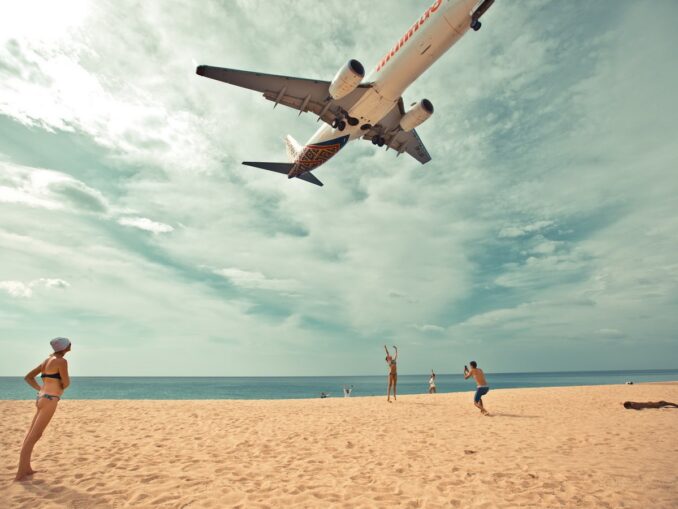
Mai Khao Beach, north of Sirinat National Park and the international airport, is particularly popular with photography enthusiasts looking for spectacular shots. And it’s easy to see why — planes come in to land right over your head!
The beach is so long, however, that if you walk just half a kilometer away from the crowds of young people, you’ll find completely unspoiled stretches of sand. These areas have no facilities or other modern conveniences and, unfortunately, no lifeguard stations either.
Karon
Karon is Phuket’s second-largest beach after Patong — Wikipedia reports that it stretches for approximately 3,350 meters.
It’s known as a «singing beach» because its quartz sand squeaks underfoot as you walk. The seabed slopes down fairly quickly, and an adult needs to walk around 15–20 meters to reach water deep enough to come up to their neck. On the plus side, the seabed is flat, with very few rocks.
One of Karon’s defining features is its large waves. You can encounter them not only when visiting Phuket in August, but also during other months of the year.
As a result, the beach is usually much less crowded than neighboring Patong and Kata. Naturally, it is also popular with surfers.
Kata Beach
Phuket’s second-most popular beach and the first one that comes to mind when discussing family holidays. It’s located south of Patong and Karon, on the same west coast, not far from the island’s southern tip. The beach has two sections: Kata Yai in the north and Kata Noi in the south, separated by a headland.
It’s practically ideal for a family holiday with preschool-aged children. The seabed slopes gently, and the water only gets deep after around 40–50 meters. There are very few rocks!
When choosing accommodation in this area, it’s best not to stay right on the beachfront. You’ll find cheaper and quieter options a little farther inland. If you don’t mind walking to and from the beach every day (around 15 minutes each way), we recommend checking out Kata Tranquil Villa — SHA Plus. For a surprisingly low price, you can rent an entire two-story villa.
Excellent tourist infrastructure and plenty of water activities are major advantages of Kata Beach. However, those who value privacy or simply crave a little peace and quiet may not feel entirely comfortable here.
Just offshore from Kata Yai Beach, you’ll see a rocky, forest-covered island. It looks wonderful in photographs, especially at sunset.
You can read more about Kata Noi Beach here: www.tourister.ru/world/asia/thailand/city/karon-beach/beachs/3356.
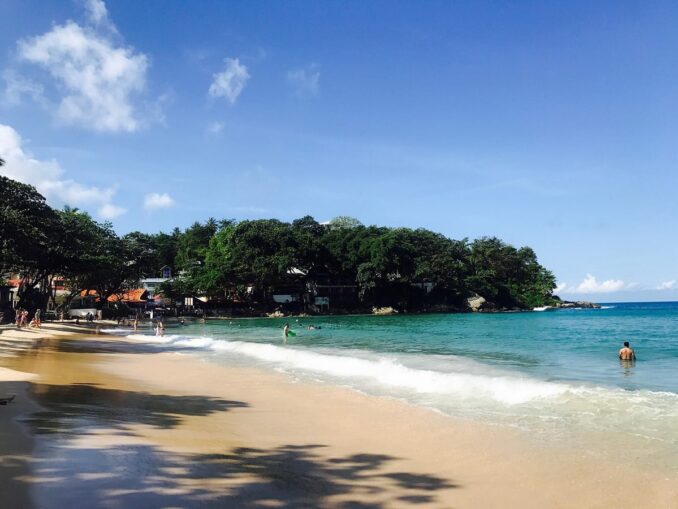
During the rainy season, Kata Beach also becomes very popular with surfers, as the wind drives large, powerful waves toward the shore.
Both Karon and Kata have areas with strong rip currents. This is something to keep in mind if you enjoy swimming out into deeper water.
South and East Coasts
This coastline is more rugged, with beaches tucked away in small bays. As a result, the beaches tend to be relatively small and may well become overcrowded in the coming years.
Nai Harn
The excellent, often calm beaches of Nai Harn and Ya Nui are located close to Phuket’s southernmost tip.
Nai Harn is particularly well suited to families, as it sits in its own very cozy — though relatively small — bay. European retirees also love spending their holidays here.
And it’s easy to see why: white sand, crystal-clear water, and breathtaking sunsets — what more could you ask for? However, reviews suggest that in the post-pandemic years, Nai Harn isn’t quite what it used to be, as too many visitors have discovered it. One reason for its growing popularity is the fact that, despite the «rainy season,» waves aren’t an everyday occurrence here!
If you’re still willing to take a chance and give it a try, we’d recommend the excellent, affordable Navatara Phuket Resort, which offers free transfers to Nai Harn Beach.
Nearby, just half a kilometer away, is the small Ao Sane Beach, a hidden spot nestled among coastal rocks. Farther south lies Ya Nui, considered one of the best places in Phuket for snorkeling.
The water here is wonderfully clear, and the beach itself is usually far from crowded! However, some relatively recent reviews have mentioned that Ya Nui has become a little dirty…
Here — pros and cons of vacationing in Phuket in December.
Ao Yon
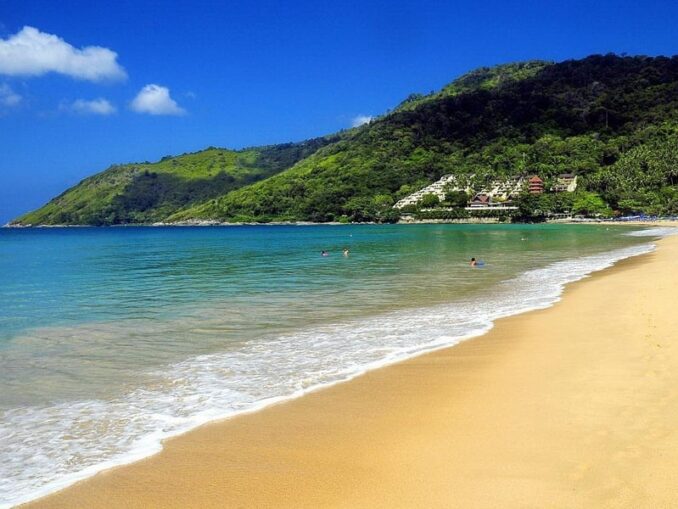
Ao Yon is known as one of the few beaches in Phuket where strong waves are virtually unheard of. It’s located in a bay sheltered by hilly headlands on the island’s east coast, making it possible to swim here even in July.
Ao Yon is suitable for families with children, as there are no dangerous rip currents here
Among the affordable, good-quality hotels in the area, we’d recommend Bandara Phuket Beach, located right on the beachfront. Reviews praise its attentive, friendly staff, «excellent breakfasts,» and… rooftop swimming pool.
- The best beach resorts in Thailand
- When is the best time for a beach holiday in Thailand?
- What tourists are not allowed to take out of Thailand
© Eurotraveler