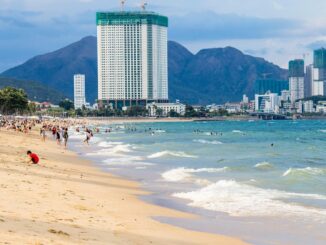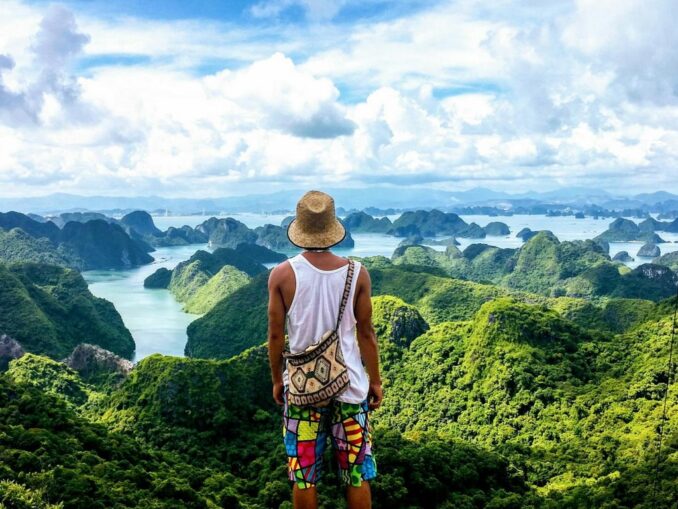
What to Pack for Vietnam: a list of essentials every traveler should bring for their holiday. Documents and clothing, medicines and money. Do you need vaccinations before traveling to Vietnam? Where should you eat, what should you watch out for? What language should you use to communicate with locals, how should you get around, and what are the approximate prices of food and transport? Plus, what you absolutely cannot bring into Vietnam and what is subject to restrictions — all covered in this detailed Eurotraveler guide.
Vietnam is a popular beach holiday destination. And in recent years, tourists have increasingly been proving this with their actions. After all, the year-round warm climate and relatively low cost of living in this Asian country make it particularly appealing!
The weather in Vietnam during winter looks especially promising: with the arrival of December, the rains come to an abrupt end across almost the entire country. Temperatures, except in the north of the country (where it is cooler), hover around a comfortable 26–28 °C. As for the water in the South China Sea, it is getting so warm that you’ll want to swim all day long.
It’s not just a holiday — it’s a postcard-perfect escape!
- Back in Europe and most of North America, blizzards are raging at the time, and people are wrapped up in their down jackets.
- While you are spending most of your time in next to nothing, being likely underdressed than overdressed!
And, for example, you can celebrate New Year’s Eve in Vietnam in a truly unusual setting: beneath swaying palm trees rather than next to a plastic Christmas tree.
Much More
Vietnam is also quite welcoming to holidaymakers in March and April. Plenty of sunshine, little rain, and swimming is possible almost everywhere.
The only exceptions are the northern regions: on Cat Ba Island, early spring in general, and 8 March in particular, can be rather chilly.
From around May and onwards, heavy rain begins to fall across most of the country’s top resorts. And apart from a few regions, this rainy spell continues until the dry season arrives in Vietnam.
Though, the dry season here doesn’t begin at the same time along the entire coastline…
But we’re getting carried away trying to convince you to visit! This article is primarily about what to pack for a trip to Vietnam when you’re planning to move there spend a holiday.
However, let’s start with a slightly different question. As there is quite important to decide — do you really need to get
Vaccinations Before Your Trip?
And if so, which ones?
Vietnam is considered an exotic and (for now) relatively underdeveloped Asian country. So it’s understandable that some travelers want to take every possible precaution.
They scour the internet for information about dangerous infectious diseases, while seriously considering getting vaccinated before traveling to Vietnam to avoid bringing home an unpleasant «souvenir».
However, in this particular case, there’s no need to worry excessively if you mainly plan to stick to the beaches at well-known resorts. And only occasionally venture out on an excursion.
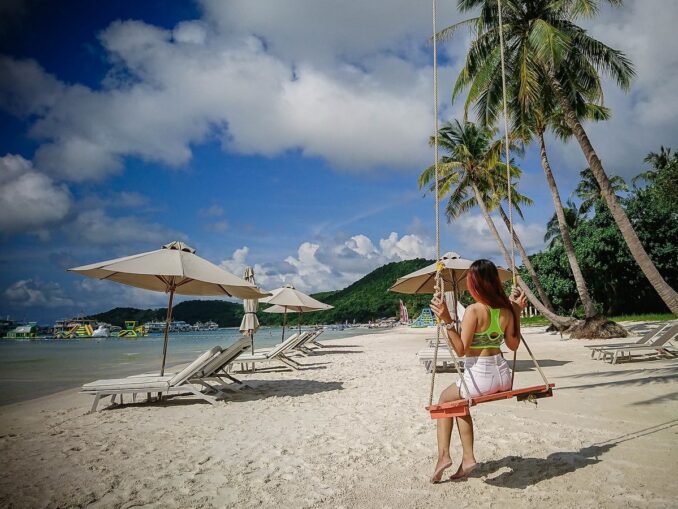
In other words, if you’re not planning to explore the local jungles independently, embark on a long journey along the Mekong, or venture into caves, you can pretty much put the whole vaccination question out of your mind. It may also reassure you to know that most beach holidaymakers don’t take any special vaccination precautions at all before visiting Vietnam.
- A measles vaccination is generally advisable, given the increasing prevalence of the disease worldwide.
Even if you’re traveling somewhere in «civilized» Europe, let alone Asia, it’s worth keeping that in mind.
- There is no vaccination against dengue fever, although the chances of contracting it in Vietnam’s tropical regions are relatively low.
By the way, dengue is transmitted by mosquitoes with white spots on their bodies.
- As for malaria, effective vaccines are now widely available.
There are two vaccines: Mosquirix has been around for quite some time, while Matrix-M was developed only a couple of years ago…
Should you get vaccinated against Japanese encephalitis, a serious disease transmitted by mosquitoes, before traveling to Vietnam? And what about hepatitis A, commonly known as «the disease of dirty hands»?
That’s a decision everyone needs to make for themselves!
According to
the official WHO website, Japanese encephalitis is a relatively rare mosquito-borne viral disease. Around 70,000 cases are reported in Asia every year, with a very high mortality rate of up to 30%.
- There is no specific treatment, but highly effective vaccines are available — www.who.int/ru/news-room/fact-sheets/detail/japanese-encephalitis.
As for hepatitis A, good personal hygiene, drinking bottled water, and making sure fruit and vegetables are thoroughly washed provide fairly reliable protection. However, this doesn’t completely solve the problem of eating at Vietnamese cafés and restaurants, where hygiene standards are not exactly renowned for being exemplary…
- In any case, make sure you take out travel medical insurance before visiting Asia!
That’s because getting the right professional treatment promptly, without having to pay for it out of your own pocket, greatly increases the chances of a full recovery without complications.

What Documents to Bring to Vietnam
This is all fairly straightforward and self-explanatory. Still, let’s go through the list:
- Your passport, valid for at least 6 months from the date of entry.
- Flight tickets (save them on your phone). Ideally, have access to details of your return or onward flight, as you may be asked to show them when checking in or going through border control.
- Proof of accommodation — recommended.
- Travel medical insurance — recommended. A travel insurance policy is not a general mandatory requirement for tourist entry, but taking one out is strongly advised. Medical treatment for foreigners in Vietnam can be expensive, and you never know when you might need it — whether you step on a sea urchin or eat something dodgy at a street café.
- Driving license. If you plan to rent a car or motorbike, bring both your national driving license and an International Driving Permit (IDP).
- Children’s documents. Your child will need their own passport and birth certificate (preferably the original or a certified copy). If the parents’ surnames differ from the child’s, there is a good chance you’ll be asked to show the birth certificate at border control.
Visas
As you probably know, Vietnam is one of the countries that can be visited in a visa-free mode. In 2026, citizens can stay there continuously for up to 45 days without a visa. Here is a list of countries available to exemption evisasvietnam.com/blog/vietnam-visa-exemption-list/.
- The trip must be for tourism purposes.
- And your passport must remain valid for at least 6 months from the date of entry.
If you wish, you can apply for a visa online for $25, allowing you to stay in Vietnam for up to 90 days (that’s the price of a single-entry visa; a multiple-entry visa costs USD 50).
Unfortunately, this «workaround» cannot be paid for using a bank card issued in Russia…
Money
Vietnam’s official currency is the Vietnamese dong (VND). Paying in the local currency is by far the most convenient option in cafés, shops, markets, taxis, and when booking excursions.
Russian tourists are better off bringing cash in US dollars or euros for their holiday in Vietnam. These can be exchanged for Vietnamese dong at banks and official currency exchange offices.
US dollars issued in 2013 or later (with the blue security ribbon) are traditionally the easiest to exchange at banks and currency exchange offices. However, older banknotes are usually accepted too.
- The main thing is to make sure they aren’t worn out or damaged.
1 USD equals 25,500-26,000 dong (exchange rate as of autumn 2026).
Vietnamese dong banknotes in denominations of 10,000 and above are made of polymer. That’s particularly handy in a tropical climate with its sudden, sometimes torrential downpours!
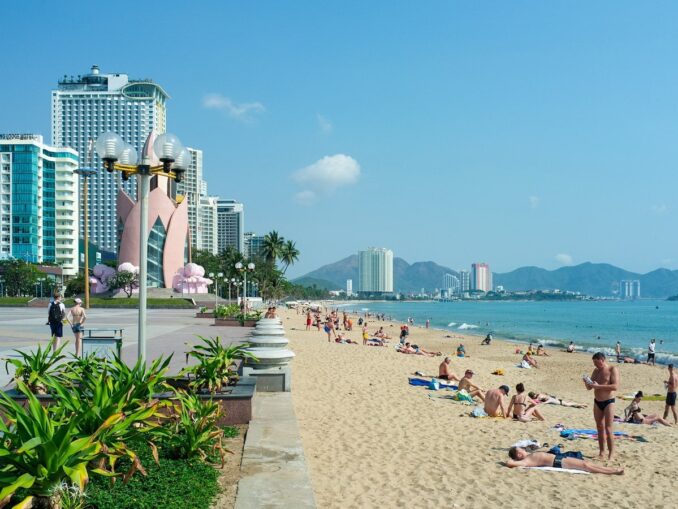
Approximate Prices in Dong:
- a restaurant meal: from 100,000,
- a meal or sandwich at an inexpensive café or fast-food restaurant: from 35,000-40,000,
- beer or coffee: from 20,000-30,000,
- local fruit: mangoes from 35,000 per kg, durian from 100,000 (although prices can be significantly higher during certain seasons), and pineapples from 20,000 each.
For more information on current prices, see vietnam.travel/things-to-do/currency-and-payments-vietnam/.
Medicines
We previously published a list of medicines to pack for a seaside holiday. It’s fairly general and therefore suitable for almost any trip. Whether you’re heading to Nice for some sunshine or traveling to the tropics.
To avoid repeating ourselves, let’s just say that basic medicines such as:
- activated charcoal,
- Enterosgel or Mezym,
- hydrogen peroxide or chlorhexidine,
- paracetamol and ibuprofen.
along with any prescription medicines you take regularly, should be packed for your trip to Vietnam regardless. The same goes for antibacterial plasters in case of scratches or cuts.
All of these items are relatively lightweight and won’t take up much valuable space in your luggage.
Leave other medicines, including antibiotics, at home. Self-medicating in Vietnam can do more harm than good. After all, chills and a fever, which in Russia might be the first signs of an ordinary, unremarkable cold, could indicate a much more serious illness in Southeast Asia.
If you start feeling genuinely unwell, don’t delay — see a doctor and use the travel insurance policy you arranged in advance!
Clothing
Packing nothing but beachwear for your holiday — shorts and shirts, swimsuits and sarongs, hats and caps — is all well and good. But if you’re planning to visit Vietnam’s mountains in winter or even a lovely city like Da Lat, a warm jacket certainly won’t go amiss.
That said, you’ll probably have one in your luggage anyway. After all, you’re hardly going to head to Nha Trang for a seaside holiday in January dressed entirely for the beach, are you?!
Food and Drink
In Vietnam, it’s safest to eat at your hotel, especially if you have a sensitive digestive system. And, in theory, the higher the accommodation’s standard, the safer the food is likely to be.
- There’s nothing wrong with trying local cuisine outside your hotel, though. Vietnamese food isn’t particularly spicy in the Thai style.
- Always wash your hands or clean them with wet wipes before eating.
Of course, none of this guarantees that you won’t pick up an infection — just as it doesn’t guarantee anything in Nice. Among the reviews of holidays in Vietnam, you’ll even find travelers complaining about severe food poisoning after eating an ordinary bread roll with no meat or cheese filling.
Naturally, wash all fruit thoroughly before eating, whether you’ve bought it at a market or in a shop. And tourists in Vietnam should drink bottled water only. Don’t even think about drinking from a local water source, even if the locals seem perfectly happy to do so.
Transport

Bus fares depend on where you’re traveling. Let’s take Nha Trang as an example.
Local city routes cost 8,000-10,000 VND. A public minibus (No. 3) will take you to Doc Let Beach (50 km, around 1.5 hours) for approximately 24,000 dong. A trip from Nha Trang to Da Lat (135 km) will cost around 210,000 dong or more.
Taxi fares start at 10,000 VND just for getting in. The rest of the fare depends on the distance traveled: approximately 14,000 per kilometre for short trips, dropping to roughly half that rate for longer journeys (from 31 km onwards). A sticker with the relevant fare information in Vietnamese is usually attached to the car’s dashboard.
For more details on taxi fares in Nha Trang, including transfers from Cam Ranh Airport, see nhatrangnotes.com/vn/taxi-nha-trang/.
Sea and Beaches
At many of Vietnam’s best-known resorts, the sea is often not quite as crystal-clear and turquoise as, say, the waters around Phuket in Thailand. It’s frequently a little murky. This is usually due not to sewage pipes near the beach, but rather to the abundance of rivers and streams that constantly stir up the seabed.
That said, you can still find places with beautifully clear water, even on mainland Vietnam. That’s precisely why Doc Let Beach is well worth visiting when you’re in Nha Trang.
- The coastal waters around the islands are usually exceptionally clear, particularly around southern Phu Quoc and the Cat Ba archipelago in Ha Long Bay.
The beaches are often enormous, but they’re not nearly as well maintained as those in Thailand. You may come across some litter, although local authorities and residents do make considerable efforts to keep it under control.
Communication
Not many people in Vietnam understand English, which is a bit surprising. And the further you get from your hotel, the more challenging things become.
So get those fingers ready and prepare to communicate mostly through gestures.
Excursions
Spending your entire holiday cooped up at a Vietnamese beach resort is a mistake. You’ll hardly get a feel for just how exotic this country really is. But there’s no need to go to the other extreme and try to travel the entire length of Vietnam in just two weeks either — new experiences aren’t always entirely positive.
A sensible compromise is to explore the surrounding area, either independently or with a guide.
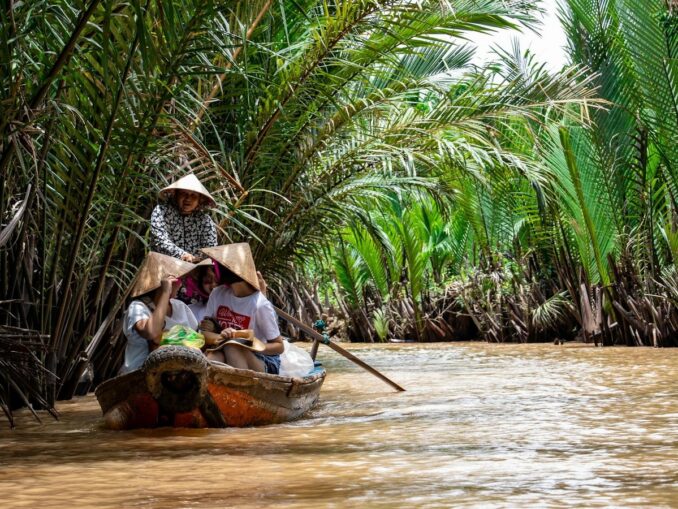
Just 20 km from the centre of almost any resort, you’ll find plenty of authentic local life and exotic sights. And if you dare to embark on a day- or two-day trip, you’ll have enough memories to last until your next holiday!
What You Cannot Bring into Vietnam
The first thing to pay attention to under the current regulations is:
Electronic Cigarettes and Vapes
Since 2025, Vietnam has had a complete ban on bringing these devices into the country. The ban covers the manufacture, sale, import, possession, transportation, and use of such products.
Therefore, tourists should not bring any of the following:
- electronic cigarettes and vapes;
- heated tobacco products;
- IQOS devices and similar systems;
- e-cigarette liquids;
- vape cartridges and consumables.
The Following Items Are Also Banned from Import
- Narcotics and prohibited psychoactive substances.
- Weapons, ammunition, and pyrotechnics (without special permits).
- Certain medicines.
Medicines
— this is one of the most important points travelers need to pay attention to. Vietnam regulates not only narcotic drugs but also certain psychotropic substances and precursor chemicals.
In particular, the following medicines require special attention:
- codeine-containing medicines;
- tramadol;
- diazepam;
- alprazolam;
- zolpidem;
- methylphenidate;
- medicines containing ephedrine or pseudoephedrine.
Important: not all of these medicines are completely prohibited. Limited quantities may be brought into the country for personal medical use, provided certain conditions are met:
| Category of medicines | Permitted quantity without a special permit |
| Narcotic medicines | Up to a 7-day supply |
| Psychotropic medicines and precursor substances | Up to a 10-day supply |
| Other medicines for personal use | Up to a 30-day supply |
A prescription is required for controlled medicines, and they must be declared at customs. The permitted quantity is calculated based on the dosage prescribed by your doctor. Larger quantities require prior authorization.
All medicines should also be carried in their original packaging, with clearly legible labels and expiry dates.
Not Prohibited, but Subject to Restrictions
| What You Can Bring | Conditions |
| Alcohol stronger than 22% ABV | Up to 1.5 litres duty-free |
| Alcohol with an ABV of up to 22% | Up to 2 litres |
| Beer and other alcoholic beverages | Up to 3 litres |
| Cigarettes | Up to 200 cigarettes |
| Cigars | Up to 20 cigars |
| Tobacco | Up to 250 g |
| Foreign currency in cash | Amounts exceeding USD 5,000 must be declared |
| Vietnamese dong in cash | Amounts exceeding VND 15,000,000 must be declared |
For more information, visit vietnamembassy.ca/welcome-to-vietnam/customs-vacinnation-medication-and-drones-regulations/.
You may also find these other articles of ours useful:
- What to See in Vietnam: The Must-Visit Attractions
- Is Vietnam Worth Visiting for New Year’s Eve, and Where Should You Go?
© Eurotraveler