Top 5 Must-See Attractions in China that every traveler should visit. Where are they located, how can you get there from Beijing, and what should you know before going? Eurotraveler has put together a list of China’s most fascinating sights — truly one of a kind. We’ve even gathered a few facts to explain just what makes them so unique!
As everyone knows, China’s appeal as a tourist destination — grows with each passing year. Yet this doesn’t stop it from remaining something of a «Terra Incognita.»
A land that is every bit as exotic as it is unfamiliar to European travelers…
Of course, sooner or later, tourists will inevitably discover this destination.
- Much to their surprise, they’ll find that January weather in Beijing, as well as the weather in other winter months, is far from hopeless. Quite the opposite, in fact, even surprisingly promising.
- And if you’re heading to Shanghai, for example, spring is the best time to go — sometime in April.
But that’s for another time. For now, traveling to China remains quite an unusual undertaking.
Thankfully, it’s no longer an extreme adventure. But it’s still an exotic experience that gets the adrenaline flowing.
Part of the reason is that many people in Europe and America know very little about the traditions and customs of the «Middle Kingdom.» Few have any idea which Chinese attractions deserve a place on that much-talked-about list of the world’s best.
We’ve decided to clear up some of the confusion with a short, easy-to-digest guide!
What to See in China (to Get Started)
And at the very top of any such list, you’ll inevitably find
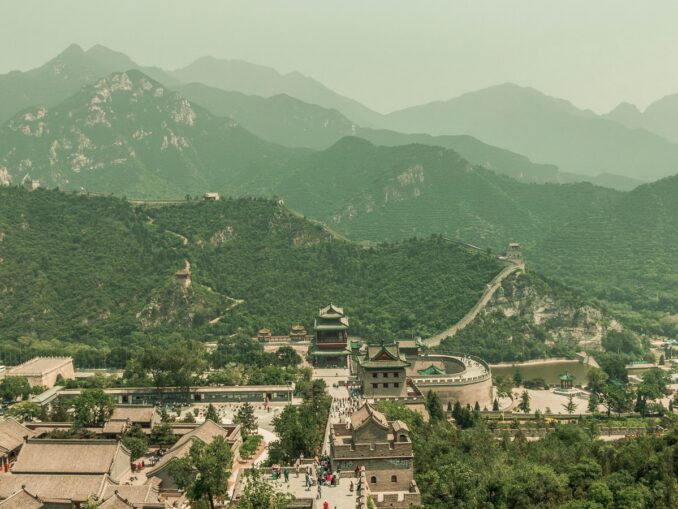
The Great Wall of China
The crowning achievement of generations of Chinese builders, this brick fortification stretches for more than 20,000 kilometers. A monumental structure that was arguably pointless in strategic terms (any wall that doesn’t form a complete loop can simply be bypassed), it was built to protect the millennia-old empire from Mongol raids coming from the north.
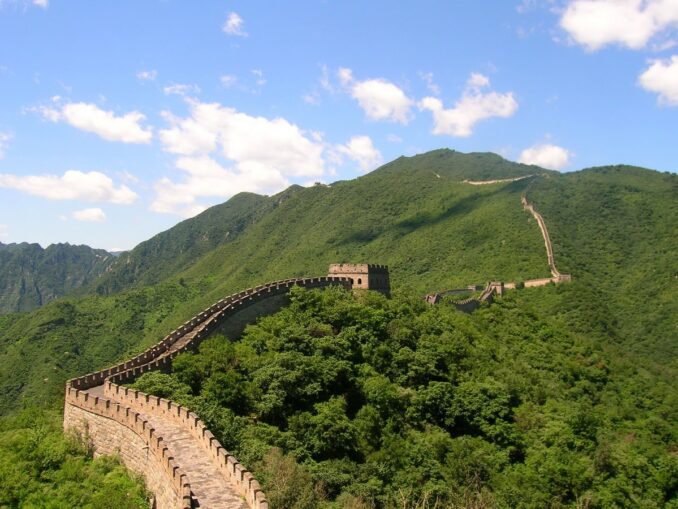
History doesn’t tell us how many soldiers would have been needed to defend the entire length of the Great Wall — the number would simply have been staggering.
- In any case, determined enemies could easily find ways to get past it.
- They could simply climb over an unguarded section using ropes under the cover of a moonless night. Or, if they couldn’t be bothered to stay awake, they could bribe a couple of guards in advance to make sure they were several kilometers away from the intended «breach».
None of this takes away from the fact that the Great Wall is an extraordinary feat of engineering. And, of course, it’s the first place any tourist should visit in China.
After all, it’s a monumental testament to the hard work and determination of the Chinese people!
This remarkable defensive structure took two thousand years to build. Its total length exceeds 21,000 kilometers when its numerous branches are included.
Length
The main, central section of the Great Wall, which separates China’s inland territories and stretches from the Yellow Sea in the east to the impassable sands of the Gobi Desert in the west, is more than 2,000 kilometers long.
From a strategic standpoint, building the wall can be seen as a fundamental mistake.
- And it wasn’t just because around 2 million workers died during its construction — their remains, incidentally, were buried in the foundations of the very structure they had helped build.
- More importantly, defending the entire wall would have required an enormous army numbering in the hundreds of thousands. Even then, there would have been no guarantee against an enemy breakthrough.
The Great Wall is between 5.5 and 6.5 meters wide at its base, allowing five columns of infantry to march along its top. It stands between 6 and 10 meters high, while its watchtowers — positioned so that at least two neighboring towers were always within sight of each other — reach a height of 12 meters.
Some towers that existed before the wall was built were incorporated into the structure. You can recognize them by their narrower-than-standard width. At its widest point, the wall exceeds 9 meters.
The first stones were laid as early as the 4th century BC, during the period known as the Warring States, long before China was unified into a single empire under the Qin dynasty. Under China’s first emperor, Qin Shi Huang (259–210 BC), construction of the wall was extended.
The builders faced some particularly challenging and labor-intensive tasks. At the time, sections were being constructed along mountain ridges and across valleys and mountain passes.
The Great Wall Continued to be Expanded
in later centuries, under successive dynasties, with construction coming to a halt only during the Three Kingdoms period. The project was finally completed under the Ming dynasty (1368–1644), almost two thousand years after it had begun.
Today, only a relatively small number of sections of the Great Wall remain in good condition. Over the centuries, much of the structure was dismantled and, much like the Roman Colosseum, used as a source of building materials by later generations.
Other sections fell into disrepair or were completely forgotten after losing their defensive purpose. Archaeologists are still discovering more and more stretches belonging to the original structure.
- The Great Wall of China was added to the UNESCO World Heritage List back in 1987.
- Later, it was also included (not literally, of course — just try moving a structure that massive!) in the unofficial list of the New Seven Wonders of the World, following a public vote that concluded in 2007.
The other landmarks on this prestigious list are the Colosseum in Italy, Petra in Jordan, the Taj Mahal in India, Chichen Itza in Mexico, Christ the Redeemer in Rio de Janeiro, Brazil, and Machu Picchu in Peru.
The section of the wall near Mount Badaling and the so-called Mutianyu section can both be visited on a day trip from Beijing, China’s capital. They’re just 50 and 70 kilometers away, respectively. The first section is much more popular than the second, so it’s best to avoid it during peak season, when the crowds can get overwhelming.
The Forbidden City in Beijing
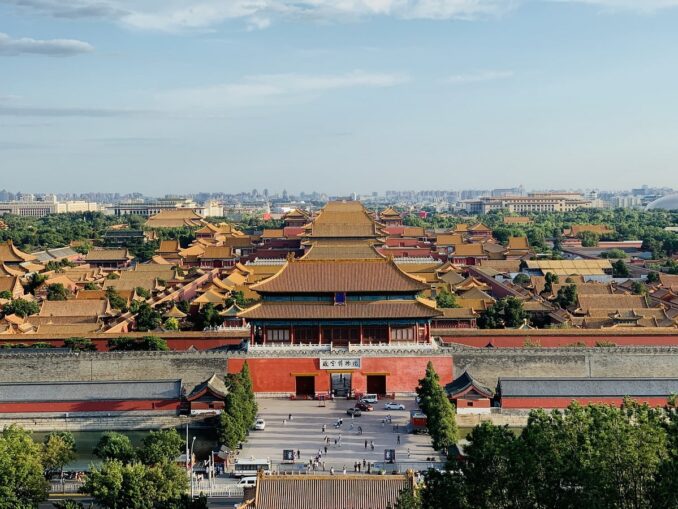
The residence of China’s emperors, who ruled from the 15th through the 20th century, naturally ranks among the country’s finest attractions. Both the Ming and Qing dynasty rulers lived here.
Construction of the Forbidden City began around the time the Chinese had had enough of building the Great Wall. They had come to realize that, on the whole, it was a rather pointless drain on resources.
Instead, they decided to focus their efforts on building a residence for the emperor, the «representative of God on Earth.»
- The result was the Forbidden City, now also commonly known as the Gugong Palace — the largest palace complex in the world.
- Within its walled (yes, another wall!) grounds, measuring 961 x 753 meters, stand numerous buildings and pavilions containing around 8,000 individual rooms!
It’s pretty obvious that if you’re planning a trip to Beijing, you’ll have no trouble finding your way to its main attraction — one of China’s most iconic landmarks. So there’s no need to dwell on the details here. Let’s move on to the next unique destination.
Potala Palace in Lhasa
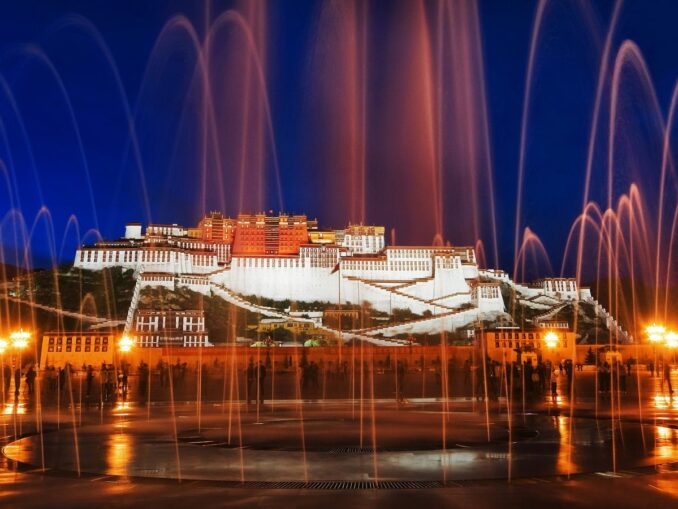
Yes, this enormous Buddhist temple complex and former principal residence of the Dalai Lamas is located in Tibet, but within China’s borders. Built at an altitude of 3,700 meters above sea level, it is the highest palace in the world — quite literally.
- The Dalai Lama, the spiritual leader of Buddhists worldwide, no longer lives here, however.
- In 1959, he left the palace and the country, which had been taken over by Chinese Communists, following the failure of the uprising against the occupiers.
Despite this, Potala Palace in Lhasa has been included in the UNESCO World Heritage List because of its outstanding historical and architectural significance. To get to Lhasa, you’ll need to take a three-hour flight from Chengdu, the capital of Sichuan Province.
And that brings us nicely to the next remarkable destination on our list of the five most important places to see:
Giant Panda Breeding Research Base
in the city of Chengdu. As everyone knows:
- These adorable black-and-white bears are found in the wild only in China.
- What’s more, every single panda belongs to China. Those you can see in zoos around the world are there under loan agreements.
It’s hardly surprising that the panda has become a symbol of the country and one of China’s most recognizable attractions! Failing to see these animals in their natural homeland would be a real shame.
Incidentally, Chengdu is the capital of Sichuan Province, a «small town» with a population of 15 million. You can get there by traveling from Beijing, which is more than 1,500 kilometers away — by plane or train.
Huangshan or the «Avatar Mountains»
For our final recommendation, we’d like to offer you a choice of two excursions. You can visit the incredibly photogenic Huangshan Mountains (the «Yellow Mountains») in Anhui Province or head to Zhangjiajie.
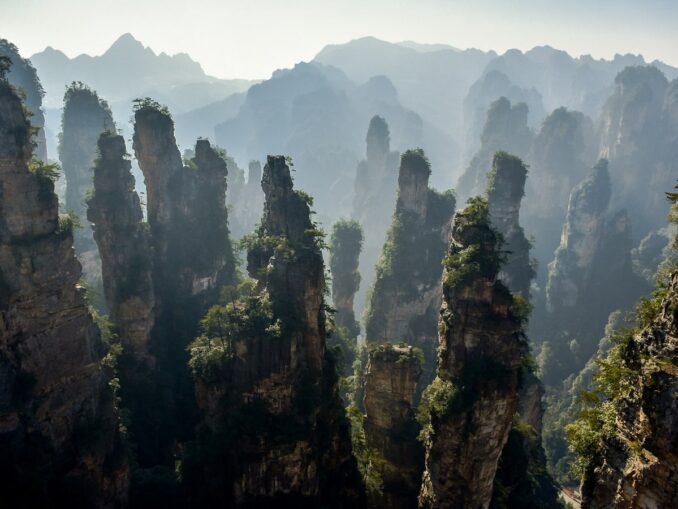
The latter are also known as the «Avatar Mountains» because the floating rock formations featured in James Cameron’s blockbuster of the same name were filmed in Zhangjiajie National Forest Park, in Hunan Province.
- Both Huangshan and Zhangjiajie are incredibly beautiful.
- Both are also protected from destructive human activity by UNESCO (Huangshan in its own right, and Zhangjiajie as part of the Wulingyuan Scenic Area).
Keep in mind that these parks, just like China in general, are best avoided during public holidays and nationwide vacation periods, when visitor numbers soar. But these sights are absolutely worth seeing!
What’s more, Huangshan is located just 120 kilometers from Xi’an, famous for its Terracotta Army. As for Zhangjiajie, the most convenient way to get there (although it’s still a long journey) is from Shanghai. This is another Chinese megacity that deserves a place on your itinerary.
- Is September a good time to visit Beijing?
- The cheapest way to travel from Beijing to Shanghai
- What to see in Shanghai in January
© Eurotraveler