Shanghai in January 2027 — is it worth visiting? Weather and traveler reviews, air temperatures, what to wear, flight and hotel prices. What to do and see in Shanghai throughout January, where to go on day trips nearby and, more broadly, what to explore in China — Eurotraveler has all the answers.
We won’t pretend that January is the best month of the year to visit Shanghai. Quite the opposite: midwinter in this Chinese metropolis is predictably rather cold, making it hardly the time to stroll around in summer clothes (or, in most cases, even autumn outfits).
That said, January isn’t the worst time to travel here either. After all, you can still enjoy all the main attractions and experiences that make people travel to distant countries and cities in the first place.
- You may even manage to «exceed your target» and see more sights than you originally planned.
- That’s because there won’t be many things getting in your way, and the weather won’t cause too much inconvenience.
There is really just one thing to keep in mind: you’ll need to check the forecast and choose your outfit based on what «the coming day has in store for you.»
Good to Know
Have you never considered visiting China, and Shanghai in particular, in January? Well, it’s never too late to start.
Especially now, when the «Middle Kingdom» is gradually opening up to the world! Traveling there is no longer seen as something not only exotic but also extremely difficult and even dangerous.
Besides, you can always visit China in winter as a stopover on your way somewhere else. Why not make it part of a longer trip?
After all, the weather on Hainan Island in January is perfect for a beach holiday. And that’s without even mentioning destinations farther south.
From Nha Trang in Vietnam to Phuket, and certainly not forgetting Phuket and the other resorts in Thailand, midwinter is an ideal time to enjoy a vacation in these places!
Shanghai Weather in January
Judging by the meteorological statistics, it’s actually very good. From a northerner’s perspective, it’s downright wonderful.
What else could you call it when temperatures in Shanghai at the beginning of January range from 8 to 15 °C? In some years, they even climb to 20 °C!
- But statistics are one thing, and how the weather actually feels is another!
- The thing is, because of its proximity to the coast, Shanghai is almost always excessively humid.
And this particular combination can make you shiver and feel chilly, even when temperatures are above freezing. Especially if you decide to take a cruise on the Huangpu River or join a lengthy sightseeing tour of the city…
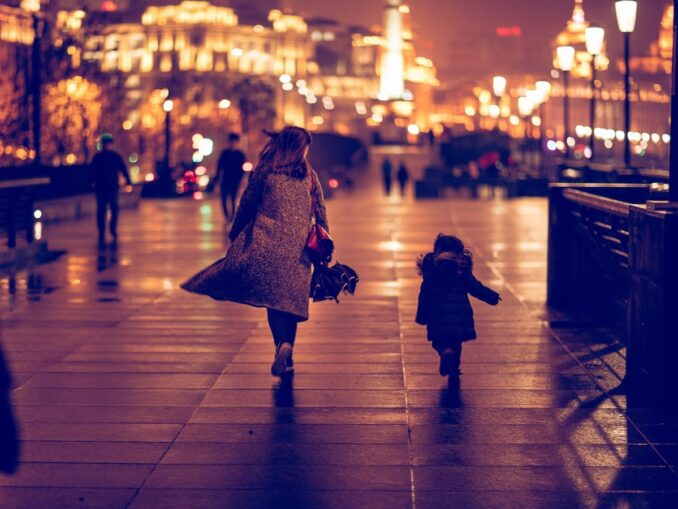
Bear in mind that daytime temperatures can drop to 4-7 °C, while nighttime temperatures may fall to just 0-5 °C.
The weather in Shanghai gets colder in the second half of January. Average temperatures drop below 10°C and sometimes even below 8°C, with nighttime frosts also possible.
It doesn’t happen every year, but temperatures around freezing have even been recorded during the daytime toward the end of January. Still, this isn’t a regular occurrence: the following days may bring almost springlike weather, with temperatures climbing to 12-15°C.
Yes, all this sounds rather unpredictable. And it means you’ll need to adapt.
But if you pack warm enough clothes (rather than relying exclusively on lightweight mid-season outfits), you’re unlikely to suffer from the cold and damp.
And if you decide to travel to Shanghai from Beijing, where January is considerably colder by default, you certainly won’t freeze. As you are already be prepared for genuinely wintry conditions!
Precipitation
Humidity is high, but rain and snowfall in Shanghai throughout January are relatively rare. Overcast days, however, are much more common than sunny ones.
- And there’s a good chance you’ll encounter thick fog at least once during your trip (even short — up to 3-4 days).
On January 1, the sun rises over Shanghai shortly before 7 a.m. and sets below the horizon at around 17 o’clock (5 p.m.) As the month progresses, daylight gradually increases: the sun rises earlier and sets later.
Daylight therefore lasts from approximately 10 hours and 12 minutes to 10 hours and 42 minutes — a very decent amount for midwinter. This gives visitors plenty of flexibility when planning their time and allows them to see the most interesting places in Shanghai and its surroundings.
What to Wear
And once again, this is a key consideration. Underestimating the importance of warm — and preferably layered — clothing can ruin your trip.
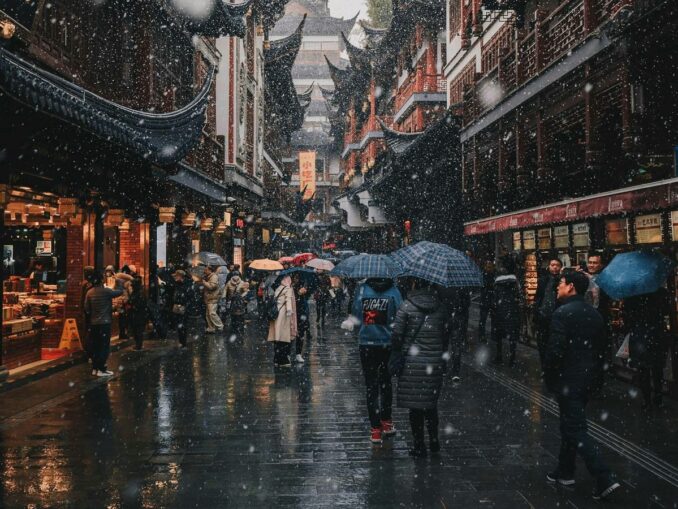
For example, in this travel review (a very informative one, by the way), you can read about how expectations of warm weather turned out to be completely at odds with reality. As a result, the travelers «were freezing their tails off» and tried to spend as much time as possible in their hotel in the mornings.
That’s why, in January, it’s best to wear sturdy, waterproof, lined jackets with hoods in Shanghai. Ideally, you should have thermal underwear and a thick sweatshirt or sweater underneath.
Trainers will do just fine for footwear. However, if you’re planning to travel somewhere in central China after Shanghai rather than heading to the southern beach resorts (the Huangshan Mountains or Zhangjiajie, for example), it’s better to bring warm, comfortable trekking boots that fit you well.
- And, of course, don’t forget to pack a hat, scarf and gloves.
- You’ll definitely find them useful in January.
An umbrella can also come in handy from time to time… As for the other things worth packing for a trip to China, we’ve covered them in detail in another article.
Prices
We’d love to say they’re low, but unfortunately, that’s not the case yet. And it’s not just that flights to Beijing become outrageously expensive over the New Year holidays. The problem is that they remain expensive even after the period is over.
At least if you want to fly direct, you’ll have to pay a substantial amount. A flight from Europe to Shanghai after January 10, with a return a week later, will cost at least €700 (including or excluding checked baggage — it may vary).
As for hotels in Shanghai, their average prices are roughly on a par with those in Beijing. Perhaps just a little cheaper.
So, in January, you can expect to pay around €80-90 per night for double room to stay near the city center, not far from the famous Bund waterfront (Waitan).
We would especially recommend Holiday Inn Express Shanghai on The Bund, which looks downright «affordable» compared with similar hotels. Breakfast is included in the room rate by default. This can actually save you quite a bit of time, as there’s no need to rush out in the morning looking for somewhere to eat.
Another good option is Magnificent International Hotel — not quite as well located, but way more cheaper…
Guided Tours
Many visitors can also afford to join a guided walking tour of Shanghai. Or, if you’d rather go with the cheapest option, take a river cruise.
A 2.5-3-hour guided walking tour of the city in winter costs no more than €30 per person. A cruise on the Huangpu River will set you back €20 or more (dress warmly — it can get damp and chilly out on the water).
Things to Do
It’s been said before that you can explore Shanghai and its surroundings, even in considerable detail, in just 3 days — 4 at most. And while we have no trouble agreeing with that, we’d also suggest setting aside a couple of extra days to explore China’s interior.
And, of course, you’ll need another 4-5 days to see Beijing. Equally, if you’re arriving from there or decide to visit after your stay in Shanghai.
In any case, you’ll need to plan your travel itinerary well in advance to make sure you have time to see all the interesting places in Shanghai in January (perhaps as part of an organized tour).
- Some travelers head straight out of the city, but traditional sightseeing routes usually begin with a visit to the Bund.
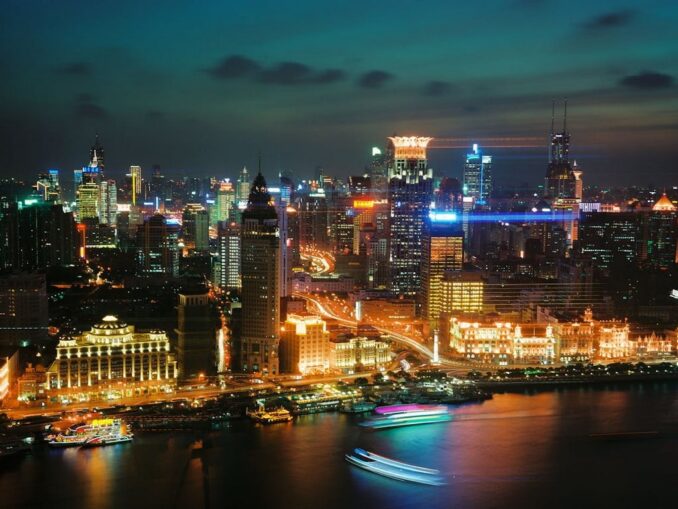
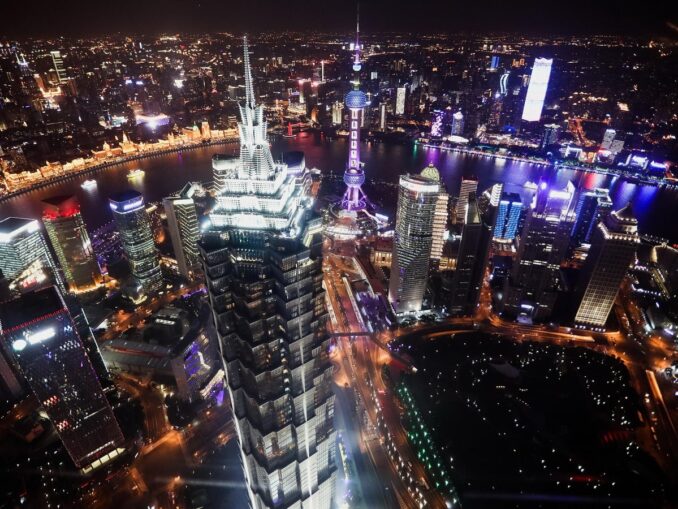
- This is where you’re supposed to spend several hours admiring the European-style architecture and taking plenty of photos of Shanghai’s business district, Pudong, across the river.
The skyscrapers look particularly atmospheric at dusk and after dark, so keep that in mind!
Virtually every travel guide also recommends visiting an observation deck to take in the vast city from above (yes, even when it’s shrouded in fog).
If you’re a fan of super-tall buildings, you should set your sights on the Shanghai Tower, the world’s second-tallest building after Dubai’s Burj Khalifa. But many tourists also make their way to the city’s photogenic TV tower, whose rather unpretentious name is the «Oriental Pearl».
Visitors look for the best angles to take selfies with it in the background. And then, of course, they head up to enjoy the panoramic views…
Must-See Places
You simply can’t leave Shanghai without taking a walk along Nanjing Road, which lights up like a Christmas tree during the New Year celebrations. This pedestrian street is home to some of the city’s most expensive shops and boutiques, as well as restaurants where it’s easy to spend a considerable amount of money.
You should also visit Shanghai’s French Concession in January, an area that has retained its distinctly Parisian charm to this day.
- And be sure to seek out the much more authentic, distinctly Chinese neighborhood of Tianzifang.
- It’s full of souvenir shops selling handmade goods, as well as little Chinese restaurants (here’s what to eat in China).
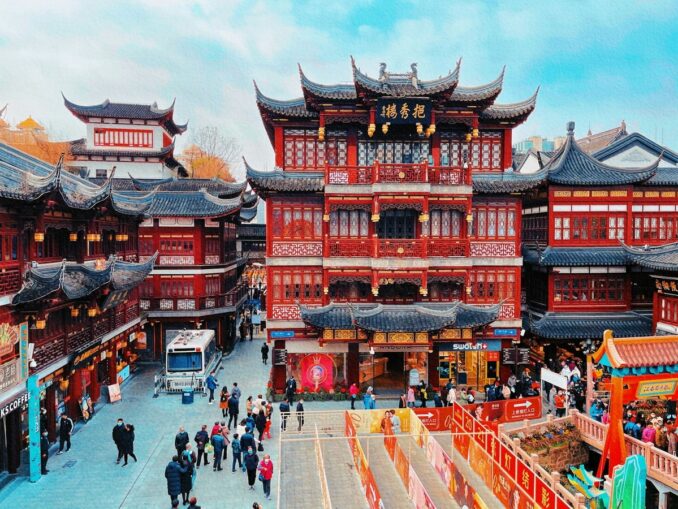
Even in winter, Shanghai’s «Garden of Happiness», Yuyuan Garden, is sure to enchant you. Designed according to the principles of feng shui, it’s a place that seems perfectly capable of helping visitors leave at least some of their negative energy behind.
If you’re visiting Shanghai with children, you’ll almost certainly spend a day at the local Disneyland. It’s said to fall somewhat short of its American counterpart in terms of the number and quality of attractions. Nevertheless, it can still provide plenty of wonderful memories for children and adults alike…
Where to Go on Day Trips
Of the relatively nearby destinations, we’d recommend two.
The first is Zhouzhuang, often called the «Venice of Shanghai». This village has stood amid a network of canals for centuries and has retained many of its original features.
The second is the classical gardens of Suzhou. There’s hardly anything that needs adding here: this is a UNESCO-protected site and, by general consensus, one of China’s major attractions.
As for longer trips, a journey from Shanghai to the Yellow Mountains, or Huangshan, is relatively easy to arrange.
- However, getting there will require a couple of transfers.
- First, take a train to Huangshan Railway Station (formerly known as Tunxi), then catch two buses (a regular service followed by a shuttle) to the lower cable car station.
You can read an excellent travel review with plenty of photos about visiting the Huangshan Mountains here: otzyv.ru/review/224282/
You can also travel from Shanghai to Zhangjiajie (the staring point to «Avatar Mountains»).
To reach the famous place, you need to take a direct train (to Zhangjiajie West) first, a journey will lasts around 7 hours. Once there, head to the city’s bus station and transfer by a regular bus to the village of Wulingyuan.
- The top places tourists should see in China
- The best and worst months to visit China
- Is Phuket worth visiting in January?
© Eurotraveler