When is the Best Time to Visit Vietnam: to enjoy a beach holiday in Nha Trang and Da Nang, Phan Thiet and Phu Quoc, to explore Hanoi and Ho Chi Minh City? A month-by-month weather guide covering air and sea temperatures at popular resorts, the likelihood of rain, how high and dangerous the waves can get. When does the dry season begin and end, and when is the rainy season in northern, central and southern Vietnam coming? Eurotraveler has all the answers.
However you look at it, Vietnam remains a fairly exotic holiday destination for European tourists. There’s plenty of information and travel reviews online, but piecing them together to get a clear overall picture isn’t easy.
In particular, there’s no real consensus on when is the best time to visit Vietnam:
- If you’re looking for a beach and seaside holiday?
- Or if your main goal is to explore the country’s sights and attractions?
Some
travel guides and experts insist that there is no better time of going to Vietnam than during the local dry season, in other words, — in winter. Others disagree, arguing that it’s simply too cold. Then they throw another spanner in the works by claiming that there’s no better time to visit than March and April.
The smallest group of Vietnam holiday enthusiasts takes a more adventurous approach. While they may not go so far as to recommend a trip to the South China Sea coast in September or October (we all know that’s a bad idea, right?!), they do suggest visiting Nha Trang in June or July.
These months are hot, but also relatively dry (in the mentioned area, tough). Making them perfectly suitable for beach holidays, as well as diving, surfing and other water sports.
So, where does the truth lie? What really is the best time to go Vietnam’s resorts aiming beach vacationing?
We decided to bring all these opinions together and take a closer look. Here’s what we found!
Things to Keep in Mind
It’s generally accepted that the best time to travel to Vietnam, whether for swimming or sightseeing, is from January to April. We’d recommend extending that window a little, though.
Because Mother Nature never makes promises to anyone.
- For starters, the distinction between Vietnam’s rainy and dry seasons is fairly relative. Every year is different.
- Secondly, a lot depends on which particular resort or destination you’re planning to visit.
For example, autumn as a whole is often considered a poor, or even downright terrible, time to visit the South China Sea coast. Yet conditions are considerably better a little further south.
In fact, November weather on Phu Quoc can be a real treat for anyone willing to visit this place in late autumn.
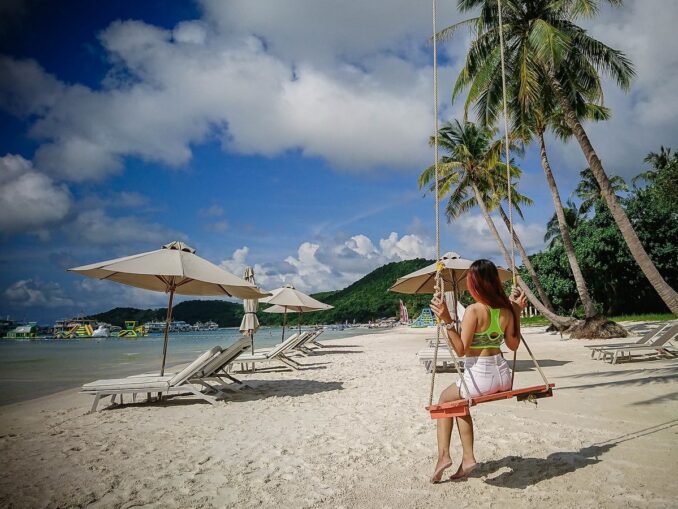
On the other hand, the period starting around January is generally considered a good time to visit. But in some years, you might make what seems like a foolproof choice and fly to Nha Trang in January, only to be greeted by relentless rain, strong winds and waves as tall as a house a person.
Here you can find discounted flights to Nha Trang and package deals.
Winter
Northern Vietnam isn’t exactly cold at this time of year, but it can certainly feel chilly. Hanoi, for example, sometimes sees daytime temperatures of around 16–18 °C. The upside is that there’s relatively little rain.
This means you can enjoy the spectacular scenery of the unique Ha Long Bay without much in the way of weather-related interruptions. Isn’t that reason enough to pack your bags and head to Vietnam in winter?
It’s best to forget about swimming around Cat Ba at this time of year. Not because the sea is cold — quite the opposite, actually — but because you’ll be freezing before you even get into the water.
Meanwhile,
as December gradually gives way to January and then — February — the central and southern parts of Vietnam see fewer rainy days and more sunshine. Temperatures also begin to rise, though fortunately not to the extremes experienced here in summer…
- Typical December temperatures in southern Vietnam range from 26 to 28 °C.
- Some days can reach 30 °C, but that’s more the exception than the rule.
You can expect temperatures of around 25 °C almost every December’s day in Nha Trang and Da Nang. Meanwhile, swimming in northern Vietnam in early winter is still very much out of the question.
If you’re planning a trip to Vietnam in December, Phu Quoc or Phan Thiet are your best bets. The chances of experiencing more than one or two rainy days throughout your entire holiday are minimal.
In Nha Trang and further north, however, you shouldn’t rule out tropical downpours or, even worse, violent gusts of wind. These can whip up huge waves (the sea itself also cools to around 23–24 °C by January) and generally do their best to spoil your holiday.
January weather in Nha Trang is equally unpredictable: it can be chilly (around 22–25 °C), windy and rainy. You certainly won’t be able to swim in the sea every day, and red flags are often flying along the beaches.
You won’t need anyone to tell you that swimming in such conditions can be dangerous — on some days, the wind is strong enough to knock you off your feet.
Read the Reviews Carefully
And you’ll probably come to a rather disappointing conclusion: visiting Nha Trang over the New Year holidays, or even up until mid-January, is a little premature! The second half of the month, however, can be a perfectly reasonable choice. Provided you’re not afraid of waves, of course — irecommend.ru/vetnam-2024-byudzhetnyi-otdykh.
As for central Vietnam, including Da Nang, it’s best not to arrive before February. The risk of heavy downpours and strong winds is even higher here.
December and January aren’t particularly warm either, with average temperatures of just 23–25 °C. Here’s more about December weather and sea temperatures in Nha Trang.
Spring
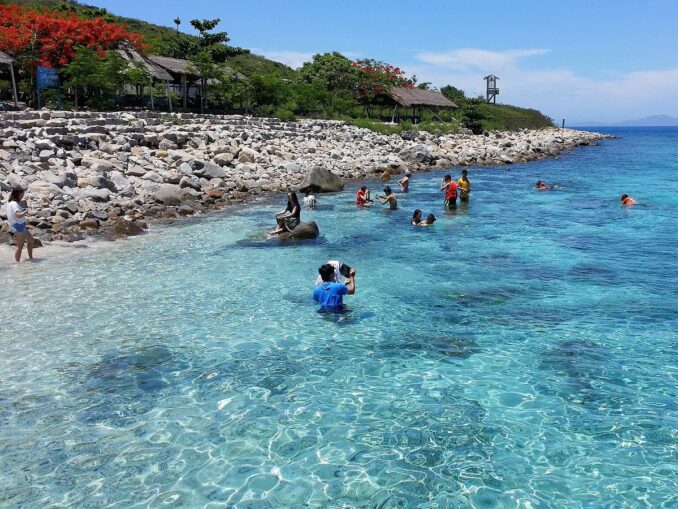
March and April are the heart of Vietnam’s dry season, with temperatures that are ideal for a beach holiday without being excessively hot (up to 27–29 °C).
What is up to the sea? There’s no need to worry about that either — the water warms up to similar temperatures, sometimes even a little higher.
Wherever you decide to go, you’ll have plenty of opportunities to swim and get a tan. And the only possible exception is the northern part of the country: if you’re planning to visit the beaches of Cat Ba, it’s best to arrive no earlier than April and no later than early May.
You’ll also have time to explore some of the most interesting places in Vietnam. After all, when better to go sightseeing than in pleasantly warm, mostly sunny weather?
It’s Worth Remembering
though, that despite the promise of a dry season, the weather may not be quite as dry as you’d expect. Much of Vietnam is in the tropics, after all, and tropical weather has a habit of bringing rain whenever it feels like it.
- By May, the beach and swimming season in Phan Thiet and further south begins to take a bit of a break.
- The heat becomes more intense (32–35 °C and above), while rain is getting increasingly frequent. Full-blown hurricanes are also possible.
Ho Chi Minh City experiences similarly challenging conditions from May to November, with high humidity, frequent heavy downpours and temperatures hovering around 28–32 °C around the clock.
Nha Trang, on the other hand, remains quite pleasant at this time of year. In fact, it can be a pretty good time to visit: prices come down from their peak-season highs, while the weather remains reasonably comfortable.
Sure, consistently high temperatures of +30–35 °C won’t appeal to everyone. But considering that it’s not too humid just yet, it’s certainly manageable!
Summer
It’s generally believed that it’s best to avoid visiting Vietnam between late May and October. At least if you’re a tourist dreaming of soaking up the warm southern sunshine and swimming in crystal-clear waters.
That’s because temperatures reach their annual peaks during this period (and we’re not just talking about 35 °C — 40 °C is entirely possible), while tropical downpours begin to rule the roost. It’s hardly surprising: average monthly rainfall in Dalat during this period, for example, exceeds 350-400 mm.
Phu Quoc isn’t particularly appealing for sunbathing either. June, like the other summer months, can bring up to 200 mm of rainfall, along with a high chance of overcast days.
- However, as with almost everywhere else, there are exceptions.
- In particular, summer in Phan Thiet, Nha Trang and even Da Nang is generally associated with relatively dry weather.
Naturally, it’s hot, with temperatures exceeding 32 °C, but sunny skies are still quite common. This means you can usually stick to your holiday plans, whether that’s sunbathing, swimming, snorkelling, diving, sailing or exploring inland attractions.

Rain is more frequent than in mid-spring (the average rainfall for each summer month can reach 100 mm). But the duration and volume of downpours are nowhere near enough to classify this period along Vietnam’s central coast as the truly wet season.
It’s also worth noting that summer is the best time for surfing in Vietnam. This is when the sea around Mui Ne (Phan Thiet) develops low but consistent waves, making it an excellent spot for beginners to practise their skills.
Here’s what you can expect from typical July weather and tour prices in Nha Trang.
Autumn
September is definitely a month to avoid when planning a trip to Vietnam. And October is best approached with caution, too.
That said, even in mid-autumn, Nha Trang, for example, can enjoy mostly cloudy weather without being constantly battered by rain. Overall, you can still have a pretty good holiday: soak up some warmth, swim, enjoy the local fruit and simply escape the usual European autumn gloom.
Things get more interesting from there. That’s because November in Vietnam isn’t hot and rainy everywhere. In fact, the new beach season begins at some resorts.
- In most cases enjoys very pleasant weather in November Phu Quoc.
- Sure, there may not be an abundance of sunny days, but the number of tropical downpours can usually be counted on the fingers of one hand.
As for temperatures, daytime highs hover around 30 °C, while nights bring temperatures of around 25 °C. The sea is approximately 28 °C. Honestly, what more could you ask for?
Sometimes,
November is Simply Stunning
in northern Vietnam, including the Cat Ba archipelago. It stays warm but not excessively hot (26–28 °C) right through to the last ten days of the month. The sea, warmed to 26–27 °C, is perfectly comfortable for swimming all day long.
The chances of a sunny day here in late autumn aren’t particularly high — around 30–40% at most — but the number of rainy days drops to a minimum. And excursions to Ha Long Bay, a natural wonder of global significance, never fail to leave visitors practically speechless.
- Which resort in Vietnam should you choose for your holiday?
- How long does it take to fly to Vietnam from Moscow?
- Do you need vaccinations before travelling to Vietnam?
© Eurotraveler