
When is the best time to visit Turkey for a beach holiday by the sea with/without children, for excursions and sightseeing? Should you head to Kemer or Antalya, Bodrum or Marmaris, Istanbul or Cappadocia?
Which month is better fit for a vacation in Turkey? What are the weather conditions like, the air and sea temperatures, what should you wear and pack for a trip in spring and summer, autumn and winter? Eurotraveler covers all this!
Turkey is doing everything it can to become a truly year-round destination, but it hasn’t quite got there yet. And its prospects in this regard don’t look particularly promising!
After all, most holidaymakers primarily consider an Asian country a beach destination. Given that Turkey’s climate is far from tropical, it put significant limitations on the options available to travelers.
For example, the swimming season in Turkey generally doesn’t start before May. That’s the rule, with April in Alanya and Antalya being the exceptions!
On the other hand, the beach season in Turkey ends remarkably late either. Even in November, for example, the weather in Antalya is often perfectly suitable for swimming and simply splashing around in the sea.
Of course, there’s more to life than swimming, and Turkey has plenty to offer in terms of other activities and entertainment, even outside the peak and so-called «velvet» seasons.
So if you take the time to look into the question of when it’s best to visit Turkey, you’ll realize that there’s no single straightforward answer.
After all, this country has something to amaze and even enchant travelers at virtually any time of year. Leaving them with vivid memories and gives health a boost, both physically and mentally.
Not Convinced Yet?
You might be surprised to learn that many travelers have already discovered that the weather in Turkey in December (especially in certain parts of the country) can be genuinely delightful. The same goes for January and February, March… and that’s before we even get to the more promising months?!
So for giving a pleasure for a trip, you just need to decide on two things from the outset:
- where exactly you’d like to go in Turkey
- come up with a sensible plan of action
Because staying in one place — on the beach, that is — only really makes sense during the hottest months…
Spring
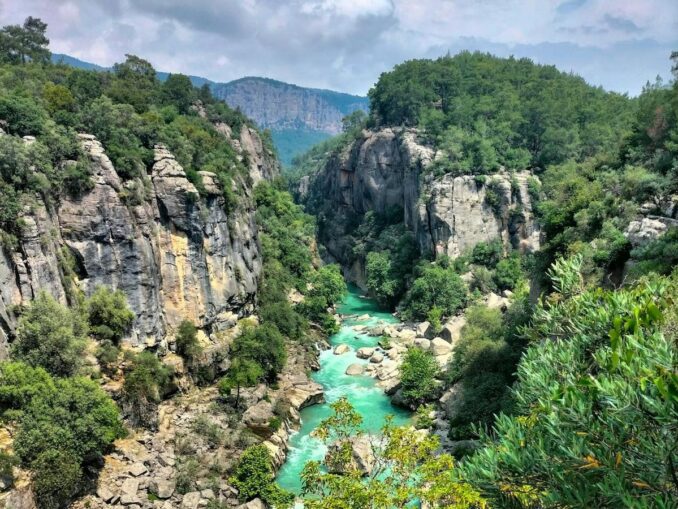
Spring arrives early in some places, such as the Antalya Riviera, and a little later in others. Overall, though, if you’re planning a trip to Turkey in early spring, you’re better off avoiding the strictly beach holiday.
That’s why our first choice is
Istanbul
In some years, Istanbul can be warm and comfortable even in March. Air temperatures don’t reach 15–18°C every year, but they usually do, particularly in the second half of the month.
The sun pours down its warmth during this period, as though making up for the long winter months. And rains are rare!
The sightseeing tours are just as fascinating as ever, too. As for those being «cheap,» that’s no longer quite the right word — it’s more a case of not being outrageously expensive.
Hotels in Istanbul also tend to offer tempting rates to their guests in early spring! At the Constantinopolis Hotel, for example, located in the central Fatih district, a double room in spring costs as little as €40 per night.
Further, in April, the weather in Istanbul doesn’t change dramatically in terms of temperature — conditions remain more or less the same. But as May approaches, you can expect a substantial warm-up, with temperatures reaching 20°C and above.
- Nature bursts into bloom, and children will love experiencing all its beauty
- Vast fields of tulips blooming in Istanbul’s parks make the season especially colorful
There’s no doubt about it: May is a wonderful time to visit Istanbul. The last month of spring is truly glorious here, with mild weather and plenty of sunny days.
Any Downsides?
Prices soar during this period!
The huge crowds of curious visitors filling the streets and squares, along with queues practically everywhere, can also spoil the experience…
Find out more here: is Istanbul worth visiting in May?
Cappadocia
is an another extremely popular destination in Turkey that virtually every tourist wants to visit. And coming in this region at the beginning of spring is a smart choice.
After all, although the weather in Cappadocia in March tends to be slightly more gloomy than in Istanbul, this certainly doesn’t get in the way of hiking or embarking on entire expeditions!
Long walks and extensive sightseeing are perfectly possible — and often even better — when the sun isn’t shining
All in all, you’re almost certain to have a wonderful time. Just remember to dress almost as warmly as you would in winter for a hot-air balloon ride. In other words, make sure you pack for your trip to Turkey plenty of properly warm clothing.

Features
- Air temperatures in Cappadocia rise quickly in April, and nature bursts into bloom
- The colors of the valleys become much richer, too.
Even so, there are still relatively few tourists coming to see all this. You may even get to join a «Green Tour» with a small group of fellow travelers.
May, however, is much more popular in Cappadocia. By the middle of the month, daytime temperatures can comfortably reach 25°C.
The winds are usually gentle, too. As if they were doing everything they can to avoid disrupting a hot-air balloon flight.
The Aegean Coast
Spring is a great time to visit this part of Turkey if you’re the kind of traveler who values peace and quiet. It’s ideal for those who enjoy long walks, fresh air, tranquil surroundings, and time to reflect.
Until the very end of spring, there are relatively few foreign tourists here, and the streets are generally free of people with nothing in particular to do. Things only start to change when the weather finally allows people to take a dip in the sea — you can already swim in Bodrum in May.
During the first two and a half months of spring, you can enjoy leisurely walks along the many beaches and admire the natural beauty of the coast. Watch the sunrises and sunsets, sample authentic Turkish cuisine, and simply enjoy life to the fullest!
Of course, you’ll want to break up your relaxing days with something a little more active now and then. Fortunately, there are plenty of opportunities to do just that!
For example,
Bodrum and Marmaris are close enough to make day trips to Pamukkale and Ephesus possible. The excellent condition of the highways also makes a road trip from Bodrum to Istanbul an appealing option.
Prices during this period are, quite simply, attractive! It’s perfectly possible to find a cozy, well-rated hotel in the old town or nearby for €60–70 or more per night — for example, Costa Maya Bodrum.
- You certainly won’t have much to complain about when it comes to sunshine and warmth
- As early as March, outdoor thermometers in this part of Turkey can reach 15–20°C, with very little rainfall
By late April, Marmaris welcomes genuine warmth — the kind that would be considered summer-like in much of Europe.
That applies to daytime, of course. At night, temperatures of 12–14°C are a reminder that the weather isn’t quite ready to commit to full-on summer.
The climate is much the same in Bodrum, Fethiye, and Ölüdeniz. Even Kuşadası, which lies considerably farther north, enjoys similar conditions.
The Turkish Riviera
At the very beginning of spring, you probably won’t feel like taking a dip in the sea here — unless winter swimming is your hobby.
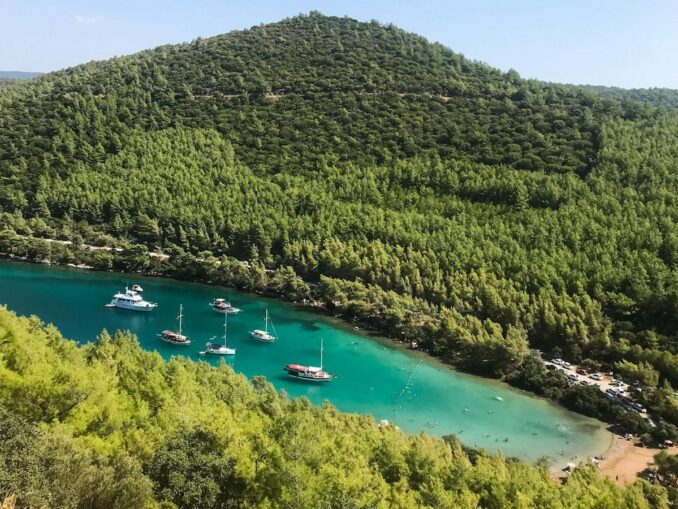
By April, however, the beach season begins in Antalya. You can sunbathe practically every day, although swimming is a different story. Still, plenty of people do take a dip.
- Why not? Sea temperatures of 18–20°C make swimming quite tempting!
- Air temperatures already reach 20–22°C at the beginning of the month
- And nature bursts into bloom in spectacular fashion at this time of year!
The abundance of colors and fragrances alone makes this region of Turkey worth visiting in spring. Even with children, provided they don’t suffer from pollen allergies.
May offers even more promising temperatures. Strawberries and sweet cherries ripen in abundance — and what child couldn’t use a vitamin boost after winter? Other fresh Turkish fruits also begin appearing in markets toward the end of spring.
Summer
During this period, sightseeing tends to slow down a little as the truly scorching weather sets in.
It doesn’t disappear altogether, of course — tour buses full of holidaymakers still crowd the sites at Demre and Myra, as well as Pamukkale. Trips to Cappadocia remain popular, too. After all, who wants to miss out on the opportunity, even if it means taking a break from the sun and sea in Kemer or Antalya?
For the most part, though, holidaymakers prefer to settle into a «beach-and-hotel» routine. Air temperatures climb above 30°C almost everywhere, and in some places they come perilously close to 40°C.
The sea warms up to an impressive 27–29°C, while rainfall seems to take a vacation of its own!
For some reason, humidity doesn’t seem interested in staying at comfortable levels, either. This is particularly true in the south — the June weather in Antalya can be hard to handle if you’re not used to the heat and humidity. And it only gets more challenging as summer progresses.
Here’s — what is the best time of year to visit Istanbul?
Autumn
September is considered the «velvet season» all along Turkey’s coast. The intense heat begins to ease, while the sea remains wonderfully warm — warmer than at the height of the season at many European resorts.
You can still swim in the Black Sea and the Sea of Marmara, not to mention the Aegean and Mediterranean.

As for air temperatures, Istanbul in early September can be so hot that spending time outdoors feels almost like a punishment, at least during the day.
Temperatures regularly exceed 30°C at the start of autumn in Bodrum and Marmaris. Fortunately, the heat is relatively easy to handle here: the coastal areas enjoy plenty of ventilation, and humidity generally stays at comfortable levels.
- It’s hardly surprising that the beaches along the Aegean coast remain busy during this period
- Turkish holidaymakers and Europeans alike flock to the country’s pine-scented western coast.
On the Turkish Riviera
September still feels like the height of summer, with all the familiar characteristics of the season.
So if you struggle with high humidity, intense heat, and the stuffiness that comes with them, consider moving your trip to Antalya to October.
You can still swim with very few restrictions at this time of year, but the air no longer feels quite so much like a sauna!
Mid-autumn is also considered a golden time to visit Cappadocia, as tourist numbers — and prices — drop considerably.
Air temperatures, however, are in no hurry to follow suit. During the day, it can be warm enough that there’s simply no need to wear a jacket.
November can also be a good time to visit Turkey, provided you’re not set on spending your days on the beach or swimming in the sea. It’s a great opportunity to explore interesting places, whether in Istanbul or Cappadocia, or around Bodrum and Kemer…
November is also a chance to discover a different side of Alanya! Not a town exhausted by the heat, but a lively, invigorating place refreshed by the sea breeze and seemingly made for outdoor activities.

Winter
Winter is where things get more interesting. The colder months are generally considered an almost hopeless time for sightseeing trips to Turkey.
In reality, though, that’s far from the truth. Just read the reviews of people who visited Antalya in December and later in the winter, including around New Year’s…
Yes, swimming in the sea is almost certainly out of the question at this time of year, unless you’re staying at a hotel with heated pools. But people who visit Turkey in winter are usually well aware of the local climate. They plan their trips around the opportunities the weather offers.
After all, you can enjoy:
- walks along the seafront and through narrow, historic streets
- visits to palaces and temples
- trips to the ruins of ancient city-states
And you can do all this without the crowds — an opportunity that’s hard to pass up.
Even
Istanbul in December is warm enough for you to plan and enjoy long walking routes. It can be damp at times, of course, but genuinely freezing weather is rare.
Keep in mind than winter in winter in Cappadocia can be quite brisk. Although December is often surprisingly mild and relatively snow-free there.
In January and February, however, you can enjoy Cappadocia’s otherworldly natural landscapes blanketed in snow.
And if even that doesn’t convince you, consider this: even in winter, tourists travel from Alanya to Cappadocia. They don’t do it out of boredom after tiring of daily walks and lounging on Cleopatra Beach, but with a very clear purpose in mind!
They book an inexpensive package holiday at a seaside resort, then skip the beach in favor of visiting cave churches and photographing the «fairy chimneys» wearing their charming little caps of snow.
- The best months of the year to visit Cappadocia
- When to visit Istanbul: a month-by-month guide
- What tourists bring home from Turkey
© Eurotraveler