Best time to visit Paris: is it spring or summer, autumn or even winter? Weather month by month, tourist numbers, 2027 hotel and excursion prices. Which season offers the most memorable Paris experience? How can you plan your adventure, make the most of your time, and avoid missing anything important? And when is it best to stay away Paris altogether?
Find all the answers in this Eurotraveler guide!
For centuries, Paris has been a true magnet for tourists. In spring and summer, during the golden days of autumn, both during the day and late into the evening, the streets of the French capital are packed with crowds speaking a multitude of languages.
In some months, the crowds are at their thickest, and the flow of people reaches its peak. In others, visitors can actually take a look around without bumping into the people walking right in front of them.
Enjoy long walks through the streets, soak up the charm of the city on a leisurely Seine cruise without the crowds. Step into the most interesting museums in Paris without having to stand in an endless queue, and admire the masterpieces of the Louvre and Musée d’Orsay without peering over other people’s shoulders.
You Might Say
that’s impossible, that all of this sounds like a miracle. After all, Paris is incredibly popular at any time of year!
Our answer? Every rule has its exception. And to make sure of this, you just need to choose the right moment for your trip!
After spending some time learning the «basics» and figuring out what time to go to Paris for tourist purposes is best!
Spring
A season of awakening and renewal. Naturally, Paris is no exception to this uplifting process and embraces spring with plenty of energy. It quickly leaves behind the familiar features of Central European winters, such as snow and icy pavements.
Some might grumble that 5-10 °C (41-50°F) at midday isn’t exactly a traveller’s dream. But let’s be honest: that kind of weather is perfectly suitable for walking tours and sightseeing. So you certainly won’t be short of things to do — there’s plenty to see and do in Paris in March.
It’s worth remembering, however, that early spring in northern France can bring not only chilly nights but even freezing temperatures.
- And rain is hardly unusual either: 4-6 rainy days a month is still quite a lot.
- On the other hand, you’ll see noticeably more sunshine than in winter.
And if you’re a romantic at heart, you’ll certainly notice a certain freshness and sense of anticipation in the air. As it trully feels thaht a warm season is just around the corner, and nature is about to burst into life.
This usually happens in late March or early April. At last, the sun begins to do more than simply light up the city — it starts to bring some real warmth. Cherry and plum trees burst into blossom, and fresh green leaves begin to appear!

April
The French themselves, along with plenty of foreign visitors, flock to the city in March and April. And why not? The Easter holidays are arguably one of the best times to visit Paris!
The weather usually gives them even more reason to come. By mid-April, daytime temperatures in Paris can reach 20°C or even 22°C (68-72°F). Nights, however, are still considerably cooler, with temperatures dropping to a less inviting 8-12°C (46-54°F).
- Either way, you’ll be hard-pressed to find negative reviews from people who have visited Paris in mid-spring.
- Quite the opposite — their reviews are full of enthusiasm and positive impressions.
Hotel and guesthouse prices in Paris are also quite reasonable at the time (something you certainly can’t say about summer). So a couple travelling together can find something perfectly decent for a modest (by today’s standards) €120-140.
And you won’t have to strain to hear your guide during city tours either. Mainly because your group is likely to be very small…
In short, experienced travellers know exactly what they’re doing when they visit Paris during the off-season. And March and April, apart from a few specific dates, certainly qualify — although the winter months are even quieter. They know how to make the most of it!
May
Things only get busier from here! Not so much thanks of the weather, but because interest in visiting the «capital of the world» continues to grow. Especially since France celebrates two national holidays in May!
- Both Labour Day (May 1) and Victory in Europe Day (May 8) draw in Paris large crowds of visitors and curious onlookers.
And although the weather hardly gives you much reason to celebrate — May in Paris is rather rainy — the city fills up with tourists. Prices soar, hotel rooms and even country guesthouses sell out, and any attempt to photograph an empty street, even at midnight, is pretty much doomed from the start.
In our view, it’s clear that late spring is not the best time to visit Paris. Of course, you’re perfectly entitled to disagree.
You might even argue that if you wait a little longer, things will only get worse…
Summer
Besides, visiting the French capital in late spring doesn’t seem like such a bad idea when you consider what happens during the peak summer months. In June and July, the number of tourists in Paris grows even further, while hotel prices become completely detached from reality.
If you haven’t managed to book an apartment or hotel room well in advance — ideally 3-4 months before your trip — expect to pay a hefty premium in summer.
And that’s even if you’re happy to stay somewhere well outside the city centre and plan to commute into town by metro or RER trains.
- If you make a DIY trip to explore Paris during this period, you will get a reason to completely lose faith in the «City of Light».
- And telling your friends and family afterwards just how hot, stuffy and overcrowded it was.
That’s why — in general — you didn’t like it very much!
In August, Paris gets even sunnier and extremely hot, while its streets begin to empty out. The French head off in droves to enjoy a holiday on the French Riviera, in Nice, Cannes and Menton. Others choose Brittany or Aquitaine.
Foreign visitors aren’t particularly keen on spending the best part of summer on the scorching streets of a major city also. And why, when they could be heading to the seaside instead?
Is August worth considering as your chance to visit? We wouldn’t recommend it.
Exploring Paris’s attractions in temperatures above 30°C (86°F) is hardly anyone’s idea of fun! What’s more, many atmospheric little cafés and family-run shops also close for the holidays during this period.
But — a lot of things are getting cheaper — anyone who went to Paris in August has every right to notice. And he’s absolutely right — this is a good time to save some money!
Best Paris Tours and Excursions - Viator
Tours, Cruises and Activities in Paris and Nearby - GetYourGuide
Autumn
On the contrary, September is generally a very good time to travel to Paris. The first month of autumn is no longer as scorching as its summer colleagues, and the weather is unlikely to give you much (if anything) to complain about.
It stays warm and light well into the evening, while the number of rainy days remains within a reasonable range — usually no more than 5-6 a month.
In some years, September temperatures in Paris can reach or even exceed 30°C (86°F). There’s no particular reason to expect 2027 to be any different.

That said, it would be wrong to assume you’ll have little competition and be able to wander the streets all by yourself. Quite the opposite, in fact!
But you’ll have more opportunities than usual to discover something truly special.
- That’s because the Journées Européennes du Patrimoine (European Heritage Days) take place in Paris on the third weekend of September.
- During the event, visitors get access to some genuinely fascinating places, including the Élysée Palace, the Luxembourg Palace and Paris City Hall, housed in the Hôtel de Ville.
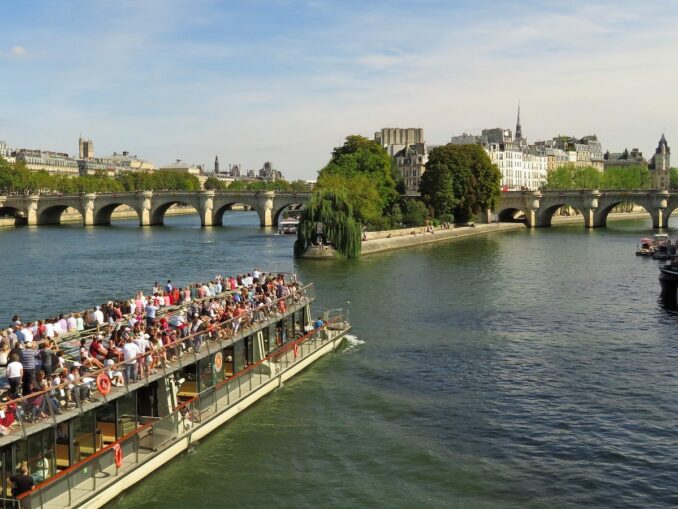
Throughout October, the weather in Paris is still pleasantly warm, with plenty of clear, sunny days. You can enjoy long walks around the city with virtually no restrictions, as well as Seine cruises aboard open-top boats.
The second half of autumn can also be considered the cheapest time of year to visit Paris. In other words, you can save money on both flights and accommodation.
It is only necessary to include in the equation the knowledge that it is cold and damp in Paris in November. And that this month is a real prelude to an overcast and gloomy winter.
The sun often disappears for days at a time, drizzle is frequent, and temperatures fall along with the mood of both Parisians and visitors.
Freezing temperatures are rare, but seeing something 2°C (36°F) on the thermometer on a November morning is perfectly normal!
Paris in Winter
Winter is when nature goes into hibernation. But humans have become sufficiently detached from their roots to ignore the eternal laws of nature. And so, even during the coldest months, we carry on with our lives and remain reasonably active.
- Still, December, January and February attract to the French capital relatively few travellers.
- That is, apart from the short festive period around Christmas and New Year’s celebrations in Paris.
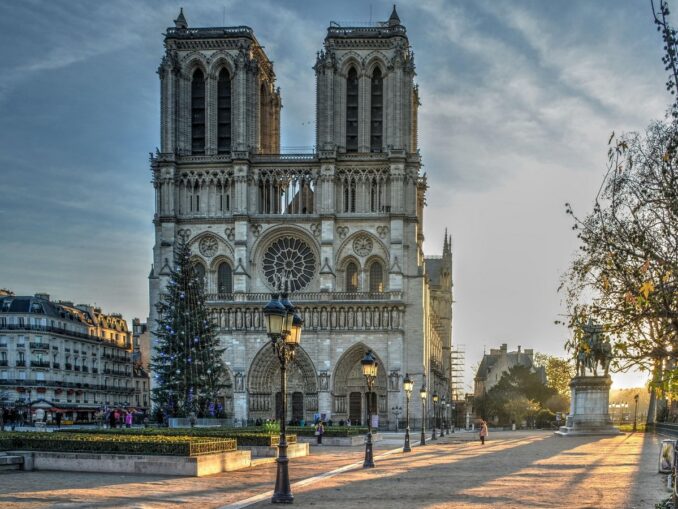
In December, the local weather can be downright bone-chilling: rainy, windy and cold. Temperatures, however, rarely fall outside the 5-10°C (41-50°F) range. The sun seldom makes an appearance, while rain is frequent and persistent.
January and February in Paris are cold, although freezing temperatures are very rare. Unfortunately, that doesn’t mean any more sunshine.
Instead, precipitation in the form of freezing rain can sometimes come down in heavy bursts, threatening to push the Seine beyond its banks.
January is also not an ideal time to visit Paris because the city spends the month nervously anticipating another «flood of the century». For more than 100 years now (the previous one occurred in 1910), meteorologists have been discussing the possibility and assessing the risks.
And the risk is far from negligible. In fact, there is already a well-established evacuation plan to move the Louvre’s treasures to Picardy. The concern is that a major rise in the Seine’s water level could literally put the outstanding collection of France’s leading museum at risk.
That said
the possibility of flooding is one thing, but visiting Paris in January is actually a great idea for one simple reason: you’ll find very few other tourists around. Which means that, if not entirely alone with the city, you’ll at least be able to enjoy the timeless beauty of its architecture in relative peace and quiet.
Of course, that assumes you know how to dress properly for a season when even the weather seems unable to decide whether it’s autumn or winter. One moment it’s damp, the next a biting wind cuts right through you!
The winter hotel prices in Paris are another real bonus. Apart from the New Year period, they are at their lowest levels of the year!
- What authentic street food should you try in Paris?
- Interesting places near Paris that are well worth visiting
- What inexpensive souvenirs should you bring home from France?
© Eurotraveler