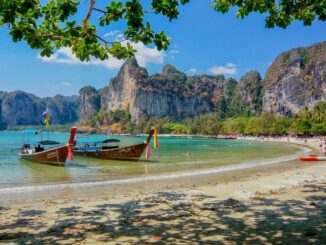
Goa in January 2027: weather and reviews, sea and air temperatures, can you swim? Is it worth visiting, how much do flights and hotels cost, and what about excursions? Where is the best place to stay in January: North or South Goa? What to see and things to do on a holiday — Eurotraveler has all the answers.
While in some parts of the world January marks the peak of winter, bringing snow and freezing temperatures, everything is quite the opposite in the Indian state of Goa. Here, January marks the height of the beach season. The sun is warm without being unbearably hot, and the sea stays relatively calm, making for a relaxing time off on a beach.
- Holidaymakers arrive, settle in, and almost immediately slip into a kind of nirvana, forgetting all their worries and everyday problems.
- Some enjoy this retreat so much that they never quite make it back to normal life, staying on the Indian coast for
yearsmonths.
Either way, trips to Goa in January — especially over the New Year holidays — sell like hotcakes long before the season begins. By early autumn, flight and hotel prices are already on the rise.
But that doesn’t put people off — there’s simply too much to love about this place at this time of year!
What’s more, some beaches in South Goa (and that’s without even mentioning the north) remain surprisingly uncrowded even during peak season. So you can still enjoy a peaceful getaway — provided you do a little research beforehand)
But enough of the introduction. Let’s take things one step at a time, starting with the most important factor! And first, we’re going to explore what is like
Weather in Goa in January?
It is typically sunny and hot, but not unbearably so. Daytime temperatures above 30-31 °C are actually more of an exception than the rule.
The most popular time to visit is, naturally, the New Year holiday period, as the weather in Goa in early January is ideal for a beach holiday. Daytime temperatures hover around 30 °C or slightly higher, while nights are a relatively mild — up to 22-25°C.
- More or less the same weather continues along the Goa coast until mid-January.
- In the second half of the month, however, temperatures may drop slightly.
Fortunately, this doesn’t usually happen during the day — the sun still warms the air to around 28-30 °C. At night, however, temperatures can fall to 20 °C or even — believe it or not — 18°C.
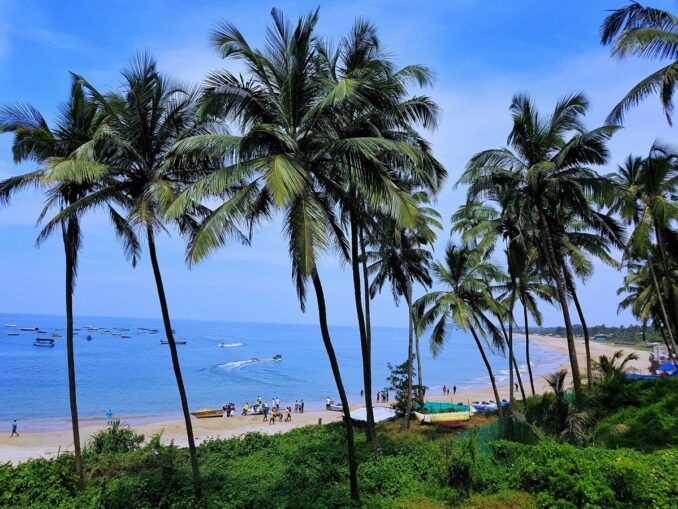
Precipitation
- Rainfall is extremely rare, and even overcast days are something of a novelty in Goa in January.
- The sun rises at around 7 a.m. and sets shortly after 18 o’clock (6 p.m.).
That means more than 11 hours of daylight. What better excuse to switch into full-on summer holiday mode?
In other words, head out of your hotel and make your way to the beach before or just after breakfast. Then retreat into the welcome shade around 11 a.m. or noon.
A second beach session can be done at around 16 o’clock (4 p.m.), with staying by the water until sunset…
During the rest day hours, the risk of getting badly sunburned while outdoors increases considerably. And that’s even if you’ve been sensible enough to pack sunscreen for your beach holiday along with all your other sun-protection essentials!
Sea Temperature
The sea — or, more precisely, the Indian Ocean — is a pleasant 27-28 °C at the time. Some reviews describe it as being as warm as a bath, but that’s a bit of a poetic exaggeration of course. As in January, the sea temperature in Goa never rises above 29 °C!
- Either way, everyone, including children, can comfortably swim at any time of day.
- Just make sure you keep an eye on the little ones and stay alert.
That’s because the sea can get a little choppy from time to time. More importantly, it’s worth remembering that rip currents can occur off Goa’s beaches even when the water looks perfectly calm.
And you don’t have to swim far from shore nor have to do anything reckless to get caught in one.
So, before your holiday begins, take a moment to read what to do if you find yourself caught in a rip current and how to get out safely.
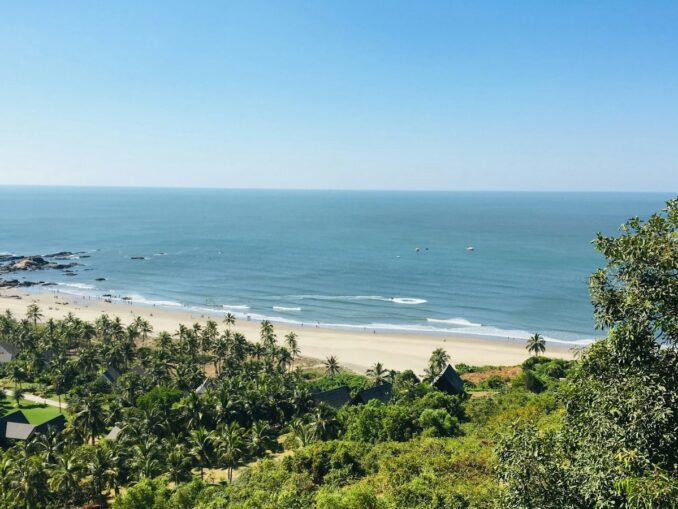
Prices in 2027
If you’re planning to celebrate New Year’s Eve in Goa, be prepared to spend at least €3,000 on a package holiday for two. Shifting your travel dates to the second ten days of January, or even simply leaving after January 4-5, could save you around €1,000 straight away.
Would planning the trip independently work out cheaper? At first glance, not really. As during the New Year holiday period, flights from Europe to Goa and back alone will cost at least from €650-700 per person.
- And don’t expect direct flights at that price.
- You’ll be looking at connecting ones, with journey times of 12 hours or more.
On the plus side, Goa has plenty of reasonably priced hotels and guesthouses along its coast. For example, in early January, you can book a double room at the excellent Ariena by Spree Hotels Goa, near Ashwem Beach, for just €70 per night. In the second ten days of the month, the rate drops to around €40-50 per night.
Another very good option is the Coastal Suites Apart Hotel in Benaulim. It’s clean, well maintained, conveniently located and, most importantly, reasonably priced. A couple can expect to pay between €400-600 for a week-long stay there in January.
Where to Go in January
There’s one important thing to get right: the beaches of North Goa attract a very different crowd from those in South Goa. So if you don’t want to find yourself surrounded by people who aren’t quite your cup of tea, take a close look at our guide to the two regions before booking!
In a nutshell, the northern part of the resort is geared more towards younger travelers on a tighter budget. They’re primarily there to enjoy the warm sea, party, let loose and dance the night away. Comfortable hotel rooms are nice to have, but they’re hardly a priority.
Price is the deciding factor here, and it’s about as low as it gets. You can easily find a room on the northern coast for just €15–20 per night.
- North Goa has plenty of guesthouses with basic amenities, as well as simple two- and three-star hotels (for example, a very decent Shree Sai Beach Stay in Arambol).
- South Goa, on the other hand, tends to attract considerably better-off holidaymakers.
Families with children and those seeking peace, quiet, and comfort are primarily drawn to the south. And yes — they are ready to spend more on accommodation.
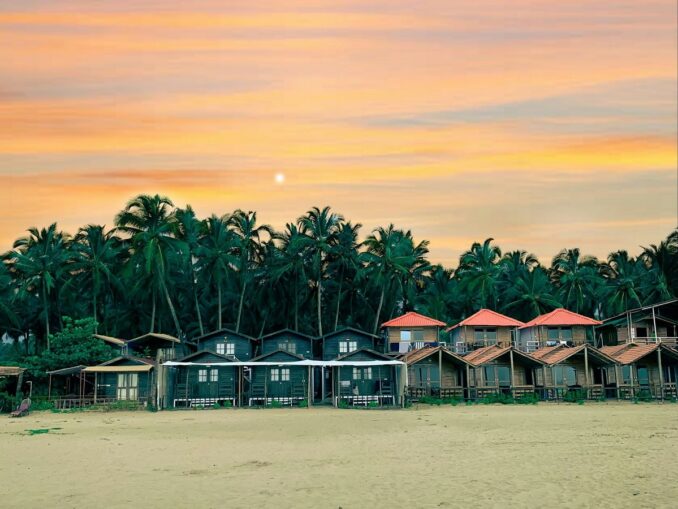
The Beaches in South Goa
are generally cleaner and better equipped. Beach vendors are less common, and you’re unlikely to encounter people who come to the shore just to watch others rather than enjoy a day by the sea themselves.
What’s more, holidaymakers staying in Majorda, Benaulim and Colva are less likely to encounter unpleasant surprises such as underwater boulders or dangerously strong currents.
What to Pack
There’s no need to bring mosquito repellents or plug-in mosquito killers from home. For some reason, the products sold in European shops don’t seem to work against Indian mosquitoes.
However, you should definitely put together a well-stocked travel first-aid kit and pack it in your suitcase.
- Pay particular attention to remedies for food poisoning and indigestion when putting your first-aid kit together. Not every stomach can handle Indian cuisine!
- It’s also worth bringing fever reducers and allergy medication, as pharmacies in Goa have a rather limited selection.
A bank card is perfectly suitable for making payments im most places. It’s also a good idea to bring some US dollars to exchange for Indian rupees and use for cash payments.
Bear in mind that taking rupees out of India is prohibited, so it’s worth using a calculator to keep track of your holiday budget.
One more universal tip: have some small-denomination banknotes ready for currency exchange at Dabolim Airport. As he exchange rates there are extremely poor, but you’ll have to pay for transport (in cash) at the very least.
If you’re staying for an extended period, it may be worth buying a local SIM card as soon as you arrive in Goa. All you need is your passport (they’ll take your photo at the mobile phone shop).
However, many travelers nowadays prefer universal eSIM cards, which work in many countries around the world.
Things to Do
If you’re heading to North Goa, your main entertainment, apart from swimming, will be the various beach parties and nightlife events. The trick is to keep your wits about you.
Otherwise, you might not only miss your return flight but also end up joining the ranks of the local expat community. Of the European kind!
South Goa offers more traditional ways to spend your free time. One of the nicest options is simply exploring the local restaurants and cafés.
- Diving enthusiasts will be pleased to find that the local waters are clear, while those who enjoy fishing can head out into the open ocean, where marine life is abundant.
- There are also water parks: Splashdown in Anjuna and Froggyland in Nuvem.
It’s definitely worth a visit Old Goa near Panaji — it’s home to some beautiful colonial-era houses and churches. You should also pay a visit to the impressive Aguada Fort and climb its lighthouse, once the largest in Asia.
We’d also recommend getting to Dudhsagar, the largest waterfall in the state…
Another fascinating place is the village of Hampi, once the capital of the mighty Vijayanagara Empire. The only catch is that getting there isn’t particularly easy (it’s more than 300 km away).
If you have a bit of money to spare, we recommend exploring Goa with a local guide who really knows the area inside out. You’ll get to:
- take in some breathtaking scenery,
- learn about the Portuguese colonial period,
- and discover fascinating Indian traditions.
What Else
For those with a more generous travel budget, there’s addressed a full-day trip to the metropolis of Mumbai. And if you haven’t yet seen Agra and the Taj Mahal and have enough money to spare, you can head off on a two-day trip to Delhi.
© Eurotraveler