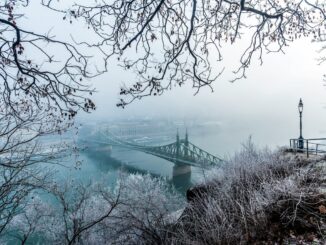
Budapest in January 2027 — is it worth visiting? Weather and reviews, air temperatures, what to wear, hotel and tour prices. What to see in Budapest in early January and after the New Year holidays, and where to go in Hungary — Eurotraveler has all the details.
Some cities are beautiful at any time of year, but winter brings out something truly special in their appearance. And Budapest is one of those! January may be a cold time to visit Hungary’s capital, but it also offers a chance to see it from a different perspective: quieter, more atmospheric, and perhaps even a little magical.
- Life in Budapest it seems as to slow down during winter.
- The streets become much quieter, with far fewer tourists, while walks around the city take on a special charm.
The city’s architecture also seems even more striking against the backdrop of the crisp winter sky.
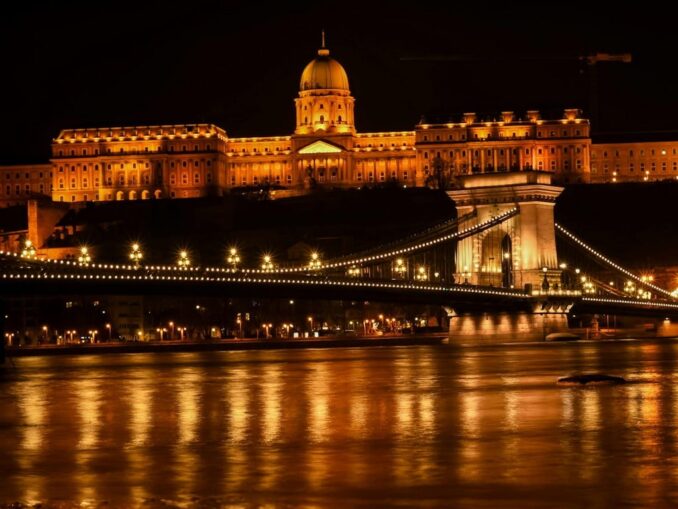
The Parliament Building glowing at dusk, the Chain Bridge lit up with festive lights, the magnificent buildings of Pest and the charming narrow streets of Buda stop being mere tourist attractions and begin to feel like the setting of a beautiful film. One you never want to leave.
Another, perhaps the main, reason to visit Budapest in January is the chance to experience its famous thermal baths during the coldest time of year. Just imagine: it’s chilly or even freezing outside, while you’re relaxing in the hot water of an outdoor pool!
Again
January in Hungary also seems like the perfect time for food lovers. After all, when it’s cold, who wouldn’t want to warm up with a bowl of authentic Hungarian goulash, a delicious lángos and a steaming mug of mulled wine?
What’s more, Budapest in January can also boast relatively mild weather.
Of course, it’s still proper winter. But the conditions are generally ideal for exploring the city on foot, going on sightseeing tours, visiting museums and… hitting the shops.
Weather in Budapest in January
You certainly wouldn’t call it spectacular. But it’s not bad either.
It’s typical Central European winter weather, characterized by:
- moderately cold temperatures,
- occasional frosts,
- and a surprisingly reasonable chance of sunny days.
The Danube, incidentally, hardly ever freezes over. And river cruises continue to operate in January, with schedules that are not all that different from those at other times of the year.
What’s more, they come at a price nobody would call outrageous — just €12–15 per person, with an audio guide included. Sounds fine, doesn’t it?!
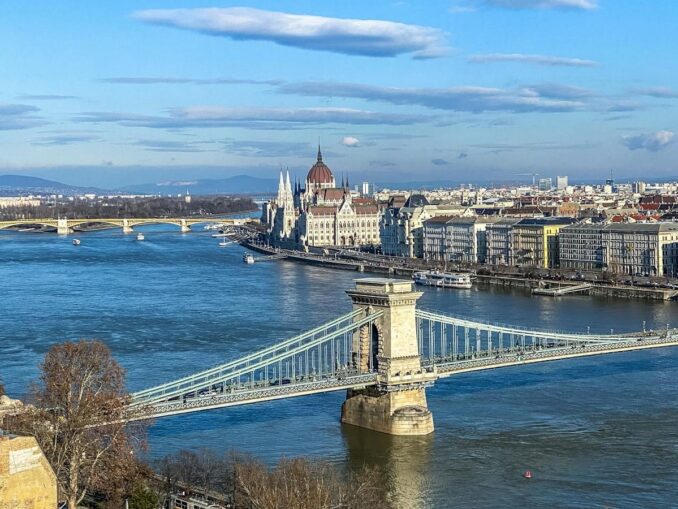
Some travelers even describe January weather in Budapest as ideal for sightseeing and exploring the city. And we have to agree – provided you dress appropriately.
All in All
At the beginning of January, temperatures in Budapest generally don’t stray too far from the zero mark. From 2–4 °C to even 8–10 °C – that’s what a typical midday looks like here.
- Rain and snowfall are rare, while perfectly clear days do happen.
- Truly sunny ones, with a peacefully blue sky and wonderfully crisp, crystal-clear air.
Evenings – and it gets dark quite early in Budapest in midwinter, at around 17 o’clock (5 p.m.) – bring a rapid drop in temperature. In some years, it can fall to zero or even slightly below. More often, though, temperatures settle at around 2–4 °C.
Severe Frosts
are extremely rare in Budapest during January. And temperatures of -4-6 °C are about as low as the thermometers on the city’s streets tend to go.
Does the weather change in the second half of the month? Not by much, although sometimes it can actually get a little worse!
The second half of January, or its final ten days, usually begins with a drop in daytime temperatures to 1-3°C. This can happen immediately after the New Year holidays as well.
At the same time, once the Christmas markets close (after January 6), there are hardly any tourists left in the city!
Good to Know
But those who do make their trip at the time, iv seems couldn’t be happier. And for good reason — prices drop across the board. You can even join sightseeing tours for a fraction of what you’d pay during the peak season!
- As you may remember, there are plenty of places to warm up in the city. The water temperature in Budapest’s thermal baths reaches 38 °C even in winter.
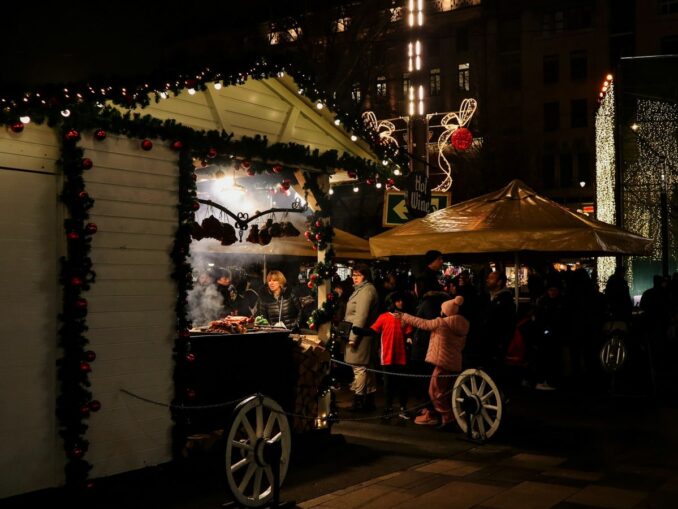
- And popping into a shop or grabbing a mug of Christmas mulled wine at a street stall is always an option, isn’t it?
It’s also worth keeping an eye out for something genuinely special at this time of year. After all, Hungary’s capital has no shortage of art galleries, as well as souvenir shops.
And what about the regular shopping centres in Budapest, packed with discounted post-holiday goods and plenty of quality high-street fashion? All this sound like a pretty good excuse for a proper shopping spree!
Precipitation
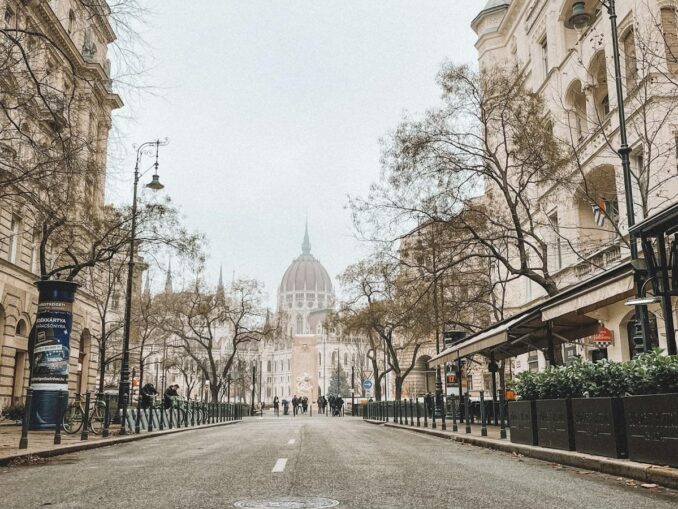
You may find the pavements dangerously slippery in the mornings and evenings, especially near the river. Snow is also not unusual in January in Budapest, although it usually appears only in patches on the pavements and park lawns.
- However, you won’t normally have to make your way through deep snowdrifts, even in the middle of winter.
- One reason is that the average precipitation for the first month of the year is quite low — no more than 30-40 mm.
You’re also likely to come across some ice. Especially if you make the effort to walk to Vajdahunyad Castle, where an enormous ice rink is set up in front of the building every winter.
Here’s a guide to the best things to do and see in Budapest — in winter and at any other time of year.
And there — a weather forecast for the capital of Hungary for the coming days.
What to Wear
Think proper winter clothing. The Danube has a major influence on Budapest’s climate throughout the year. Even in the middle of winter, including during dry spells, it brings increased humidity to the surrounding areas (up to 85–90%).
When that dampness combines with strong winds — and January winds have little reason to hold back – it can get genuinely cold. Anyone planning to explore Budapest who:
- doesn’t bring a properly warm jacket,
- forgets a scarf, a warm hat and at least a pair of leather gloves,
will almost certainly have good reason to regret their lack of preparation.
They’ll spend their time with their noses buried in coats and hands firmly tucked into pockets. And they’ll keep urging their travel companions to warm up with some Christmas mulled wine at a street stall, take a break in a café or pop into a shop — preferably one in a shopping centre.
There are plenty of the latter here, incidentally. Although you’ll often come across the opinion in travel reviews that Budapest has never really been a shopping destination.
Prices in 2027
Hotels and their owners know perfectly well which dates bring peak demand, and they price their rooms accordingly. But if you’re not set on staying in the most central locations, such as Váci Street in Pest, you can still find a reasonably priced place to stay (especially after January 6-7).
Budavar Bed and Breakfast in Buda is a popular choice. And it’s easy to see why: around €80 for a double room, plus truly outstanding breakfasts — that’s a pretty attractive deal.
- Especially considering its almost unbeatable location: Fisherman’s Bastion is no more than a five-minute walk away.
Kastely Apartments — Buda Castle cost just a little more but offer considerably more space. And when it comes to value for money, they have very few competitors in the city!
As for airfares, they also drop significantly outside the post-holiday peak dates…
Tours
City sightseeing tours are generally cheaper in Budapest than in most European capitals, Prague included. And after January 6-7, you can expect some pretty substantial discounts – there are hardly any tourists left.
- All in all, you can enjoy an interesting walking tour of Buda for €25-30.
- And you’ll likely be part of a very small group.
More personalized tours of Budapest cost a little more, starting at €35. But that’s hardly surprising — a bespoke experience rarely comes at the price of a mass-market product.
Best Budapest Tours and Excursions - Viator
Tours, Cruises and Activities in Budapest and Nearby - GetYourGuide
What to See
The Christmas buzz in Budapest has almost completely died down by January. The market stalls are taken down, tourists gradually disappear, and the city itself becomes peaceful and wonderfully quiet.
Naturally, this has an effect on your mood — you no longer feel the need to rush anywhere. And suddenly you realize that there’s enough time to see everything and more, even if the weather throws an unpleasant surprise your way and covers the streets in wet snow.
- You’ll have plenty of time to explore every corner of Buda Castle District, perhaps more than once.
- You’ll get to enjoy all the panoramic views of the Danube and the low-rise cityscape of Pest.
- And, of course, you’ll see the monuments – there are plenty of them here, and almost every one has a story of its own.
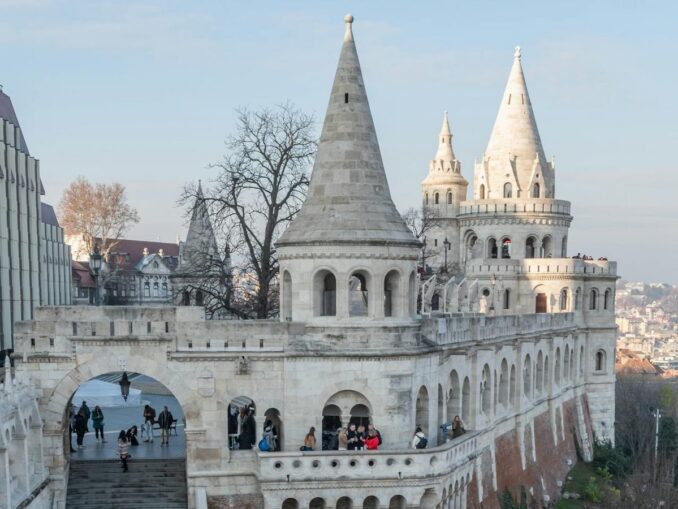
Fisherman’s Bastion, Matthias Church and Buda’s charming old houses — you’ll need at least a full day to explore them at a leisurely pace. And you can easily set aside another couple of days for the treasures of Pest.
- The Hungarian Parliament Building and St. Stephen’s Basilica,
- City Park (Városliget) and Vajdahunyad Castle,
- Vörösmarty Square, Váci Street and the Central Market Hall…
Don’t Forget
about Danube cruises, although they may be cancelled in particularly windy or extremely cold weather. A visit to at least one of Budapest’s famous thermal baths is also a must — they’re open regardless of what the weather forecast says.
And, of course, make the most of the opportunity to try traditional Christmas mulled wine. Known here as forralt bor, it’s served in practically every café during winter.
Here’s what you should definitely try when it comes to Hungarian food.
Many tourists are also keen to visit the Hungarian State Opera House. If not to catch a performance — the New Year production of The Nutcracker is still on in January — then at least to admire its magnificent interiors on a guided tour.
What Else?
Experienced travelers visiting Hungary have absolutely no doubts about whether it’s worth taking a trip from Budapest to Vienna. After all, it’s simple enough: hop on a train and just three hours later you’re stepping out at Austria’s main railway station!
But is it worth traveling beyond Austria? Perhaps driving to Italy in a rental car?
That is, if you have plenty of time to spare – a trip like this is likely to take a week or more…
Where to Go Nearby

Among the places within easy reach of Budapest, we’d particularly recommend the lovely little town of Szentendre and its museums, dedicated to marzipan, Christmas, the Soviet era and more. Other highlights include the ruins of Visegrád Castle, where Vlad the Impaler was once held prisoner, and the beautiful Baroque city of Győr.
Some travelers may also decide to make a trip to Lake Balaton. In January, however, it looks nothing like the swimming destination it becomes in summer.
- On the other hand, the famous thermal lake Hévíz, renowned for its healing properties, is popular all year round.
- While you’re in the area, you can also visit (after a relaxing soak in the thermal waters) the town of Keszthely, home to the magnificent Festetics Palace.
If you’re already near Hévíz, it would be a shame not to make a little detour to Sümeg Castle. It regularly features on our list of Hungary’s most interesting places, yet remains largely unknown to all but around 10% of tourists visiting the country.
Is it worth visiting Bükk National Park in the middle of winter? Travelers who have been there in January generally don’t recommend following in their footsteps. «You’ll only waste your time,» — they reasonably point out. You’ll get your feet wet and spend half your visit slipping along icy trails.
If you really want to get out of Budapest, why not head to Eger instead? Enjoy the peace and quiet, and take in the surrounding countryside from the walls of the legendary Castle of Eger?
- How to Get from Budapest Airport to the City Center
- How Much Does the Budapest Metro Cost? (And How to Save Money)
- Best Day Trips from Budapest
© Eurotraveler