
Montenegro in winter: weather in December, January, and February in Budva, Tivat, Kotor, Bar, Žabljak and Kolašin: reviews, air and sea temperatures, what to wear? Whether it’s worth visiting for a holiday and which destination to choose, 2026/2027 hotel prices, the pros and cons of winter in Montenegro, things to see and do, how the country celebrates New Year’s Eve and Christmas — Eurotraveler tells you all about it.
Montenegro is one of those countries that almost every traveler associates exclusively with beach holidays. If you like, you can easily mix in some sightseeing and other outdoor activities. But a beach holiday here is definitely seasonal.
There’s no doubt that you can (probably) swim in Montenegro in May and sunbathe — and there’s no need to mention all the other activities on offer. From June to August, you can also enjoy long swims in the open sea and go snorkeling.
It’s more than likely that you’ll have a wonderful seaside holiday in Montenegro in September and even… in October. But after that, a whole lot of questions arise, and this article aims to answer at least some of them.
We’ll look not only at Montenegro’s winter weather — air and sea temperatures, rainfall and more — but also suggest places to visit around the country.
In particular, we’ll cover what to see in Montenegro and:
- Which places are worth visiting?
- And what else can you do while you’re there? Not just around New Year’s Eve or Christmas, but on ordinary days, too!
Along the way, we will also provide reliable information about prices current for the 2026/2027 season at hotels and guesthouses, as well as on excursions and tours.
Winter Weather in Montenegro
Anyone who has spent the summer in this Balkan country and knows just how much warmth and sunshine it has to offer may find the winter weather disappointing. Some people are even convinced that there’s literally nothing to see or do in Montenegro in winter.
Of course, that’s a misconception. Still, if you’re planning to visit this European country during the colder months, you’ll need to prepare much more thoroughly than you would for a beach holiday…
Even if you’re spending winter in Budva or Bar, on Montenegro’s coast, be sure to pack plenty of windproof and waterproof clothing. You’ll also need some genuinely warm clothes — preferably layers — if you plan to visit any of the mountain areas north of Podgorica.
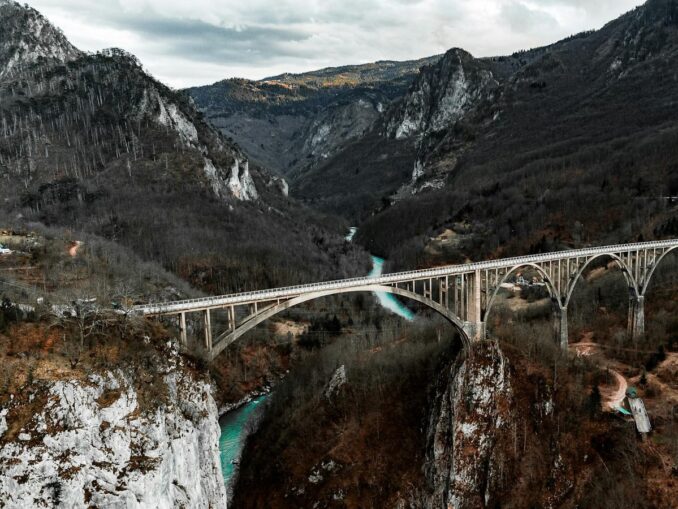
We’d also strongly recommend checking weather forecasts, climate statistics and relevant travel forums carefully, especially if you’re seriously considering driving to Montenegro.
Alternatively, you can simply rent a car in Podgorica, Budva or almost any other town in the country. Rental prices during the off-season drop considerably — expect to pay €25-30 per day or around €300-350 per month.
Naturally, accommodation prices at hotels and guesthouses go down. Even in Budva, in winter you can rent an apartment for €35–40 per night. And, by the way, it’s only an 8–10-minute walk from the city centre and the beach…`
But we’ve digressed — let’s get back to the main topic!
Montenegro in December
The country becomes much quieter. Even the few tourists who used to come for a stroll around Kotor or to soak up the sun on Velika Plaža near Ulcinj during November weekends have left.
The mountain towns of Žabljak and Kolašin, on the other hand, may see a little more activity. In some years — and it’s literally impossible to predict what will happen in any given season — the ski season gets underway as early as late autumn. But along the coast, life largely comes to a standstill.
- In December, daytime temperatures around the Bay of Kotor, along the Budva Riviera and in Bar typically range from +8 to +12°C.
- At night, temperatures can drop to +2 to +7°C — don’t count on particularly warm weather in Montenegro in winter.
Sometimes, however, the warm weather lingers along the coast or suddenly returns. When that happens, temperatures can climb to +14 to +17°C on some days, even just before Catholic Christmas.
As a result, Montenegro’s coastal towns often welcome the New Year in surprisingly comfortable weather.
There’s no snow, but festive lights adorn windows, doors, streets and squares. A stroll through the old towns of Budva or Kotor will immediately put even the least excitable visitors in a festive mood.
If you’re really craving cold weather, you can get in your car and head to the mountainous north of Montenegro, where snow settles in winter. And by snow, we mean a thick, lasting blanket, not just a brief snowfall that melts away.
That said, this doesn’t happen every December. It’s more likely to happen in January — if it happens at all.
Weather forecast for Budva for the next few days – meteocast.net/forecast/me/budva/.
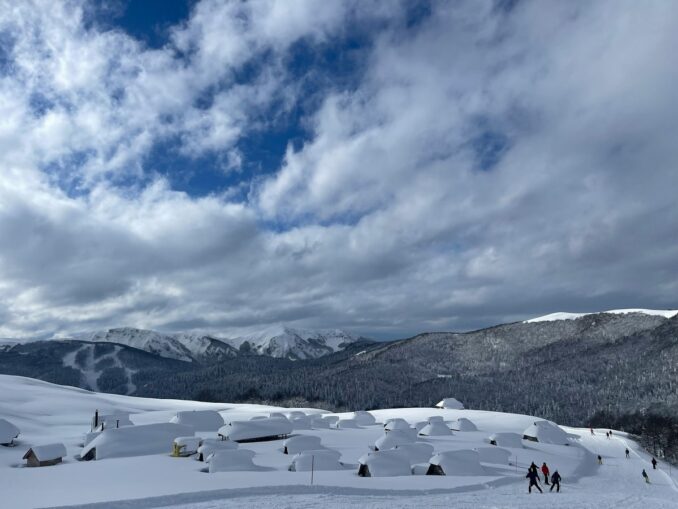
All it takes is
the official opening of the ski slopes for free bus services to start running from the country’s capital, Podgorica, to the mountain resorts on weekends.
There are plenty of people eager to hit the slopes. Kolašin and Žabljak still make little use of artificial snow, and in some years, hotels and guesthouses there are almost fully booked in early and mid-December.
Sometimes, though, there are tourists but no snow. That’s why booking accommodation in Kolašin well in advance can be a bit of a gamble… Still, here’s an excellent option (a little house) at an attractive price.
Daytime temperatures in the north of the country in December range from -10 to 0°C. At night, severe frosts are possible, with thermometers sometimes dropping to -13 to -20 or even -25°C.
Rainfall
Rain becomes a frequent and widespread feature of December in Montenegro. Monthly precipitation can reach 200-220 mm along the coast and up to 130-150 mm in the north.
However, there are rarely fewer than 7-10 clear days in the month. So if you’re longing for some sunshine, a winter stay in Montenegro should suit you just fine — or at least not disappoint.
Here we listed all the places that are absolutely must see in Montenegro…
Sea Temperature
The sea is too cold for most people to swim in. By the beginning of winter, the Adriatic has cooled to +15 to +16°C, and the water continues to cool gradually.
Northern Europeans, however, may well challenge the claim that swimming is «impossible» by taking a dip on a clear, sunny day and showing everyone just how fearless they are.
People in Montenegro sometimes go into the sea even in winter, too. And the farther south they live, the more willing they tend to be.
Either way, only a handful of people are keen to swim in open water at this time of year. But plenty of visitors enjoy warming up on the shore on a sunny day, sitting on the beach and watching and listening to the waves.
In fact, popular spots such as Richard’s Head Beach in Budva can even get quite crowded.
January
Once the New Year celebrations are over, you begin to realize that winter in Montenegro is very real. It’s not just another season of the year, but one that can bring prolonged cold spells.
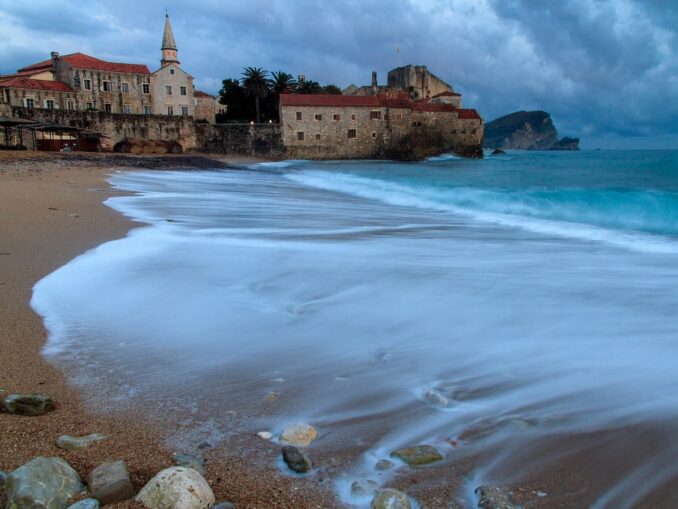
Of course, it depends on where you are, but even in Bar and Ulcinj, you shouldn’t expect temperatures above +12 to +14°C. Along the coast, it’s usually cooler still, around +7 to +10°C.
On some days, temperatures may dip to as low as +5°C, but such cold spells are rare.
In Kolašin and other mountain resorts, temperatures typically range from -3 to -5°C up to +4°C. In early January, outdoor thermometers can even show -7 to -10°C during the day.
Strong winds are common, and rain or even snowstorms can occur.
Clear days are more likely in the northern regions, where temperatures regularly drop well below freezing.
Locals start wearing warm winter jackets as early as November. By January, even the few tourists still around finally feel the need to wrap up properly. The same goes for expats who have recently decided to move to Montenegro.
For roughly the first month of winter, the latter often manage to shrug off the seasonal deterioration in the weather. They stroll around in T-shirts and shorts, occasionally throwing on a light jacket or hoodie.
And there’s actually a good reason for that: on clear winter days, many people in Montenegro dress surprisingly lightly. The sun can feel remarkably warm, rather than merely making a token appearance.
Montenegro in February
According to long-time residents, February isn’t just cold — it’s also extremely unpredictable when it comes to the weather. Then again, it depends on what you’re comparing it with. Way more southern Istanbul in February, for example, is no better.
In any case, pack warm clothes and try not to get too gloomy while reminiscing about those hot summer days. Even in February, there’s plenty for an active traveler to do.
And if you’re the kind of person who likes to see a romantic side to everything, you might even say that spring is just around the corner.
You can almost feel the anticipation of its imminent arrival in the air.
And you’d be right, too. In February, daytime temperatures along Montenegro’s coast rarely fall below +8 to +11°C. Nighttime temperatures also tend to hover around late-autumn levels of +4 to +6°C.
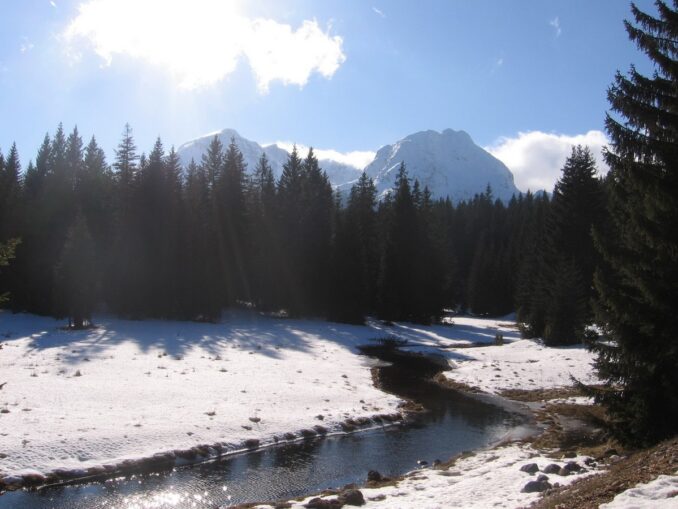
There are still more cloudy and rainy days than sunny ones. But when the sky is clear, the sun feels about as warm as it does in central Europe in May.
The days are also getting longer, increasing from 10 to 11 hours. The sun rises before 7 a.m. and sets at around 5 p.m.
All in all,
by February, Budva, Kotor and Tivat are already getting ready for spring. In Herceg Novi, the mimosa trees burst into bloom, and the traditional festival gets underway. Before the pandemic, this event was so popular that it became a major attraction in its own right.
Meanwhile, the ski slopes in Žabljak — usually, though there are years when snow either doesn’t fall or melts quickly — are covered with a thick blanket of snow. And nature shows no signs of blooming just yet.
Skiing and sledding enthusiasts, though, couldn’t be happier. On weekends, the place is so packed that there’s barely room to move.
Prices in 2026/2027
A round-trip flight to Podgorica somewhere from other European cities in the winter months cost around €200-300 per person.
You can also fly to Tivat Airport — the price is unlikely to change. You just need to bear in mind that this transport hub ceases operations after dark. On the other hand, it is located much closer to the coastal resorts!
A significant number of hotels in Montenegro simply close for the winter. As a result, prices at those that remain open during the low season can be exceptionally attractive.
In Budva, you can find a double room for up to €40 per night. It probably won’t be right in the old town or next to the sea, but during the colder months, that can actually be a good thing.
Other towns and villages in Montenegro tend to be even more affordable in winter, allowing you to find accommodation at lower prices — up to €30-35 per night.
This usually doesn’t apply to properties right in the city centers, where accommodation costs more.
For example
at Casa Di Mino Old Town, right in the heart of Budva’s old town, you can spend a week in December for just over €350. And what’s more, you’ll have an entire private studio apartment to yourself!
But if you’re willing to stay a little farther out and rent an apartment in a newer building, you can save a lot of money.
Not far from Budva’s old town, you’ll find the modern, spotless Milara Apartments. In mid-December, an entire family of four can stay there for around €250 per week.
You can rent a car during this period for a modest €25-30 per day, or for an even more budget-friendly €300-350 per month.
Winter is definitely the off-season in Montenegro. It’s hardly surprising that businesses are happy to take whatever income they can get at this time of year!
Excursions
Booking a tour in person can be tricky, as many tour agencies go into hibernation for the winter. However, there’s usually a wide selection of excursions available online, and in some cases, you can expect a decent discount compared with summer prices.
A meal for two at a café — even one by the waterfront — will cost around €25-30. That’s excluding alcoholic drinks, but the portions of pljeskavica or ćevapi are so generous that you’ll have trouble walking afterward.
Things to Do
Besides the wide range of winter sports, there are plenty of other activities that you can — and really should — enjoy if you decide to spend the winter in Montenegro. First of all, it’s worth exploring the coastal towns.
Budva, Kotor, Perast and Herceg Novi all have lovely waterfront promenades. You can stroll along them without putting your health at risk, even when the sea is rough and foamy waves crash dramatically against the coastal rocks.
Winters with hurricane-force winds, torrential downpours or heavy snowstorms severe enough to make you stay indoors aren’t an annual occurrence. And when they do happen, they usually don’t last long.
Make time to explore the old quarters, too. They’re every bit as charming as those in Dubrovnik, Croatia, or Venice, Italy.
Once again, in February, Herceg Novi hosts its wonderfully spring-like Mimosa Festival. Even people who prefer to spend the winter months in tropical countries travel here to take part.
Should you visit Durmitor National Park and the Tara Canyon in winter? We’d advise against it. The weather really is highly changeable, and the amount of snow that falls there may make you think you’ve ended up in Siberia.
Lake Skadar, on the other hand, is well worth a visit, as is the little town of Virpazar, sometimes called Montenegro’s own Venice. Even in January, there’s rarely any of that «white nuisance» there, just as in the rest of the country’s south. And the number of tourists is nothing like it is in summer — it’s minimal!
© Eurotraveler