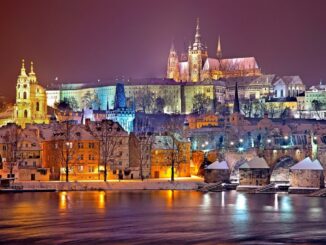
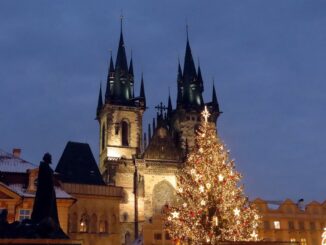
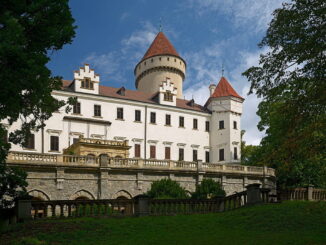
What to see in Prague in 2–3 or 4–5 days on your own? The main attractions and interesting places, fascinating facts, convenience walking routes. Where to stay in Prague overnight, what to do with children? to see in the surrounding area and beyond, including Germany — all this in a detailed Eurotraveler guide.
We all live for our travel dreams, and there’s something wonderful in thinking about it during the working day. But once we finally reach the destination we’ve been longing for, it’s easy to feel a little lost. Or, worse still, to miss something truly special simply because we didn’t know about it.
That’s why, when planning what to see in Prague or another city equally rich in attractions, putting together at least a rough itinerary should be a top priority. At least, that’s what any reasonably experienced traveler does — even when visiting the Czech capital for the second or third time.
Of course, a lot also depends on the length of your trip. Many people, for example, insist that it’s simply impossible to see all of Prague’s interesting places in 3–4 days.
We’d beg to differ:
- you can certainly do the main things
- and get a good feel for the city in that time!
But will you have enough time to soak up its atmosphere, fall under the spell of its historic buildings, experience the magic of a real medieval fairy tale? That depends, it seems, on how packed your itinerary is. There’s a big difference between strolling around and rushing from one attraction to the next!
Another factor is whether you’re willing to splurge on a city tour. A good guide — one who goes beyond the usual tourist clichés — can paint a truly memorable picture of the city in just a few hours.
Day 1
Your first day in the city — don’t even think about going anywhere else — should be devoted exclusively to Prague Castle. Without a doubt, this is the first place any tourist should visit in Prague.
There’s just one thing to decide: what time of day do you want to immerse yourself completely in exploring it? For the complex itself opens its grounds at 6 o’clock (6 a.m.), but St. Vitus Cathedral and the other historic buildings don’t open until 9 (9 a.m).
Exhibitions inside Prague Castle don’t open until 10 a.m. at all!
Exploring the towers and fortifications, Vladislav Hall, the Old Royal Palace, and Queen Anne’s Summer Palace — if it’s open (it only opens during exhibitions; check the details here: hrad.cz/cs/kultura-na-hrade) — will take a fair amount of energy. And that’s before visiting St. Vitus Cathedral and the picture gallery, strolling along the charming Golden Lane, and exploring the privately owned Lobkowicz Palace.
If you’d like, you can get an audio guide in your native language, although many visitors prefer listening to a live tour guide.
When choosing a pretty expensive hotel, you may be able to walk to the Castle in 15–20 minutes (for instance from the inexpensive but good Hotel Atos). Otherwise, we’d recommend taking advantage of Prague’s well-developed public transport network (trams and buses) or traveling by Prague Metro.
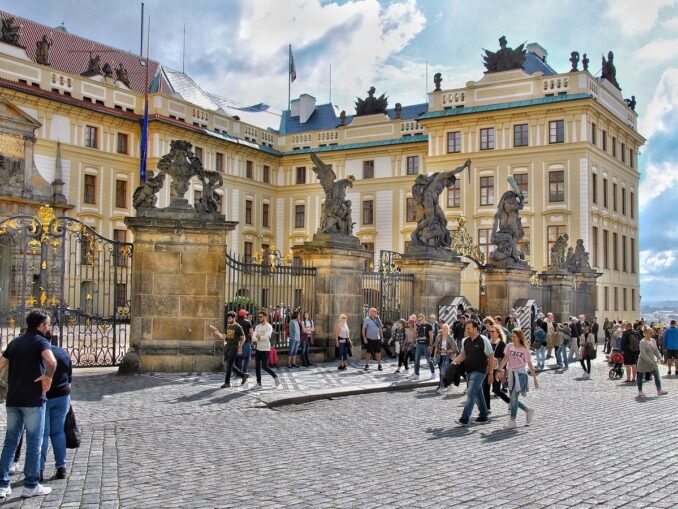
Prague Castle
is located in the historic district of Hradčany. To the south, it borders Malá Strana (Lesser Town), while the Deer Moat marks its northern boundary. Beyond the moat lie the Royal Garden and Queen Anne’s Summer Palace.
You can get there by tram No. 22 and enter from the north. Alternatively, take the metro to Malostranská station, southeast of the Castle (be warned: the climb is steep). The main entrance to Prague Castle is on the western side, through Matthias Gate.
Getting Around
The easiest way to pay for public transport in Prague is through the PID Lítačka app (pid.cz/en/tickets-and-fare/how-to-buy-ticket/). Download it to your smartphone, buy a digital ticket, and activate it before boarding. It becomes valid one minute after activation. If a ticket inspector asks, simply show them the QR code in the app.
You can also buy a paper ticket from vending machines at metro stations or from newsstands and tobacco shops. Just remember to validate (stamp) it when you board. Otherwise, you’ll be considered a fare dodger and could be fined.
For more information about Prague’s public transport system, timetables, fares, and discounts, visit the official website: dpp.cz/en.
Where to Stay Overnight
We particularly recommend the cozy and relatively affordable Pension Apartment Granit in Prague 8. In autumn, a double room costs around €100 per night.
It may not be in the very center of the Czech capital, but is wonderfully quiet, green, and blessed with clean air. Views open from the guesthouse terrace are excellent, too!
There’s also free private parking, which is especially useful if you’re exploring the Czech Republic by car.
Botanical Garden, Prague Zoo, and Troja Chateau are all relatively close by, around 10 minutes away by car or public transport. Keep in mind that Troja Chateau is an attractive Italian-style summer residence that’s open to visitors from March through November.
Surprisingly affordable considering its location is the Hotel Atos, located in Prague 5 near Petřín Hill. It’s about a 15-minute walk from Prague Castle and Wenceslas Square.
In terms of value for money and location, Hotel Atos has few rivals in Prague. In January, after the holiday rush, a room for three (2 adults + 1 child), including breakfast, costs just €80-100 per night.
We should also mention the much more budget-friendly Hotel Golden City Garni in the quiet Žižkov district. In the off-season, a double room costs around €50 per night.
There’s a tram stop nearby, with just four stops to the city center, as well as a large supermarket. The hotel has its own parking lot, and guests are treated to a hearty breakfast included in the room rate, which is very reasonable by local standards!
Day 2
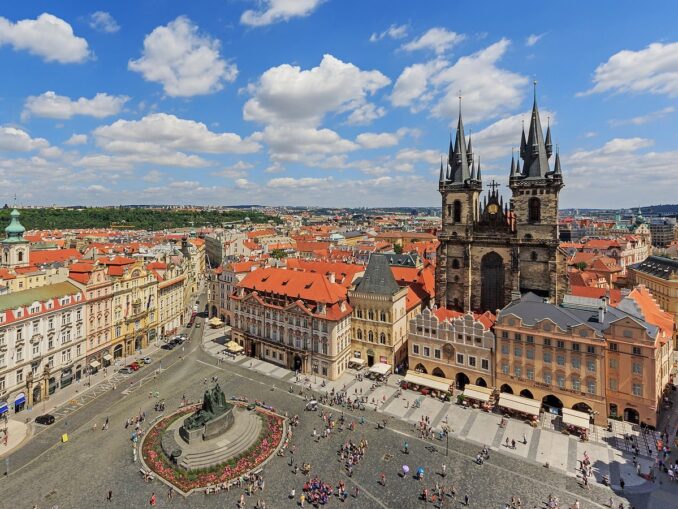
Try to devote this day to exploring the historic center at your own pace. In particular, take a look at the heart of Prague: Old Town Square, with its Town Hall and the famous Prague Astronomical Clock adorning the tower.
The area around the clock is usually packed with tourists trying to figure out what all those circles and symbols mean. Naturally, few are inclined to move aside and let you have a go at solving the puzzle yourself.
The square is also home to the wonderfully Gothic and distinctly Czech Church of Our Lady before Týn, which you should definitely step inside, and Kinský Palace, part of the National Gallery. The latter is a beautiful example of Rococo architecture and is particularly impressive from the outside.
Either you will see there the famous House at the Stone Bell, which you’ll have to find for yourself, is the oldest building on the square. Dating back to the 13th century, it’s all that remains of the old royal palace where the mother of the future King Charles IV once lived.
Charles IV was the ruler who transformed Prague into the wonderfully beautiful city we know today
We also recommend admiring Old Town Square from above, from the top of the local Town Hall tower. You can discover some fascinating secrets and stories with a guide or on your own. Either way, Prague will reveal a different side of itself: cozy, charming, and enchanting.
From Old Town Square
it’s an easy walk to the Clementinum, the city’s «largest complex of historic buildings» outside Prague Castle. The site was once home to a Jesuit college, practically a state within a state.
Today, you can join a 50-minute guided tour of the Clementinum. It includes a climb up the 68-meter-high Astronomical Tower, which offers a magnificent bird’s-eye view of the entire Old Town.
If you feel it’s too early to head toward the Vltava River and take a leisurely look at the sculptures on Charles Bridge, start by going in the opposite direction, toward the Powder Tower. Its dome will beckon to you — both literally and figuratively — as you explore the historic streets and squares on this side of the river.
The Powder Tower dates back to the second half of the 15th century, and you can climb to the top of its centuries-old, soot-darkened tower as well.
Charles Bridge
With its contemplative statues of saints and fairy-tale Gothic towers at either end, Charles Bridge is one of Prague’s main attractions. It’s simply impossible to miss: this is the city’s main pedestrian thoroughfare connecting the two banks of the Vltava.
At the Old Town end of the bridge stands the Old Town Bridge Tower, construction of which began in the mid-14th century. Anyone can climb to its observation deck for a standard admission fee of around 200 Czech korunas.
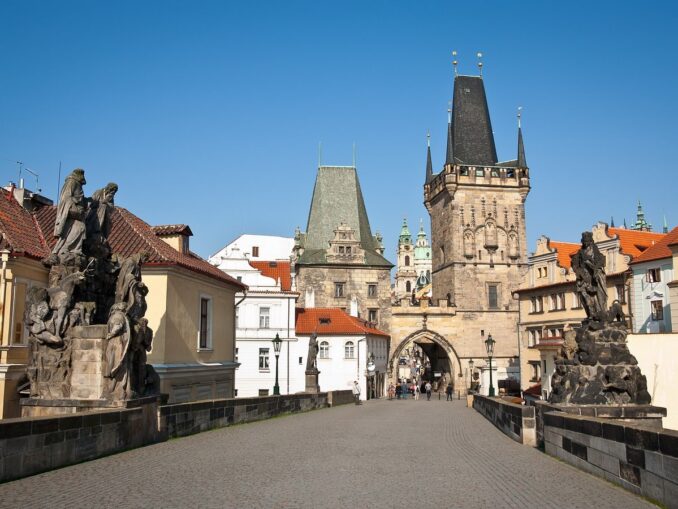
Reviews do, however, suggest that the view of Prague is even better from the other end of Charles Bridge, from the Lesser Town Bridge Towers. The simple reason is that the panorama is better from there!
If you’re planning to visit Prague in November or during the winter, dress warmly for the climb. It gets absolutely freezing up there!
Interestingly, King Charles IV personally laid the first stone of the bridge at a precisely calculated time: 5:31 a.m. on July 9, 1357. Astrologers had chosen the date and time, and their careful calculations apparently helped ensure the bridge’s long and trouble-free history.
The Left Bank of the Vltava
In this part of Prague, we’d recommend visiting:
- Malostranské náměstí (Lesser Town Square), with the Church of St. Nicholas. It’s right along the natural route from the Vltava River up to Prague Castle.
- Prague Loreto, a religious complex and major pilgrimage site built around a Catholic church. It’s a particularly distinctive example of Baroque architecture.
- The elegant Renaissance Schwarzenberg Palace on Hradčany Square. You may have heard of its Venetian-style sgraffito facade. This decorative masterpiece is definitely worth seeing, especially since comparable examples are now hard to find even in Venice itself.
- Nearby stands the imposing but less elegant Salm Palace, another property belonging to the National Gallery. Its exhibitions focus on 19th-century art and contemporary trends in painting.
- Sternberg Palace is next door, although it doesn’t make quite as strong a visual impression.
Matthias Gate invites you to enter the Castle grounds once again. But during the busiest months, and even in May in Prague, the queue at the entrance can still be long well into the afternoon, suggesting that perhaps you’ve seen enough for one day…
Day 3
On your third day, we recommend taking a little break from history and architecture. This is especially true if you’re traveling with children, as Prague has plenty of places to visit with the younger members of the family.
In particular, we recommend Prague Zoo. It’s easy to visit independently, without a guide, and the Czech Republic’s largest zoo — one of the biggest in Europe — is located on the outskirts of the city in the Troja district.

You can get there from the city center by metro to Nádraží Holešovice station and then take bus No. 12. Alternatively, you can enjoy a 1-hour-and-15-minute boat trip from the central part of the city.
Just keep in mind that during the summer months, the zoo is open from 9 o’clock o 18 (9 a.m. to 6 p.m). If you visit Prague in winter, its opening hours are shorter, and it closes at 16 o’clock (4 p.m).
For more information, visit the official Prague Zoo website: zoopraha.cz/ru.
Where Else to Go with Children
This topic really deserves a separate, fairly substantial article. For now, we’ll briefly mention a few places worth checking out if you’re visiting Prague with children.
First of all, ideally on your very first day, consider visiting the Toy Museum. Conveniently, it’s located right inside Prague Castle. It’s capable of enchanting not only the youngest visitors but also older children and even adults.
If your child loves adrenaline-fueled activities, you could visit Bobová dráha, a bobsleigh track and adventure park. It has an outdoor bobsleigh run that’s open all year round (!) as well as a rope course.
Children may also be fascinated by the enormous Kingdom of Railways, Prague’s model railway museum. In fact, the sheer scale of the exhibits impresses most adult visitors, too — kralovstvi-zeleznic.cz/en/model-trackage/!
Day 4
You could spend the day taking leisurely walks through Prague’s charming historic neighborhoods. You might even join an unusual guided tour exploring courtyards and hidden corners of the city that tourists rarely get to see.
If you’re exploring independently, we highly recommend broadening your horizons with a visit to Josefov, Prague’s historic Jewish Quarter in Staré Město. It’s located north of Old Town Square and is often overlooked by foreign visitors who are always rushing off somewhere else.
And that’s a shame, because the Jewish Quarter is one of Prague’s most fascinating areas, thanks in large part to how beautifully maintained it is.
During a major redevelopment in the late 19th century, much of the district was completely rebuilt, with buildings designed in a consistent architectural style. Today, it has a beautifully cared-for appearance and is one of the most pleasant parts of Prague to explore on foot.
Despite the redevelopment, several historic synagogues have survived in Josefov, along with the Jewish Town Hall and the Old Jewish Cemetery.
Close to Prague’s Jewish Quarter stands St. Agnes Convent. Founded in the 13th century, it has survived to this day in almost perfect condition. Inside, you’ll find a substantial collection of exhibits illustrating medieval religious art.
On the opposite bank of the Vltava lie the leafy Letná Gardens, which offer wonderful panoramic views of Prague.
Wenceslas Square
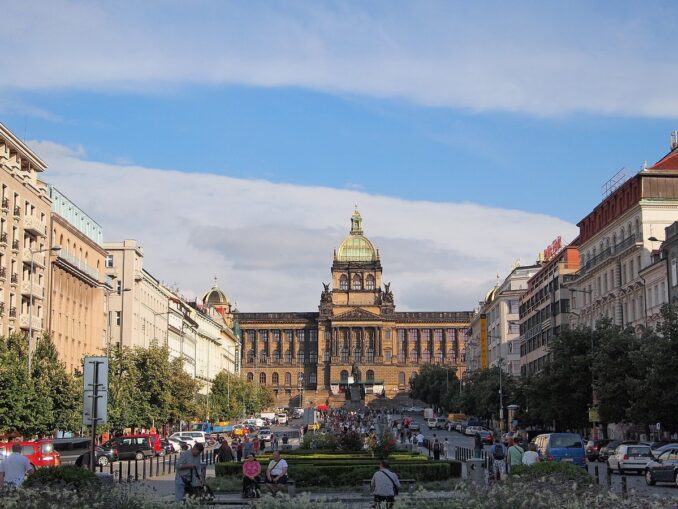
You may be surprised that we haven’t mentioned Wenceslas Square until now. It’s the largest square in the Czech capital and is served by the Můstek metro station. Lined with restaurants and cafés, it’s crowned by the impressive National Museum, which has reopened its doors following a recent renovation.
The museum is well worth visiting if you have time. But even if you don’t, there’s plenty to keep you occupied around Wenceslas Square.
For starters, it’s a great place to stop for lunch or dinner, as there are plenty of cafés and restaurants. Prices here, however, are far from cheap. They may come as a surprise to Russian tourists who assume that everything in the Czech Republic costs less than in the rest of Western Europe.
Day 5
It’s time to take a breather after the previous few days packed with activities. But since your time is limited, we’d suggest making the most of it by planning a day trip outside the city.
Even somewhere nearby is worth the effort: the areas just outside Prague are home to two major castles. And visiting even one of them will leave you with wonderful memories!
For example, Karlštejn Castle was founded by the legendary King Charles IV. This is one of the reasons why it consistently ranks among the Czech Republic’s top five attractions.
Travelers with a keen interest in architectural history may complain that the fortress looks too new for its age. Given how old it is, they might expect it to look a little more weathered.
But for ordinary visitors without such preconceptions, a visit is sure to be enjoyable. What’s more, getting to Karlštejn from Prague is easy!
The best place to start is Prague’s main railway station. Buy a ticket to Karlštejn station. The distance is around 40 km, and the castle stands in the middle of a small, charming town.
Konopiště Castle
Interestingly, reviews of this place are even more enthusiastic! The historic castle underwent extensive renovations in the late 19th century, so visitors are often delighted by the sheer number of rooms and the excellent condition of the interiors. After all, this was once the residence of the heir to the Austro-Hungarian Empire!
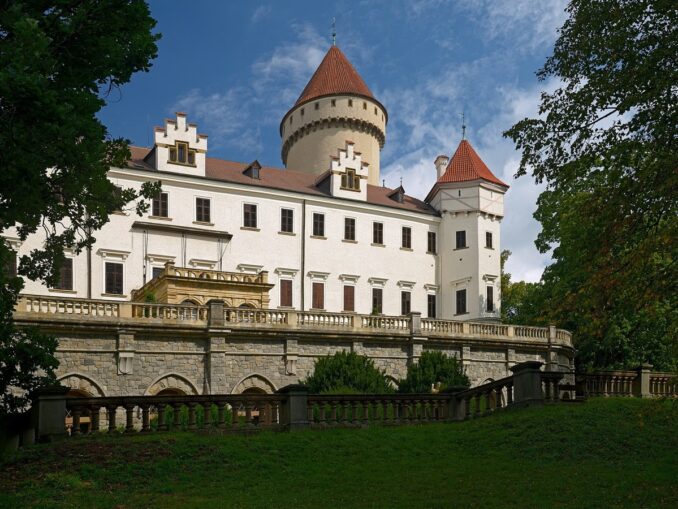
You’ll need to travel southeast for around 50 km. The train takes you to Benešov station, from where you’ll have to walk about 2 km to reach the castle.
Another of the Czech Republic’s most beautiful castles, Hluboká nad Vltavou, lies considerably farther from Prague. A trip there will take the whole day and can be quite tiring.
It’s about 150 km from the capital and can be reached by car, bus, or train. If you travel by rail, you’ll need to change trains in České Budějovice.
Dresden, Karlovy Vary, Český Krumlov
If you have a little more time available, perhaps a full week, we recommend taking a trip from Prague to Dresden, about 150 km away by road. It’s a stunning German city that surprisingly few travelers choose as the main destination of their trip.
And why not? Dresden has plenty of fascinating attractions to explore, from the Zwinger Palace and Picture Gallery to the priceless collection at the Green Vault!
What’s more, you’ll enjoy breathtaking scenery along the way, first in Bohemian Switzerland and then in its Saxon counterpart.
You can travel from Prague to Dresden by train or bus. Organized excursions with Russian-speaking guides are also available on a regular basis.
Trips from Prague to Karlovy Vary are hugely popular throughout the year.
You can choose a short, one-day guided tour that offers a quick introduction to the famous spa town and includes a visit to the brewery that produces Krušovice beer. Or will explore it independently, taking the time to discover Karlovy Vary in detail.
Also, it seems to be a good idea of venturing into the surrounding area: to visit Loket Castle, the town of Cheb, and the spa town of Mariánské Lázně.
Another excellent option is an independent trip from Prague to Český Krumlov, a town with its own enormous, remarkably well-preserved castle complex. It also has that unmistakable atmosphere found only in small Czech towns — and nowhere else!
- What to visit around Prague in one day?
- All possible ways to get from Prague to Vienna
- A list of souvenirs and gifts to buy in the Czech Republic
© Eurotraveler