What to see in Berlin in 2–3 days or longer on your own? The German capital’s main attractions and most interesting places, convenient walking routes, where to stay overnight. Where to go in Berlin with kids, what to visit in Germany as a whole — in a short but detailed guide by Eurotraveler.
Once a city that made little attempt to establish itself as a popular tourist destination during the era when Germany was divided into two states, Berlin is now back in the spotlight. The number of travelers eager to visit is constantly growing, and the list of attractions keeps getting longer! As the local authorities understand better than those in many other European cities that attracting tourists takes more than promises and persuasion.
For now, though, we’ll leave local hidden gems and lesser-known places to those visiting the German capital for the second time or more.
- This guide is aimed for travelers who aren’t quite sure what to see in Berlin in a couple of days
- And are struggling to put together an itinerary that allows them to make the most of their time.
We’ll also tell you about the places worth visiting first when traveling to Berlin with a child. Not just to keep them entertained, but also to introduce to some useful and interesting facts.
And for the most intrepid travelers, there’s a paragraph mentioning cities that are easy to reach from Berlin. It’s there in case you find yourself thinking, «this just isn’t enough” and feel the urge to explore somewhere else in Germany.
So, naturally, let’s take things in order!
Berlin’s Attractions — Day 1
Many, if not most, tourists visiting Germany’s largest metropolis for sightseeing rather than business will hardly want to miss the chance to:
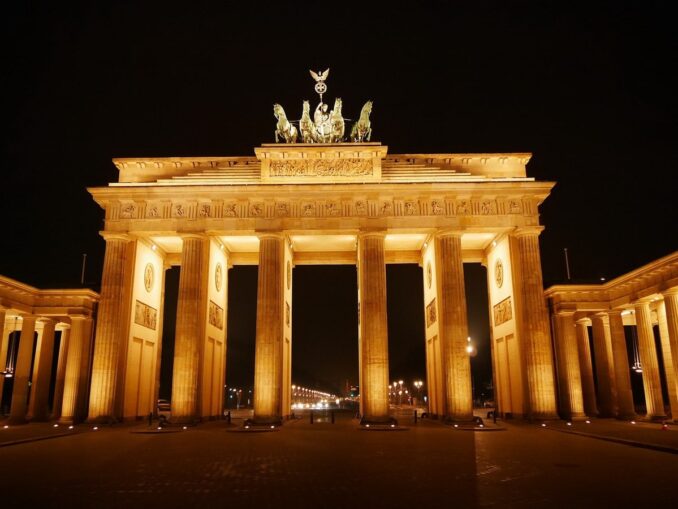
- see the Brandenburg Gate
- take a walk beneath the dome of the Reichstag.
The former is simply a symbol of the city. And what’s especially encouraging is that it’s one of the places you can visit in Berlin for free.
The easiest way to get to the Brandenburg Gate is by subway, depending, of course, on where you decide to stay. The underground system here is called the U-Bahn. Get off at the aptly named Brandenburger Tor station.
If the Brandenburg Gate is a symbol of Berlin itself, the Reichstag is a symbol of Germany and the seat of its parliament, the Bundestag. The building also serves as a powerful reminder of the defeat of Nazism.
Following its reconstruction, the Reichstag has carefully preserved inscriptions left by Soviet soldiers who made it to Berlin, along with traces of shrapnel and bullet holes. The red flag that once flew above its dome has, of course, been removed, but other reminders of that devastating war have been left in place.
So that future generations of visitors remember the tragedy and help ensure it never happens again.
Any tourist can visit the parliament building in Berlin, provided they make an advance reservation on the official website. Visitors who simply want to explore the dome are thoughtfully provided with an audio guide. And it won’t cost them a cent!
- Live-guided tours of the building are also available
- However, these take place only when parliament is not in session.
Berlin’s Reichstag is practically a stone’s throw from the Brandenburg Gate. So it’s hard to spend even half a day visiting these two major Berlin landmarks.
Visiting the famous
Treptower Park
however, where a gigantic monument depicting a Soviet soldier holding a child and a sword stands guard, requires a trip to the southeastern edge of Germany’s old-new capital (take the S-Bahn, line S9; the journey takes around 40–45 minutes).
Perhaps it’s not exactly around the corner. But how not pay their respects to the memory of those who gave their lives for a noble cause — the future of all humanity?
Treptower Park is both a memorial and a military cemetery. Thanks to the Germans’ conscientious care, it has been maintained in excellent condition to this day!
Museums
Next, we recommend heading straight to Berlin’s Museum Island! Just bear in mind that even a quick look at the exteriors of the Bode Museum, the New and Old Museums, the Pergamon Museum, the Old National Gallery, and Berlin Cathedral will take a couple of hours.
If you want to go inside and explore the collections, you’ll need to adjust your itinerary. For example, set aside a separate day to visit one or two of Berlin’s museums.

Bear in mind that the Pergamon Museum, which once housed the famous Pergamon Altar, the Ishtar Gate from Babylon, and many other treasures of the ancient Near East, has long been covered in scaffolding and is still undergoing restoration. On the bright side, visitors can head to the temporary Panorama exhibition set up opposite the museum to see what the legendary ancient city of Pergamon looked like.
- The Pergamon Museum is scheduled to partially reopen after restoration in June 2027 (it’s possible, but unlikely, that the work will be completed in time)
- Only a small part of the collection will return to regular exhibition, allowing visitors to see the Pergamon Altar and the halls in the north wing. The Ishtar Gate and many other exhibits will remain inaccessible for quite some time: the museum’s reconstruction is not expected to be completed until 2037.
Good to Know
If you plan to visit several museums and would rather not pay more than necessary, buy a Berlin WelcomeCard Museum Island pass valid for 72 hours. It gives you free admission to all the museums on Berlin’s Museum Island, as well as free use of the city’s public transport.
You can buy a Berlin WelcomeCard at the airport, the main railway station, the tourist information center near the Brandenburg Gate, and ticket machines at S-Bahn stations. Or, of course, online: www.berlin-welcomecard.de/en/buy-tickets.
Walking from the Brandenburg Gate along Unter den Linden to Museumsinsel takes about 2 km. If you take the S-Bahn from Brandenburger Tor, you’ll end up taking a roundabout route of… just one or two stops.
And you’ll still have to walk from there. Even so, the total journey time will be no more than 15–20 minutes.
Where to Stay Overnight?
Fortunately, Berlin is not yet one of those European cities — Paris, Rome, or Barcelona — where trying to spend the night near or in the city center can ruin a budget traveler financially. So, in some cases, especially if you visit Germany’s capital during the low season (here’s our guide on whether Berlin is worth visiting in winter), you can comfortably choose accommodation close to the main attractions.
- The first neighborhoods worth considering are Mitte and Prenzlauer Berg
- Both have plenty of genuinely good places to stay that won’t break the bank.
To give you a couple of examples, consider Premier Inn Berlin City Spittelmarkt. It’s a simple hotel with reasonably spacious rooms. It’s also surprisingly affordable — around €60–70 for a double room in January — and a very well-kept four-star property.
The hotel is just 200 meters from Spittelmarkt subway station and within easy walking distance of many attractions, including Berlin Cathedral and, naturally, the museums.
Leonardo Royal Hotel Berlin Alexanderplatz is located practically on the border between Mitte and Prenzlauer Berg. It’s just two tram stops from the famous square, and reviews rightly describe it as “a good hotel in an excellent location”.
We’d add one more thing: it’s affordable, too, with rates starting at €80 per night for two!
We’ve also put together a concise yet comprehensive guide to which area of Berlin to choose for stay?
Day 2
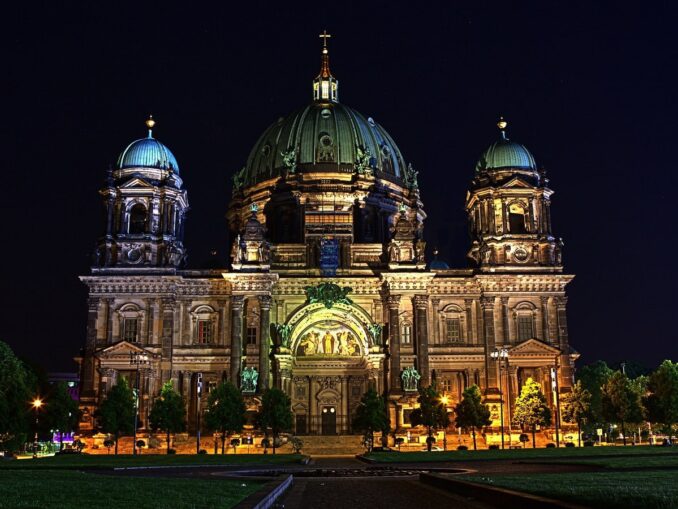
Finish exploring the museums you didn’t get around to visiting the day before (remember, the pass is valid for 72 hours). You might also want to step inside Berlin Cathedral, whose impressive building is hard to miss when strolling around Museum Island.
Highlights include the lavish interior, a climb to the upper gallery, and a visit to the crypt, where prominent members of the House of Hohenzollern are laid to rest. The exception is Frederick the Great, or Friedrich der Große. As stipulated in his will, this monarch, a contemporary of Catherine the Great of Russia, was buried near his beloved Sanssouci Palace in Potsdam.
Not far from Berlin Cathedral is the DDR Museum, a place that stirs up plenty of nostalgia for people of certain generations. It’s an interactive museum featuring a large collection of everyday objects from life in socialist East Germany.
- You can also explore a fully furnished apartment from that era and take a ride in a car manufactured in the GDR.
The Afternoon
would be a good time to go shopping at Alexanderplatz, the iconic square in former East Berlin. It’s two experiences in one:
- you’ll see a major landmark
- and pick up a souvenir or two.
You can also grab a bite to eat here, as there’s no shortage of cafés and restaurants around this famous square, one of the best-known in the German capital.
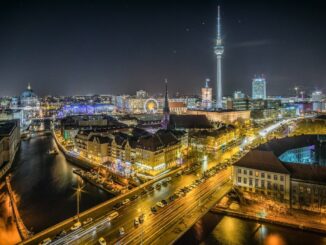
Visiting Alexanderplatz in December is especially rewarding, when the Christmas market fills the square with festive cheer. The city’s main observation deck is also nearby, at the Berlin TV Tower (Panoramastraße, 1A).
It’s hard to miss: the distinctive needle-shaped tower topped with a sphere is visible from almost anywhere in the city.
The easiest way to get from Museum Island to Alexanderplatz is by bus (routes 48, 4, 100, or TXL) or tram (routes 5 and 6). You can also walk — a distance is only 1.5 km long.
Just a short distance from Alexanderplatz is Hofbräu Wirtshaus Berlin, one of the largest beer restaurants in Germany and Europe, with room for up to 4,000 people at once. You’ll find it at Karl-Liebknecht-Str. 30.
If beer isn’t your thing — or even if you’ve already enjoyed a mug or two — you can
Round off the Day at Gendarmenmarkt
This square, framed by two churches, the French Cathedral and the German Cathedral, along with the imposing Konzerthaus, is one of Berlin’s rare surviving examples of architecture from the late 18th and early 19th centuries.
It’s hardly surprising that Gendarmenmarkt is often called the most beautiful place in Berlin. And when the Christmas market sets up here, it also becomes the liveliest.
You can get from Alexanderplatz to Gendarmenmarkt in about 15 minutes by subway, or 25 minutes on foot!
It’s worth noting that Gendarmenmarkt is essentially right by Unter den Linden, along the natural walking route connecting the Brandenburg Gate, Museum Island, and Alexanderplatz.
Day 3
If you’re visiting Berlin in summer, or at least not in winter, set aside a full day for a trip to the royal retreat of Sanssouci on the outskirts of the capital. The palaces here are truly distinctive, and a stroll through the extensive, beautifully maintained park will leave you with a wonderful feeling.
Sanssouci is in Potsdam, which lies in fare zone C. You’ll need to take a suburban train, for example, from Alexanderplatz station or Berlin’s main railway station. Get off at Potsdam Park Sanssouci.
Remember that the complex is closed on Mondays: www.spsg.de/schloesser-gaerten/objekt/schloss-sanssouci/.

Alternatives
With limited time, you may have to leave some interesting attractions off your itinerary. But if you stay in Berlin for four or five days, you’ll have time to explore them. For example, we’d recommend visiting:
- The Gemäldegalerie, or Picture Gallery, at the Kulturforum. It’s the city’s leading art museum, with around 1,500 paintings by the Old Masters in its collection
- The surviving sections of the Berlin Wall, including those decorated by talented artists at the East Side Gallery
- The Kaiser Wilhelm Memorial Church, damaged in an air raid in 1943 and deliberately left unrestored. It’s a moving memorial to the victims of war. Only part of the tower remains, nicknamed the “Hollow Tooth” by Germans. It stands on Breitscheidplatz, at the beginning of the famous Kurfürstendamm boulevard
- The Berlin TV Tower, or Fernsehturm. It stands 368 meters tall, with its observation deck at a height of 203 meters — just a little lower than the Eiffel Tower’s observation level in Paris
- We’d recommend skipping Checkpoint Charlie. What’s the point of looking at a checkpoint, even a historic one? Especially with enormous crowds of tourists everywhere?
- Charlottenburg Palace and its park. The palace itself gets mixed reviews, with relatively few visitors praising it — some find it too conventional and lacking in character. The park, on the other hand, is a place many people are happy to visit again and again
- Berlin Zoo: 33 hectares and around 20,000 animals, with plenty of space beyond traditional cages! It’s a wonderful outing for children and adults alike. There’s also a huge aquarium on the zoo grounds.
Where to Go with a Child
The zoo in Tiergarten is the first place that comes to mind in this context. But naturally, it’s far from the only place in Berlin where you can keep children entertained.
We’d definitely recommend visiting the German Museum of Technology. It’s so large and fascinating that you’ll need at least three to four hours just for a quick look around.
Families with children of middle-school age might also enjoy Berlin’s Museum of Natural History. Its collections and multimedia presentations are engaging without being overwhelming.
Another fascinating place for kids in Berlin is the Spy Museum. Here, they can do more than just look at exhibits: they can try out a lie detector, for example, or navigate laser traps.
Longer Trips
Remember that Germany, despite its size, isn’t an especially large country. In just four to five hours, you can travel from Berlin to Munich. And once you get there, you’ll have plenty to see!
Fortunately, Bavaria has plenty of attractions beyond Munich. As for Munich itself, Germany’s unofficial southern capital, you’ll easily find enough to keep you busy for at least a week.
You can also reach Hamburg by train from Berlin in just two and a half hours. It’s Germany’s second-largest city, as well as the largest non-capital city in the European Union and the country’s main port!
- A ready-made 3-day itinerary for exploring Hamburg
- What to expect when traveling to Germany by car
- A list of German castles you can combine into a single itinerary
© Eurotraveler