Where to Go from Vienna for a day trip or a longer independent getaway? What are the main attractions and interesting places, how far away are they, and how do you get there? Which places near Vienna should you visit first, and where else can you explore in Austria and beyond? Eurotraveler has all the answers.
Austria’s capital is a huge city, sometimes seeming almost too big for such a relatively small European country. Still, anyone familiar with the grand imperial past of the «City of Waltzes» won’t find that surprising.
Centuries have come and gone, but they have left behind a magnificent legacy that continues to attract new visitors.
So yes, there’s plenty to see in Vienna. And even first-time visitors will find enough to keep them busy in the Austrian capital for at least 3-4 days.
At the same time, don’t forget about everything that lies beyond the city, in the rest of Austria, where the choice of destinations is also vast and varied. Once you start exploring the possibilities for day trips from Vienna, it’s easy to get carried away!
After all, you’ll discover not only the most obvious and relatively easy options, such as Kahlenberg and Klosterneuburg. You’ll also find plenty of other fascinating places worth visiting in the surrounding area.
- In fact, the distances involved make it possible to embark on a full-day adventure, or even a multi-day trip.
- You could, for example, visit Linz or Salzburg, Bratislava, or even Budapest or Prague.
But let’s start, of course, with the easier options!
A Quick Tip
— in Favoriten, a district of Vienna that’s not exactly central but conveniently close to the city’s main railway station, you’ll find the very decent Leonardo Hotel Vienna Hauptbahnhof. Staying here makes it especially easy to plan a packed itinerary of trips from Vienna around Austria.
One particularly nice perk of the Leonardo is its relatively affordable accommodation compared with central Vienna. On some dates in May, a popular month for visiting, you’ll pay around €120-130 per night for a double room.
- There are supermarkets nearby where you can pick up snacks for the road.
- As well as restaurants where you can enjoy breakfast or dinner.
Here’s — why we particularly recommend visiting Vienna in May. In a wonderful time of year: light, airy feel, arguably one of the best months to explore the «City of Waltzes».
The Vienna Woods
Immortalized in Strauss’s music and beloved by locals as a favorite getaway, the Vienna Woods are home to several attractions that should appeal to visitors.
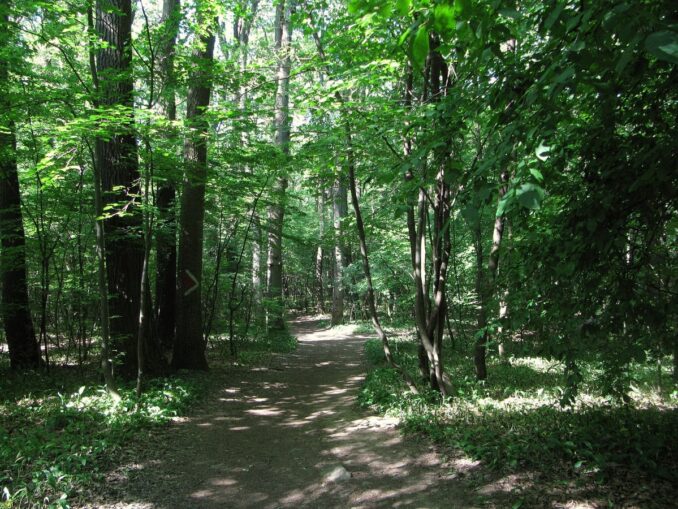
The 484-meter-high Kahlenberg hill, also known as «Bald Mountain», is the best vantage point in the area around Austria’s capital. Once you reach the summit, you can enjoy sweeping views of Vienna spread out below you on a clear day.
- You might even be able to spot the 2,000-meter-high Schneeberg mountain.
- It’s located 130 km to the southwest!
St. Joseph’s Church on Kahlenberg stands on the site of a church destroyed by fire during the Turks’ second siege of Vienna in 1683. Incidentally, a Mass was held here for Polish King Jan Sobieski before the decisive battle, as he arrived to help the Austrians.
Nearby stands the 22-meter-high Stefaniewarte observation tower, which you can climb for a ridiculously small fee by Austrian standards.
It’s also well worth simply taking a stroll through this green expanse, especially on a pleasant, dry, sunny day. The Vienna Woods are crisscrossed by an extensive network of marked walking and hiking trails.
Getting there is easy: bus No. 38A departs from Heiligenstadt U-Bahn station.
Heiligenkreuz
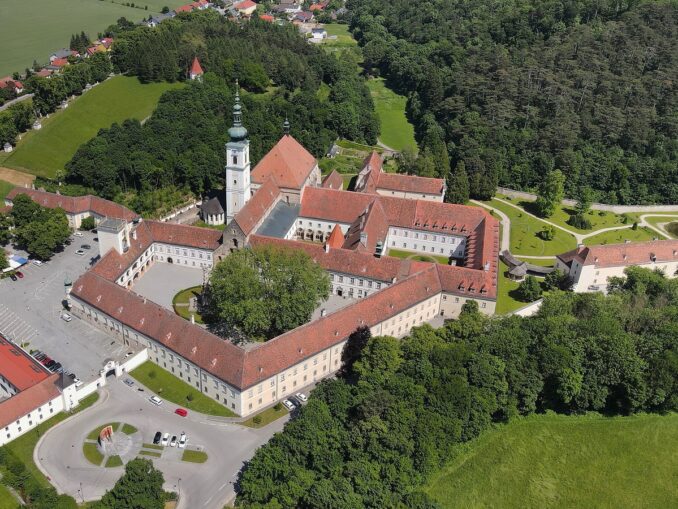
Also located in the Vienna Woods, though quite a distance from Kahlenberg, is the historic Cistercian monastery of Heiligenkreuz. Founded in the 12th century, it is considered one of the largest surviving monastic complexes of its kind in the world. What’s more, it is still an active monastery, not a museum!
Incidentally, the abbey’s archives contain a document dating back to 1342 in which the name Wienerwald appears for the first time. In other words, the Vienna Woods.
Guided tours of the abbey are available. You can find the schedule on its official website: www.stift-heiligenkreuz.org/besichtigung-fuehrungen/english/.
Getting to the abbey from Vienna by public transport isn’t particularly convenient. First, you’ll need to take a train to the small town of Baden (Baden bei Wien), then change to bus No. 359.
Traveling by car makes things much easier: the 30 km journey takes around half an hour.
Baden
We recommend taking a closer look at this place. Baden isn’t just a charming, typically Austrian town, neat and well-kept. Like its German namesake, Baden-Baden is also a spa town.
- And a famous one at that: visitors come here specifically to benefit from its natural hot sulfur springs.
For a relaxing spa getaway, you can stay in a hotel or even rent an apartment. For example, Zum Breyer BNB City Apartment offers spacious, affordable accommodation with lovely views.
A comprehensive guide to everything you can do in the Vienna Woods, if you decide to spend a day exploring the area from Vienna, is available on the region’s very own official website: wienerwald.info/en.
The Wachau Valley
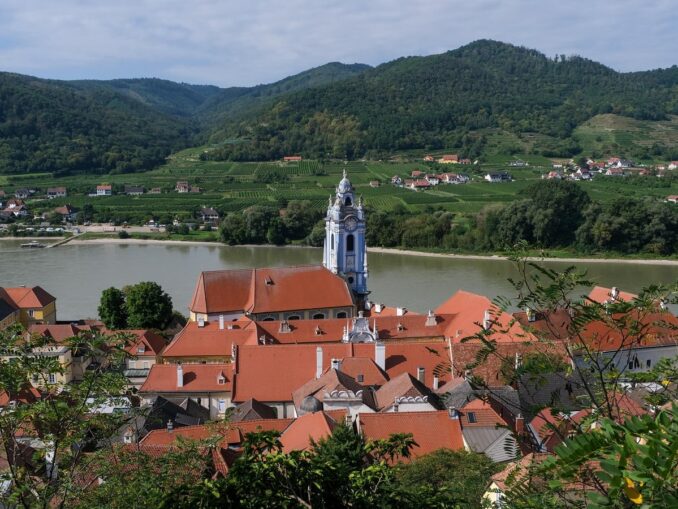
This picturesque Danube valley is usually explored from the deck of a boat or river cruise departing from Vienna’s waterfront.
- A visit to the region typically includes the charming town of Krems, the capital of the local wine-growing region.
- Göttweig Abbey.
- And another magnificent monastery, Melk Abbey, which, like Göttweig, overlooks the mighty Danube from its rocky perch above the river.
To be fair, you can visit all these places on a land-based tour, too. Sometimes, it even works out cheaper than taking a river cruise.
Still, can a journey by road really compare with sailing along the Danube on a proper cruise from Vienna? You’ll be gliding along the river, with breathtaking panoramas unfolding all around you. Views that are as beautiful as they are steeped in history!
Klosterneuburg
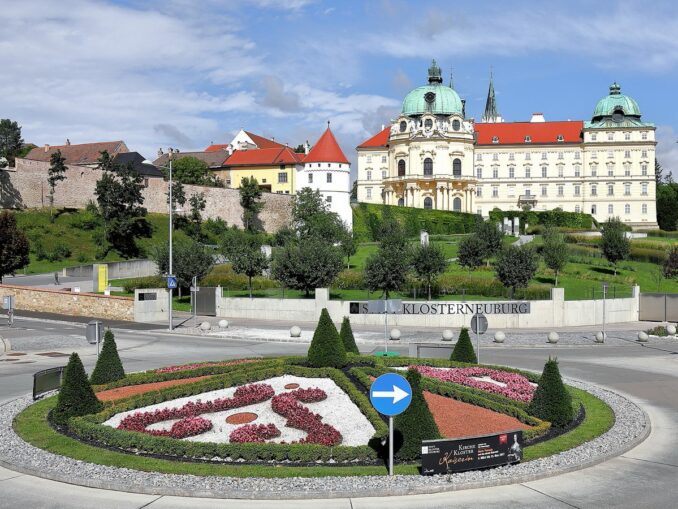
It’s worth taking a trip to this small Danube town near Vienna just to see its famous Augustinian monastery, which has served as a temporary residence for Austria’s rulers on several occasions throughout its history.
- In the 18th century, Emperor Charles VI attempted to transform the monastic complex into a grand palace modeled on Spain’s El Escorial.
- The ambitious project was never completed, but it did leave behind a rather fascinating architectural legacy.
We’ve already written in detail about what to see in Klosterneuburg and how to get there from Vienna (approximately 10 km away). For now, we’ll just point out that getting there couldn’t be easier: you can take a suburban train or hop on a bus.
Kreuzenstein Castle
A remarkably faithful reconstruction of an ancient aristocratic castle in the village of Leobendorf, 15 km north of Vienna, is sure to appeal to anyone with a passion for the Middle Ages.
Kreuzenstein Castle has been used as a filming location for historical movies on numerous occasions. Thanks to the efforts of its owners (the castle is privately owned), its interior also houses an impressive collection of original furniture, furnishings, and weapons. And we’re not just talking armor and swords: there’s even a fully functional catapult!
- Getting to Kreuzenstein from Vienna is a little more complicated than reaching Klosterneuburg.
- The main reason is that after getting off at Leobendorf b.Wien-Burg Kreuzenstein station, you’ll still have to walk for around 40 minutes.
Bratislava
Here’s an interesting fact: Slovakia’s capital is just 80 km from Vienna. That makes it an easy destination for a relatively relaxed day trip. Whether you drive or take a direct train, the journey takes just over an hour!
Not every traveler knows what to see in Bratislava, as the city remains somewhat off the beaten track for European tourism. But even a quick look at the highlights reveals plenty to explore:
- Bratislava Castle,
- the Old Town,
- St. Martin’s Cathedral.
There’s more than enough here to keep you busy for a day, and even a second one. Once you discover just how affordable hotels in Bratislava are compared with those in Vienna, you’ll probably want to spend the night!
Semmering
Not many European capitals can boast their own «home» ski resort. But Vienna can!
And it’s no miniature playground, either: the average elevation in Semmering exceeds 1 km, with the highest point reaching 1,700 meters.
Semmering lies approximately 100 km southwest of Vienna. Getting there by train or car takes a little over an hour.
At the same time, it is far from the fact that visiting Semmering is best in winter. Because although people go downhill and ski in the resort during the snowy season, hiking is popular here in summer.
There is also a completely unique attraction near Semmering — a 41 km long railway.
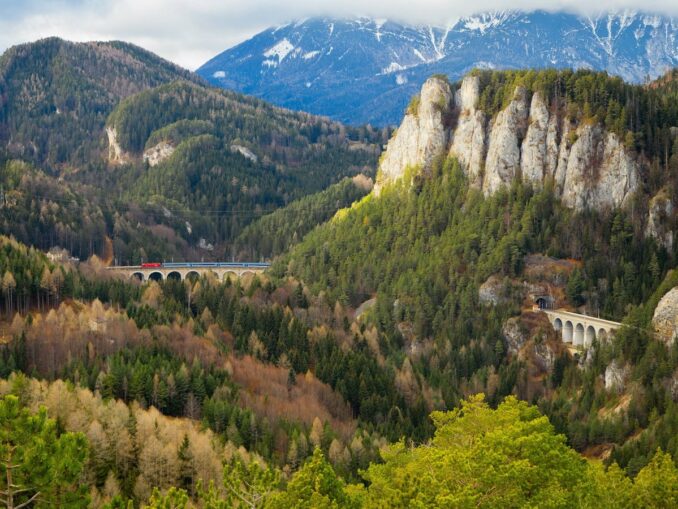
The railway was built between 1848 and 1854 through an exceptionally scenic landscape. Great care was taken to calculate how naturally the tracks would fit into the existing scenery.
- This was most likely one of the reasons UNESCO included the Semmering Railway on its World Heritage List.
Coming to Semmering from Vienna for just one day is, of course, hardly enough. You can enjoy winter sports here, or simply go for a walk, taking in the beautiful scenery and the many charming Alpine chalets. And the mountain air is absolutely wonderful!
There are plenty of hotels and guesthouses in Semmering, many of them cheaper than their counterparts in Vienna.
Linz
Austria’s third-largest city attracts far fewer international visitors than Graz or Salzburg, for example. Which is a real shame.
Linz’s proximity to magnificent Vienna alone is reason enough to include it on your list of places to visit in Austria. Especially since a high-speed train can cover the 180 km distance in just 1 hour and 20 minutes.
Not sure why you should go there or what to see in Linz? Take a look at our detailed guide.
Salzburg
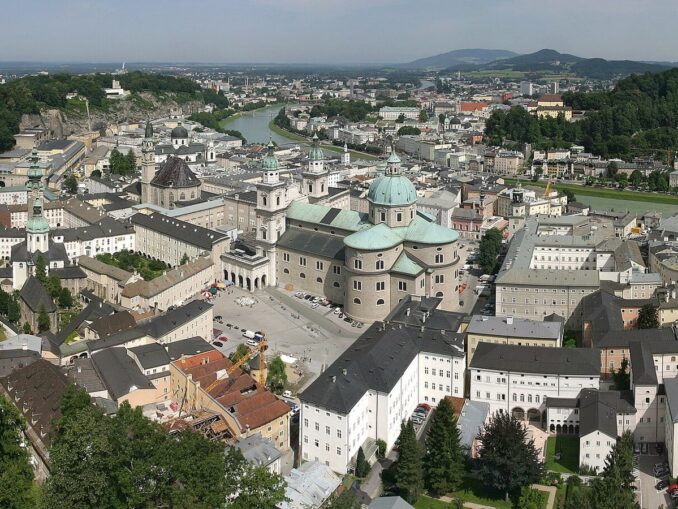
This one’s an obvious choice: Salzburg is the birthplace of Mozart and the home of the annual Salzburg Festival (July-August), a true feast of classical music.
Naturally, it’s also a beautiful city in its own right. And getting there from Vienna by train is easy, with the journey taking around 2.5 hours.
We’ve put together a separate guide on what to see and do in Salzburg. It’s also worth remembering that Salzburg is the most convenient starting point for a trip to Hallstatt (around 1.5 hours by bus), an incredibly picturesque town in the Salzkammergut region.
While you’re in the area, don’t miss the Dachstein mountain massif. And don’t just admire it from a distance. You can:
- walk across the suspension bridge,
- descend into one of the ice caves,
- visit the famous Five Fingers panoramic viewing platform.
Of course, fitting all of this into a single day is a tall order. But who’s stopping you from taking a little break halfway through your itinerary? It’s better to stay in Salzburg (it’s cheaper) than book one of the hotels in Hallstatt.
Longer Trips
Even Salzburg and the Salzkammergut region are pushing the limits of what you could reasonably call a «day trip» from Vienna. So what about cities in neighboring countries? Well, these trips are perfectly doable in practice, not just in theory.
There are even organized and fairly popular excursions that let you visit Hungary or the Czech Republic in a single day.
Budapest
Hungary’s capital is, naturally, a major draw for tourists. And the distance (240 km) makes a day trip from Vienna possible: the train takes around 2.5 hours. But if you already have some idea of what to see in Budapest, is such a short visit really worth it?
A trip like this makes sense if you’re visiting for the first time and simply want to get a feel for the city, see its highlights, and decide whether you’d like to return. But be prepared to feel exhausted afterward, largely because of Budapest’s sheer size and the incredible number of attractions it has to offer.
Prague
In theory, you can also make a day trip from Vienna to Prague. However, the journey takes around 4 hours by train and roughly the same by car, which makes a much longer stay highly advisable.
After all, what can you really see in just a few hours in a city that could easily keep you busy for 3–4 days without revealing all its secrets? Here’s what to see in Prague first.
All things considered, Prague deserves a visit when you have a decent amount of free time. Especially when you remember just how many fascinating places there are to explore nearby!
- What’s the Cheapest Ways to Get from Prague to Vienna
- What to See and Do in Vienna in 3 Days
- The Top Attractions in Tyrol
© Eurotraveler

